Reviewed · FULL-DAY
Full-Day Temples of Angkor Small Group Tour
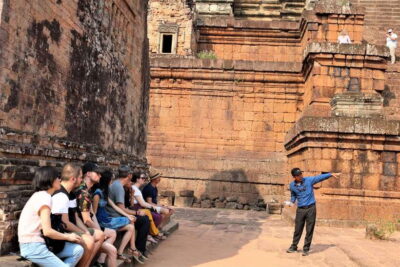
Angkor Wat at sunrise is the hook here: you leave Siem Reap before dawn, reach the world’s largest religious monument, and watch the sky brighten behind its towers. The day then moves through Bayon, Angkor Thom, and jungle-wrapped Ta Prohm, giving you Cambodia’s essential temple trio in one outing. Guide Saruon Pal, known for clear explanations and helpful photos, is one of several guides who can make the stones easier to understand.
I like the small-group format, capped at 15 people and sometimes much smaller, and I like the practical care: an air-conditioned minivan, cold water, and chilled towels after walks in the heat. The main drawback is stamina. This is a long day of steps, uneven ground, and open sun, and the $19 tour price does not include the required $37 temple pass or lunch.
Key points at a glance
- Sunrise start: Some departures collect you at about 4:30 am, putting you near Angkor Wat early.
- Three major temples: Angkor Wat, Bayon, and Ta Prohm form the day’s central sights.
- Small-group service: The vehicle holds no more than 15 people, with some departures feeling almost private.
- Strong guiding: Guides including Sok, Saruon, Sak, Chhay, and Yuth are praised for temple history, art, and local culture.
- Cooling breaks: Cold mineral water and fragrant wet towels are provided when you return to the minivan.
- Real total cost: Add the $37 temple pass and lunch to the $19 tour price.
What this Angkor day is really trying to do
The Angkor Archaeological Site spreads across roughly 150 square miles, or 400 square kilometers. You cannot see it all in one day. You can, however, see the three monuments most closely tied to a first visit, with someone explaining what you are looking at instead of leaving you to guess at every carved face and collapsed wall.
That is the value of this tour. You are not buying entrance to the temples, since the pass costs extra. You are paying $19 for hotel transport, a driver, an English-speaking guide, water, cool towels, and a structured route through the main sights.
The order gives the day a natural rhythm. Angkor Wat supplies the grand opening. Angkor Thom and Bayon shift the focus to royal power and carved faces. Ta Prohm brings in the jungle atmosphere. Srah Srang provides a pause for lunch and rest before the final temple.
Guides vary by departure. Names praised in the tour information include Chea Sok, Nuon Chan Sarak, Saruon Pal, Sak, Chhay, Kiss, Sam, and Yuth. The best guide for you will depend on the group and the day, but the repeated strengths are clear: good English, strong knowledge of temple stories, attention to timing, and a willingness to answer questions. Some guides also take photos at good viewpoints, a useful touch when you are traveling without a second person to handle the camera.
A few more Siem Reap trips to weigh up
- Siem Reap: Full-Day Angkor Wat Guided Tour with Sunset
★ 4.9 · 3,803 reviews - Full-Day Angkor Wat Sunrise Private Tour with Guide from Siem Reap
★ 5.0 · 2,920 reviews - Siem Reap: Angkor Wat Sunrise and Full-Day Sightseeing Tour
★ 4.9 · 2,828 reviews
Angkor Wat before the heat takes over
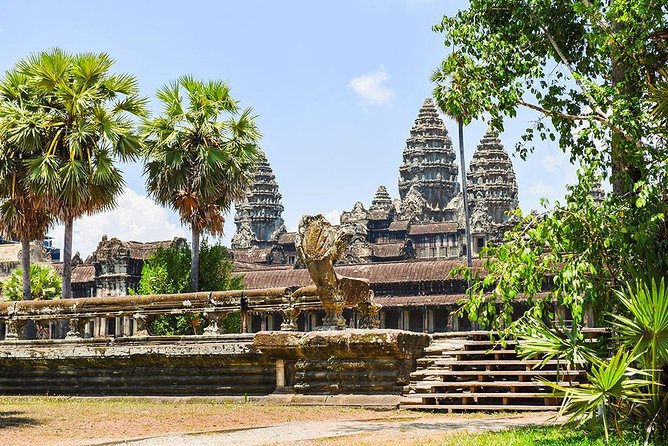
If your pickup is around 4:30 am, the early alarm is part of the deal. It can feel severe in the moment, but arriving early helps you see the temple before the day becomes hottest and gives you a chance to watch sunrise over the towers.
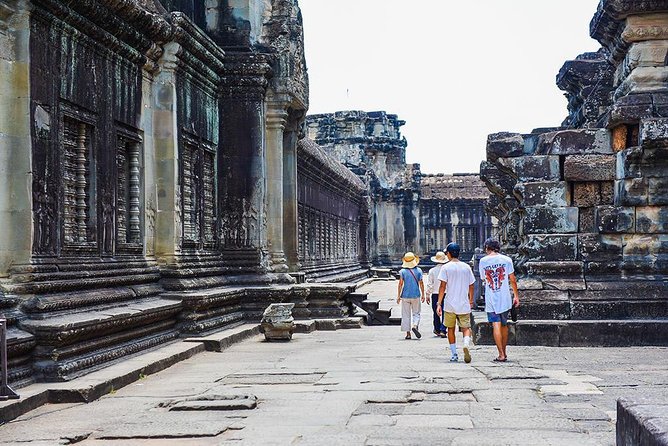
The first formal stop lasts about two hours. Angkor Wat is not a quick photo stop. Narrow stone passageways lead past bas-reliefs, shrines, galleries, and carved apsaras, the celestial dancers that appear throughout Khmer art. Your guide can point out the difference between Hindu and Buddhist influences, explain the temple’s design, and connect the carvings to Khmer stories and rulers.
You should expect stairs and some steep climbs. The central gallery is reached by steps, and the stone surfaces can be uneven. Wear shoes that grip well, and do not treat this as a gentle stroll through a park.
The early start also helps with photographs, but sunrise conditions are never guaranteed. Clouds, haze, and crowds can change the view. The tour still works if the sky is plain, since the temple interior and carvings are the main event, but you should not book it only for a perfect sunrise image.
Dress carefully. Shoulders and knees must be covered, and a scarf over the shoulders is not accepted as a substitute. Bring clothing that meets the rule from the start, rather than hoping to solve it at the gate.
Angkor Thom and the South Gate
After Angkor Wat, the route continues to the South Gate of Angkor Thom for about 30 minutes. This was the entrance to the Khmer Empire’s capital, and the approach is one of the day’s most theatrical views.
A narrow lane is guarded by 108 stone figures. On one side are gods, and on the other are demons, each holding the body of a naga. The faces and posture of the statues give the entrance a ceremonial feel, even though the surrounding complex is now made up of ruins and forest.
This stop is shorter than the temples, so listen as you walk and save some energy. The South Gate is a place where a guide adds real value. Without context, you see a bridge lined with statues. With an explanation, you begin to understand the religious story and the political message built into the entrance.
The route can be busy, and the stop is exposed. Keep your water with you and use the return to the minivan as a chance to cool off.
Bayon’s stone faces and royal stories
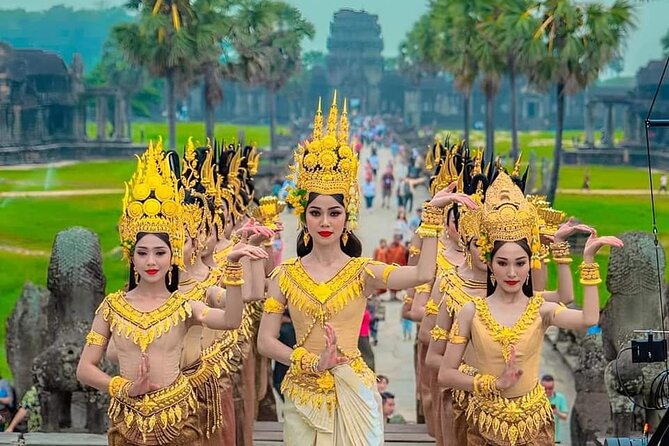
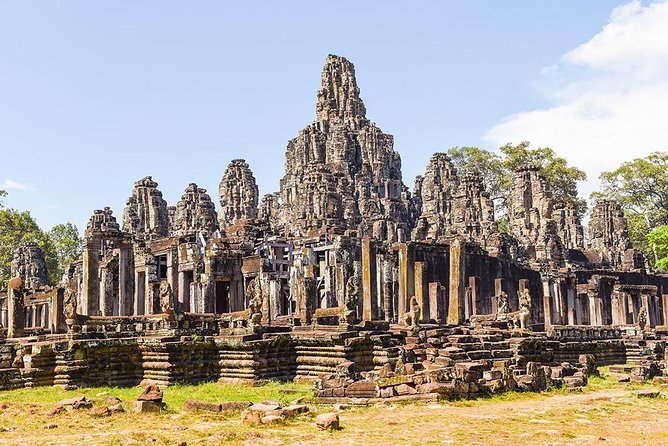
Bayon gets about an hour and a half, making it one of the day’s most substantial visits. It is the centerpiece of Angkor Thom, famous for towers carved with serene faces looking in different directions.
Bayon is also a place where it helps to move slowly. The towers can seem confusing at first, with passageways, galleries, and faces appearing at different heights. A good guide gives you a route and explains how the temple changed over time, including the shift between Hindu and Buddhist worship.
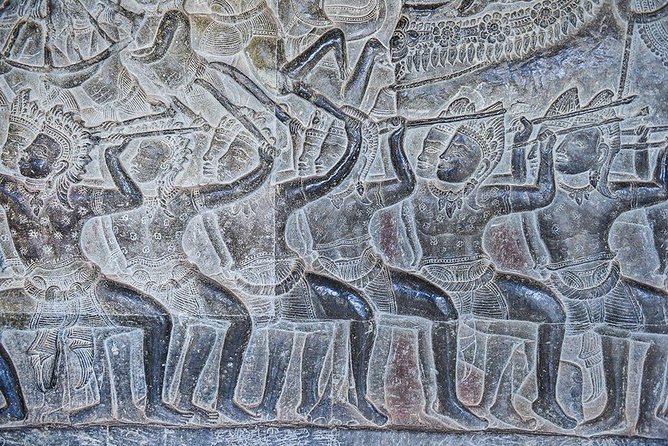
The long bas-reliefs are just as important as the faces. They show battles, court life, markets, processions, and scenes connected with Khmer victories over Cham forces. Look closely at the smaller details rather than rushing from tower to tower. Your guide may point out everyday moments hidden among the military scenes.
There are more steps and uneven passages here. In extreme heat, the temple can become tiring before you have seen everything. Take the breaks offered, and do not feel obliged to climb every stair if your knees or balance are struggling.
The nearby Terrace of the Leper King and Terrace of Elephants are passed along the route rather than treated as full stops. These terraces still matter because they help you read Angkor Thom as a royal city, not just a collection of isolated monuments. Expect a look and explanation, not the same amount of time you receive at Bayon.
Same country, a completely different kind of day:
- Angkor Wat Sunrise or Sunset Tour with Guide from Siem Reap
★ 5.0 · 12,109 reviews - Siem Reap: Angkor Wat: Small-Group Sunrise or Sunset Tour
★ 5.0 · 9,444 reviews - From Siem Reap: Kampong Phluk Floating Village Tour by Boat
★ 4.9 · 6,979 reviews - Sunset tour of Kampong Phluk stilts home village on the Tonle Sap
★ 5.0 · 4,865 reviews
Lunch near Srah Srang
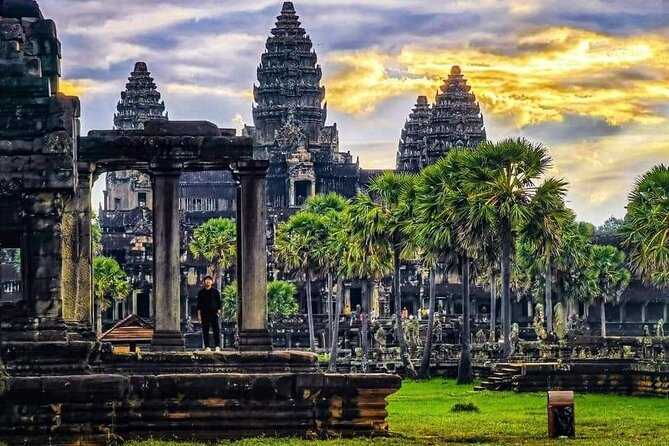
The itinerary allows about an hour for lunch and rest at a local Khmer restaurant near Srah Srang. Food and drinks are not included, so bring cash or a payment method suitable for the restaurant. The meal itself is an opportunity to try Khmer food, but the more important benefit is the pause.
A full day at Angkor can mean seven hours around ruins, with little shade during walks between sites. An air-conditioned lunch room, when available, is a welcome reset. One account describes a clean, air-conditioned restaurant with good food at a fair price, but your exact restaurant and meal can vary.
Do not skip the break simply to reach Ta Prohm earlier. The afternoon temple is atmospheric, but it is less enjoyable when you are dehydrated and overheated. Use this hour to eat, refill, and check your sunscreen.
Ta Prohm, where the jungle takes the stage
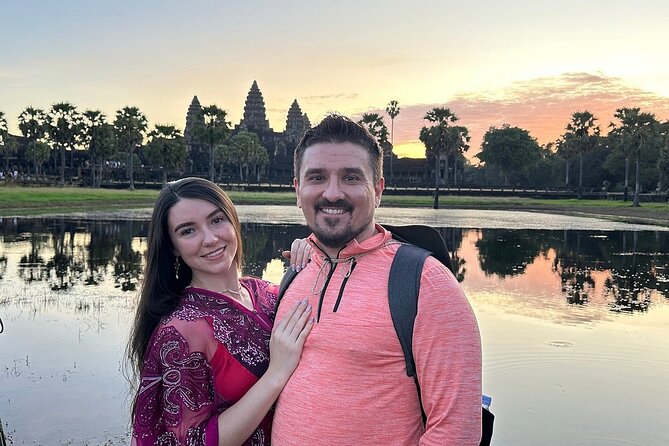
Ta Prohm receives about an hour and a half. This is the temple many people know from the Tomb Raider film, but the movie connection is only a small part of its appeal.
Ta Prohm feels different from Angkor Wat and Bayon. Instead of broad galleries and grand towers, you get a maze of chambers, narrow corridors, fallen stones, and trees pressing over the walls. Fig trees and other growth have wrapped around sections of the temple, creating the famous image of nature reclaiming masonry.
The setting can make Ta Prohm feel more mysterious, but it also creates practical problems. The ground is uneven, paths may narrow, and stairs require care. Stay close enough to hear your guide, especially when the group moves through crowded passages.
This is a good place to ask about restoration. Ta Prohm has not simply been left untouched. Sections have been stabilized and repaired while retaining the jungle character that makes the temple special. Your guide can help you separate the romantic movie image from the actual work needed to protect the site.
By this point, you may be tired. That is normal. You have already walked through Angkor Wat, the South Gate, Bayon, and the terraces. The final temple is rewarding, but it is not a light finish.
Why the minivan and cooling towels matter
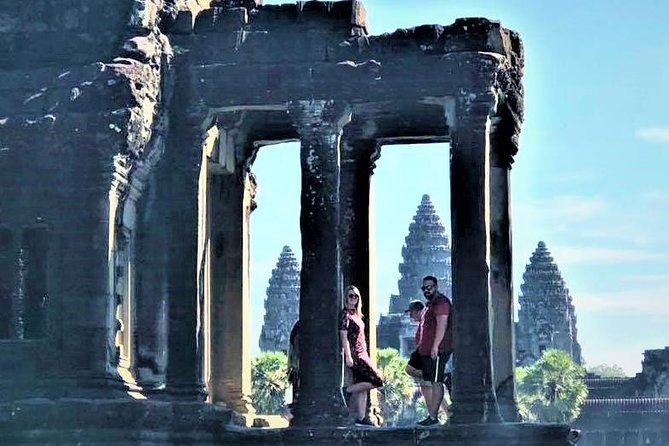
Transport is by air-conditioned minivan, with hotel pickup and drop-off included. That sounds basic until you spend a day in Cambodia’s heat. The vehicle gives you a place to sit between temples, and the driver handles the roads while you save energy for the ruins.
Cold mineral water and cool wet towels are provided when you return to the vehicle. Several accounts single out the towels as especially useful, and I can see why. A damp, fragrant towel on your face and neck does more than refresh you. It helps you reset before the next walk.
Drivers such as Mao and Naro are praised for safe, attentive service. The guide and driver have different jobs: the guide explains the monuments and manages the group, while the driver gets you between stops and keeps the vehicle comfortable.
Drop-off can take time at the end of a shared tour, especially if several people are staying in different parts of Siem Reap. One account raised a concern about hotel drop-offs, so allow some flexibility if you have an evening reservation or bus to catch.
The true price and what you receive
At $19 per person, the tour is inexpensive for an eight-hour outing with hotel transport and a professional guide. The required temple pass adds $37 per person, bringing the known cost to $56 before lunch and drinks.
That total is still a strong value if you want the main sights with historical guidance. A self-arranged day would still require transport and the same entrance pass, and you would need to plan the route yourself. The tour also saves you from negotiating every ride and deciding how long to spend at each temple.
The tradeoff is less freedom. You follow the group’s schedule, and you will not have time to explore every corner of Angkor. If you want obscure temples, long photography sessions, or repeated visits at different times of day, plan extra days independently.
The pass accepts Visa cards and can be purchased on the day, according to the tour details. Lunch is separate, so budget for it rather than treating the $19 price as your complete day’s expense.
How hard is the day?
You do not need to be an athlete, and most people can participate, but you do need to be comfortable walking for much of the day. Expect stairs, steep sections, uneven stones, narrow corridors, and heat. Children must be at least five years old.
The most useful packing list is short:
- Comfortable walking shoes with good grip
- Clothing covering shoulders and knees
- Sun protection and a hat
- Extra water, even though water is provided
- A camera or phone with enough battery
- Small cash for lunch and drinks
One account records a temperature of 42 degrees Celsius. That is not a normal forecast for every departure, but it shows how demanding conditions can become. Ask for breaks, drink before you feel thirsty, and use the vehicle’s shade and cooling supplies.
Who should book this Angkor tour?
I would choose this tour if you have one main day in Siem Reap and want the essential Angkor experience without arranging transport yourself. It is also a good fit if temple architecture, carvings, religion, and Khmer history mean more to you when someone explains them on site.
The small group is useful for questions and photos. A group of three or five can feel nearly private, though the maximum is 15, so you should not expect that every time. Guides such as Chea Sok and Sarak are praised for patient explanations and strong English, while Saruon, Sak, and Yuth are noted for detailed temple knowledge and friendly service.
I would hesitate if you dislike early mornings, cannot manage a long walk, or want a slow visit to one temple. Angkor deserves more than one day if you have the time, and this itinerary favors coverage over quiet exploration.
If this is your first introduction to Khmer culture, visiting the Angkor National Museum the day before may help you understand the religious symbols, legends, and changes between Hindu and Buddhist worship. That suggestion is not required, but it can make the temple carvings easier to read.
Final call: a smart first day at Angkor
Book it if you want Angkor Wat, Bayon, and Ta Prohm in one well-managed day, especially with the sunrise departure. The $19 tour fee is excellent value once you understand that the $37 temple pass and lunch are extra.
Go prepared for heat, stairs, and a packed schedule. Bring proper clothing, good shoes, and patience for shared drop-offs. If you do that, this tour gives you a practical first look at Angkor, with enough explanation to turn spectacular ruins into places with meaning.
FAQ
How long does the Full-Day Temples of Angkor Small Group Tour last?
The tour lasts approximately eight hours. The listed visits include Angkor Wat, Angkor Thom’s South Gate, Bayon, Srah Srang for lunch and rest, and Ta Prohm.
Is hotel pickup and drop-off included?
Yes. Pickup and return transfer to your Siem Reap hotel are included in the tour price.
Is the Angkor temple pass included?
No. The temple pass costs $37 per person and must be paid directly to the site. Visa cards are accepted, and the pass can be purchased on the day.
How large is the group?
The tour has a maximum of 15 travelers. Some departures may be much smaller, but a small group of three or five is not guaranteed.
What should I wear to the temples?
You must cover your shoulders and knees. A scarf used only to cover the shoulders is not accepted, so wear suitable clothing from the beginning.
Are food and drinks included?
No. Lunch and other food and beverages are not included. Mineral water and cool towels are included, and the itinerary stops at a local restaurant near Srah Srang for lunch.
Just added around Siem Reap
- Ultimate Sunrise to Angkor Wat, Angkor Thom and Bayon Temple★ 5.0 · 3 reviews
- Twilight Tastes of Siem Reap Include Dinner★ 5.0 · 13 reviews
- Trekking Tour at Phnom Kulen National Park from Siem Reap★ 5.0 · 3 reviews
- Full-Day Private Tour of Angkor Wat with Pick Up★ 5.0 · 12 reviews
- Private Day Trip to Angkor Temples with Expert Guide★ 5.0 · 4 reviews
- Waterfall & River of 1000 Siva Linga- Kulen Mountain Private Tour★ 5.0 · 3 reviews
- Professional Photo Shoot in Angkor Archaeological Park, Siem Reap★ 5.0 · 42 reviews
- Siem Reap City Tour with War Museum and Killing Field★ 5.0 · 27 reviews
Full-Day, compared.


Full-Day Angkor Wat Sunrise Private Tour with Guide from Siem Reap
Read our review →
Angkor Wat Sunrise and Full-Day Sightseeing Tour
Read our review →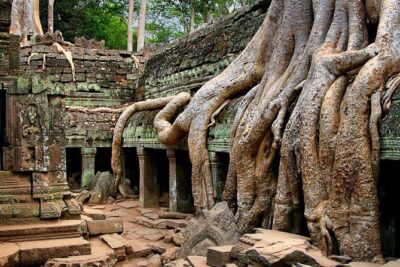
Full Day Angkor Wat Temple Experience with Sunset
Read our review →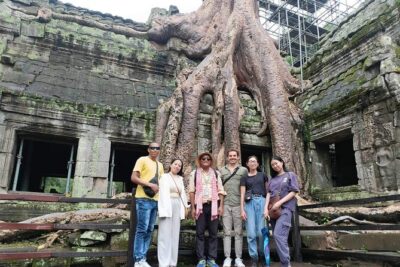
Angkor Wat full Day ‘Small Group with sunset & Tour Guide
Read our review →
Full-Day Banteay Srei & 4 Temples – Grand Tours Join-in Tour
Read our review →