
Reviewed · ANGKOR WAT TOURS
Angkor Wat Small-Group Exploration with Expert Guide
Angkor Wat is only the beginning. This 6 to 7-hour small-group tour links Cambodia’s four essential temple sights, with an English-speaking guide to explain the carvings, kings, and religious ideas behind the stones. Guides such as San, Sophy, Wat, and Nak have earned especially strong praise for clear explanations, friendly care, and even helping with photos.
I like the hotel pickup and drop-off, which saves you from arranging early transport across Siem Reap. I also like the practical comfort: chilled water, and sometimes cold towels, are waiting after the temple walks. The main drawback is that the $18 price does not include the $37 one-day Angkor National Park pass, and the included lunch stop may cost more than eating in town.
Key points to know before you book
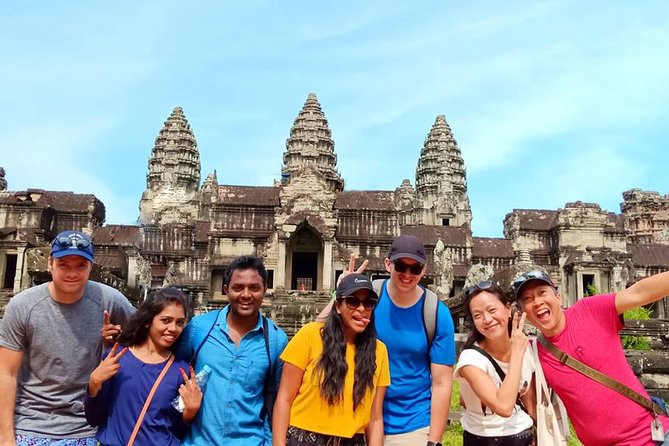
- Four major Angkor sights in one day: Visit Angkor Wat, Angkor Thom, Bayon, and Ta Prohm, the core sights most first-time visitors want to see.
- Small group, up to 12 people: The group size varies by bookings, but the limit gives you more room for questions than a large coach tour.
- Tuk-tuk for one or two people: Groups of three or more normally ride in a minivan, while smaller parties use a tuk-tuk.
- A guide who adds context: Guides including San, Sophy, Wat, Nak, and Voath are praised for history, symbolism, pacing, and help with photographs.
- Temple pass is extra: Budget $37 per person for the one-day Angkor National Park ticket.
- Expect stairs, heat, and uneven ground: You need moderate fitness, covered knees, and enough stamina for several hours of walking.
Why this is a smart first day at Angkor
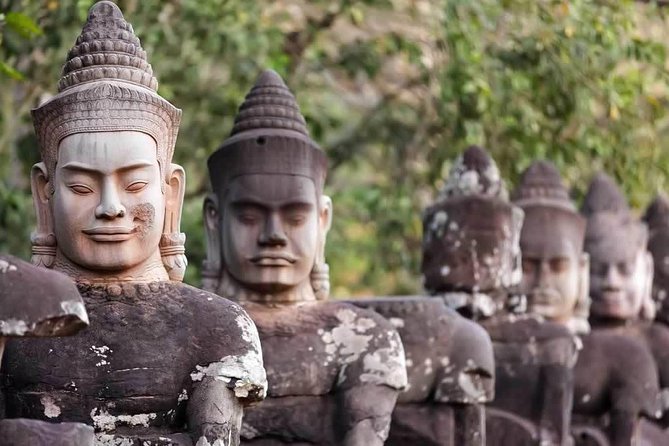
Angkor is far too large to understand by simply arriving, taking photos, and moving on. The buildings cover a wide area, the stories overlap, and the carved scenes can look like a mass of stone unless someone points out what you are seeing.
This tour gives you a useful first look at the central sights without asking you to plan every turn. You move between temples by tuk-tuk or minivan, then walk with your guide through each site. That balance matters in Cambodia, where the heat can make even a short walk feel demanding.
At $18 per person, the tour itself is inexpensive for a full half-day-plus outing. The real cost is $55 per person once you add the one-day temple pass, before food, drinks, and tips. That still makes the experience good value if you want transport and interpretation in one package, especially for a first visit.
The tour is capped at 12 people, though the actual group depends on how many people book that day. On a quieter date, it may feel almost private. One couple reported having the guide and driver to themselves, which gave them extra flexibility and more time for questions.
More Angkor Wat Tours in Siem Reap:
- Angkor Wat Sunrise or Sunset Tour with Guide from Siem Reap
★ 5.0 · 12,109 reviews - Siem Reap: Angkor Wat: Small-Group Sunrise or Sunset Tour
★ 5.0 · 9,444 reviews - Siem Reap: Angkor Wat 2-Day Tour with Sunrise and Sunset
★ 4.9 · 4,429 reviews
Angkor Wat: start with the great centerpiece
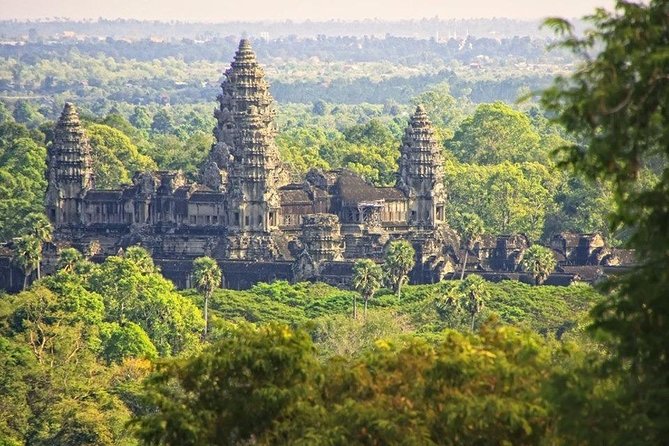
The first major stop is Angkor Wat, built for King Suryavarman II in the early 12th century as his state temple and capital. It is the best-preserved major complex in the area, and its scale can be difficult to grasp until you walk through its galleries and courtyards.
You have about two hours here, the longest scheduled visit of the day. That is sensible. Angkor Wat rewards slow looking, especially around the carved galleries and the temple’s layered design.
A good guide can help you read the site rather than simply photograph it. Ask about the meaning of the carvings, the temple’s original religious purpose, and how the building reflects Khmer royal power. Guides such as San and Sophy have been praised for explaining these details in clear English without burying the group in too much information.
There are stairs and plenty of walking. One older visitor specifically appreciated a guide who respected personal limits and offered encouragement, while another guide helped a participant over steep and uneven sections. That kind of care can make a real difference here, but you should still judge your own abilities honestly.
The planned order puts Angkor Wat first, which can be helpful. You tackle the most extensive walking while your energy is at its best. If your tour begins at 8 a.m., as one reported schedule did, the light and heat will differ from a sunrise departure, so do not assume sunrise is part of this standard option.
Angkor Thom: a royal city, not just one temple
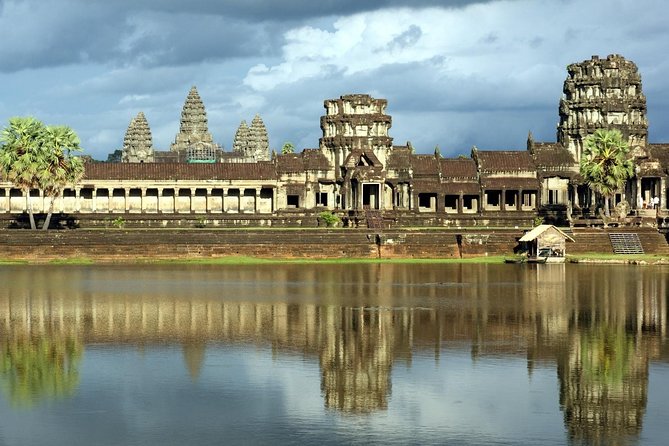
After Angkor Wat, the route continues to Angkor Thom, the late 12th-century capital built under King Jayavarman VII. This is a city-sized enclosure rather than a single building, and the stop helps you understand the wider setting around Bayon.
You have about an hour in Angkor Thom. Your guide can explain how the capital was organized and how its gates and monuments fit into the Khmer royal world. The scale is easy to miss if you rush straight to the famous face towers of Bayon.
The route may include nearby monuments within the Angkor Thom area, but the listed schedule specifically identifies Angkor Thom and Bayon as separate stops. Treat Bayon as the confirmed temple visit, rather than assuming every nearby structure is guaranteed.
This part of the day also gives you a change of pace. Angkor Wat is grand and formal. Angkor Thom feels more like an ancient urban center, with roads, enclosures, and several important remains spread through the area.
Bayon: stone faces and stories in the walls
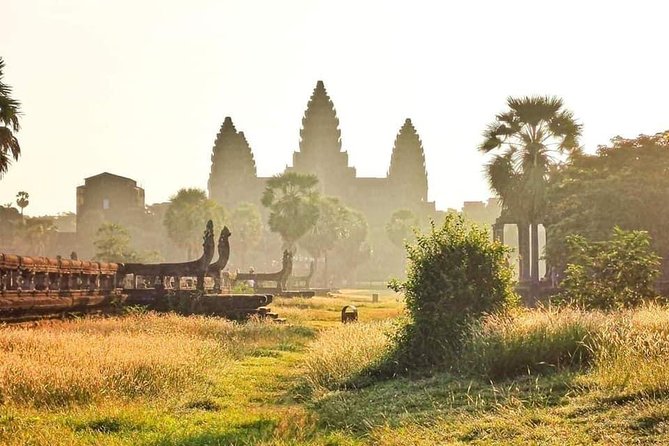
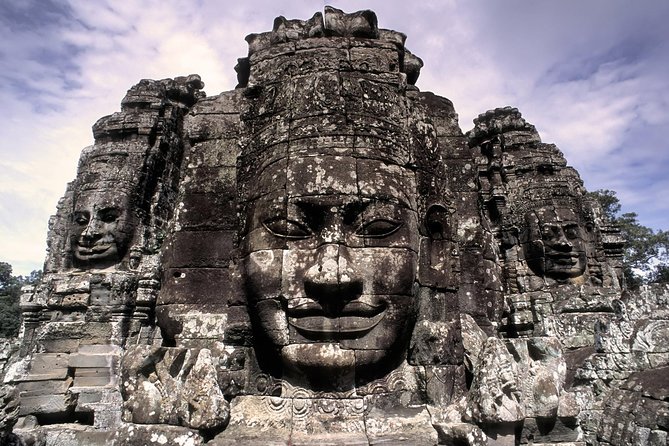
Bayon is the central temple of Angkor Thom, built in the late 12th or early 13th century during the reign of Jayavarman VII. Its famous towers carry large carved faces, and the temple can feel confusing at first because galleries, towers, and passageways crowd together.
The scheduled visit lasts about an hour. That is enough for a guided introduction and photographs, though you may wish for more time if you want to inspect every relief.
This is where a guide earns the fee. Ask your guide to show you the difference between the temple’s broad layout and its smaller carved scenes. The best explanations connect the faces, the religious setting, and everyday life shown in the reliefs.
Several guides are praised for making the symbolism easier to understand. Voath, for example, is described as explaining the history and meaning of the carvings in a way that was informative without becoming overwhelming. That balance is valuable at Bayon, where too many facts can blur together.
You also get help with the practical side of sightseeing. Guides including Phy and Sophy are praised for finding photo spots and taking pictures. This will not replace your own careful photography, but it is useful when you want a picture that includes everyone in your party.
A few more Siem Reap trips to weigh up
- Siem Reap: Full-Day Angkor Wat Guided Tour with Sunset
★ 4.9 · 3,803 reviews - Angkor Wat Sunrise tour with Small – Group and Guide tours
★ 5.0 · 3,655 reviews - Angkor Wat Highlights and Sunrise Guided Tour from Siem Reap
★ 5.0 · 3,213 reviews - Full-Day Angkor Wat Sunrise Private Tour with Guide from Siem Reap
★ 5.0 · 2,920 reviews
Ta Prohm: the atmospheric final temple
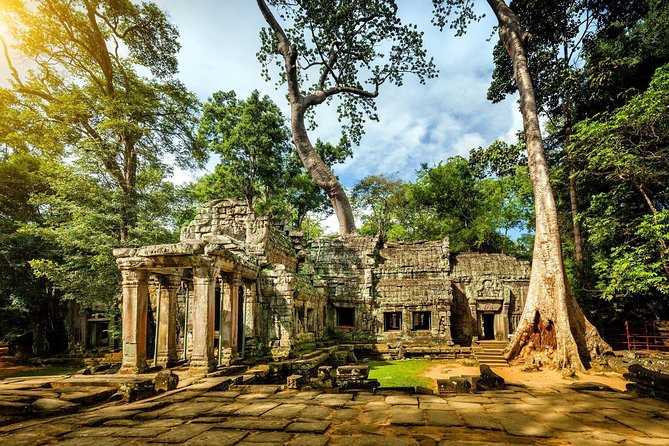
Ta Prohm is often the temple people remember most vividly after Angkor Wat. Its partially ruined walls, trees, and broken galleries create a more intimate mood than the grand central temple.
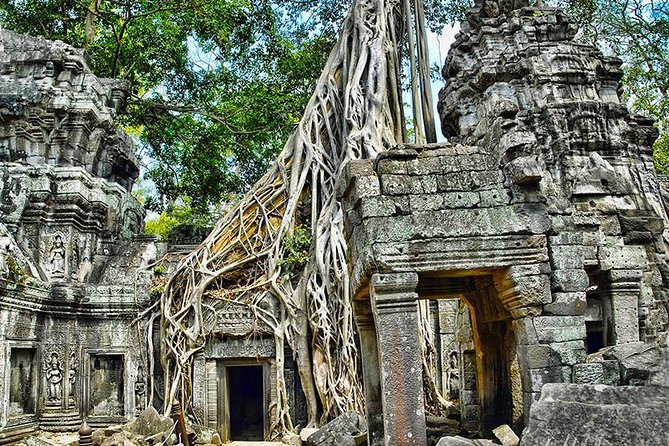
You have about an hour here. That should give you time to walk through the main areas and hear how the temple fits into the reign of Jayavarman VII. The appeal is not just the trees growing over stone. It is the contrast between an active royal-religious complex in the past and a ruin being reclaimed by nature.
Ta Prohm can be awkward underfoot. Roots, broken stones, stairs, and uneven surfaces require steady attention. One guide was praised for helping a visitor along steep terrain, and another for taking regular rest and water breaks. Still, you should wear secure shoes and avoid treating the temple grounds as a simple flat walking route.
The order is also practical. Ending at Ta Prohm gives the day a change in mood after the more formal spaces of Angkor Wat and Bayon. By this point, though, the heat and walking may catch up with you, so use the water breaks rather than trying to push through.
Tuk-tuk comfort, minivan space, and the value of hotel pickup
For one or two people, transportation is normally by tuk-tuk. Groups of three or more use a minivan. Both arrangements include hotel pickup and drop-off within Siem Reap, and the transfer at the end can also be made to a requested point in the city center.
The tuk-tuk is part of the setting, but it is not air-conditioned. You will be more exposed to the heat between sites, although the moving air helps. A minivan gives larger groups more enclosed space and air conditioning, which can be welcome on a very hot day.
Cold bottled water is included, and several accounts also describe cold towels being offered after temple visits. That is a small feature with real value in a humid climate. One group reported temperatures around 105 degrees with the heat index and found the repeated cold-water stops especially useful.
Pickup is another quiet advantage. Angkor is not a place where you want to negotiate transport at every turn, particularly if this is your first morning in Siem Reap. A confirmed hotel pickup keeps the start simple, and guides have been reported to contact people the day before to confirm the time.
The group limit is 12, but the experience can vary depending on demand. A full group means less freedom to linger and more time coordinating stops. A small booking may turn into a private outing, which can make the $18 tour an especially good bargain.
Lunch, timing, and what the six to seven hours really means
The listed temple time adds up to about five hours, followed by the return transfer. In practice, allow six to seven hours from pickup to drop-off. The exact pace can change with the group, traffic inside the park, walking speed, and the lunch break.
Lunch is not included. The guide normally stops at a local restaurant inside the national park around midday. This is convenient because you do not have to leave the temple area, but food there can be more expensive than in Siem Reap.
You should treat this as a convenience stop, not a budget meal plan. Bring enough money for lunch and snacks, and remember that drinks, beer, wine, soft drinks, and other food are also excluded. Cold water during the tour is included, but it does not cover every drink you may want during a long day.
One person felt that a shorter outing without the lunch break would have been preferable. That is a fair concern if you have limited time, low heat tolerance, or plans later in the day. On the other hand, the pause can keep the schedule manageable and give you a chance to sit down before the last temple.
Clothing, fitness, and the $55 basic cost
The temple pass is the main extra expense. The one-day Angkor National Park ticket costs $37 per person and is not included in the tour price. Add the $18 tour, and your basic cost is $55 per person before lunch and tips.
That price is easier to justify if you value a guide. You get hotel transport, a driver, an English-speaking guide, and cold water without arranging each piece separately. If you already have a driver and feel comfortable studying the temples on your own, the tour adds less value.
Dress rules are firm enough to plan around. Long pants or knee-length skirts and dresses are required. Choose clothes that cover you while still handling heat, and wear shoes suitable for stairs and uneven ground.
The activity calls for moderate physical fitness. You will walk through four large temple areas, climb steps, and manage rough surfaces. Children must be accompanied by an adult, and the tour is not a good match for someone who cannot handle stairs or extended walking.
Tipping is not included. Travel insurance is also excluded. Those are standard extras, but they should be part of your planning because the headline price does not cover every cost connected with the day.
The guide can shape the whole experience
The strongest part of this tour is the human one. A good guide turns carved stone into a story, watches the pace, answers questions, and helps you manage the physical demands of the site.
The guide names associated with especially strong feedback include Dy, San, Seth, Sophy, Vireak, Roam, Voath, Wat, Nak, Phy, Vantha, and Chau San Touchsan. Your assigned guide is not guaranteed to be one of these people, but the range of praised guides suggests that the operator has several capable hosts.
San was praised for clear English, history training, flexibility, and finding good photo locations. Sophy was noted for temple knowledge, careful explanations, and photography. Wat was repeatedly described as kind and helpful, including with older visitors. Nak was praised for enthusiasm and pride in Cambodian heritage.
You should ask questions early. The smaller group format gives you a better chance to ask about religious symbols, kings, construction, restoration, and daily life. If your group is large, speak up before moving on because the next explanation may begin quickly.
The guide is also the person who can make the day workable. Good pacing matters more than squeezing in extra buildings. The strongest accounts describe breaks, attention to ability, safe movement on steps, and a willingness to adapt the route to the group.
Is the Angkor small-group tour worth booking?
I would choose this tour for a first visit to Siem Reap when you want the essential Angkor temples without organizing transport, tickets, and a guide on your own. The $18 operating price is attractive, but budget realistically for the $37 temple pass, lunch, and a tip.
Book it if you value clear historical context, hotel pickup, a capped group, and practical help in the heat. It is especially suitable for couples, families with older children, and adults who want assistance with stairs and photography.
Think twice if you dislike fixed group schedules, want a sunrise start specifically, or prefer to spend a full day at only one or two temples. The lunch stop can also feel costly, and the six to seven hours may be tiring in hot weather.
For most first-time visitors, I like the balance: Angkor Wat gets proper attention, Bayon and Ta Prohm are included, and Angkor Thom gives the day a wider sense of the old Khmer capital. Just arrive dressed for the rules, ready for steps, and aware that the bargain price is only the beginning of the day’s budget.
FAQ
How long does the Angkor Wat small-group tour last?
The tour lasts approximately 6 to 7 hours, including the temple visits, transfers, and return to your hotel or another requested drop-off point in Siem Reap city center.
Which temples are included?
The planned route includes Angkor Wat, Angkor Thom, Bayon Temple, and Ta Prohm. Angkor Wat is scheduled for about two hours, while Angkor Thom, Bayon, and Ta Prohm receive about one hour each.
Is hotel pickup included?
Yes. Hotel pickup and drop-off are included. The tour can also finish at a requested drop-off point within the city center.
Is the Angkor temple pass included in the $18 price?
No. The one-day Angkor National Park ticket costs $37 per person and must be paid separately.
What transportation is used?
One or two people normally travel by tuk-tuk. Groups of three or more normally use a minivan. Cold bottled water is provided during the tour.
What is the maximum group size?
The tour can have a maximum of 12 people. The actual group size depends on the number of bookings on that day.
What should I wear to the temples?
Long pants or a knee-length skirt or dress are required. You should also be prepared for stairs, uneven surfaces, and several hours of walking.
Is lunch included?
No. Food, snacks, and other drinks are not included. The guide normally stops at a local restaurant in the national park around lunchtime, where prices may be higher than in Siem Reap.
Just added around Siem Reap
- Ultimate Sunrise to Angkor Wat, Angkor Thom and Bayon Temple★ 5.0 · 3 reviews
- Twilight Tastes of Siem Reap Include Dinner★ 5.0 · 13 reviews
- Trekking Tour at Phnom Kulen National Park from Siem Reap★ 5.0 · 3 reviews
- Full-Day Private Tour of Angkor Wat with Pick Up★ 5.0 · 12 reviews
- Waterfall & River of 1000 Siva Linga- Kulen Mountain Private Tour★ 5.0 · 3 reviews
- Professional Photo Shoot in Angkor Archaeological Park, Siem Reap★ 5.0 · 42 reviews
- Private Day Trip to Angkor Temples with Expert Guide★ 5.0 · 4 reviews
- Ultimate Siem Reap Food Tour by Tuk Tuk – 20 Tastings, 8 Stops★ 5.0 · 13 reviews
Angkor Wat Tours, compared.

Angkor Wat Sunrise or Sunset Tour with Guide from Siem Reap
Read our review →
Angkor Wat: Small-Group Sunrise or Sunset Tour
Read our review →
Angkor Wat 2-Day Tour with Sunrise and Sunset
Read our review →

Angkor Wat Sunrise tour with Small – Group and Guide tours
Read our review →
Angkor Wat Highlights and Sunrise Guided Tour from Siem Reap
Read our review →
Angkor Wat Sunset Small Group Tour with Lunch Included
Read our review →