Reviewed · FULL-DAY
Full Day Tour Photography in Siem Reap
Angkor Wat at sunrise is the main draw here, but the real value comes from having a guide show you how to frame the temple, find better angles, and use your phone with more care. I especially like the combination of early light at Angkor Wat and practical photography help from English-speaking guide Samnang.
I also like that the $49 price includes an air-conditioned vehicle, bottled water, cold towels, coffee, a breakfast box, and listed temple admissions. The drawback is the brutal schedule: pickup begins at 1:00 am, so you need to be ready for a long day on very little sleep.
Key points to know before booking
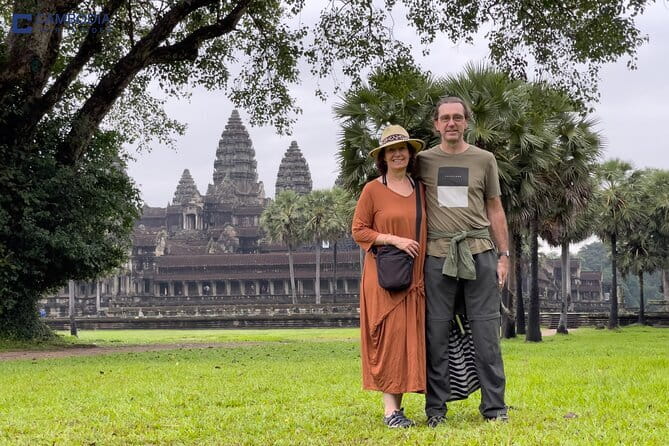
- Sunrise begins the day at Angkor Wat, with the first temple visit listed from 4:30 to 7:00 am.
- Guide Samnang teaches smartphone photography, including ways to find good spots and improve basic techniques.
- The route covers Angkor Wat, the South Gate of Angkor Thom, Bayon, and Ta Prohm.
- A full-day air-conditioned vehicle is included, along with water, cold towels, coffee, and a breakfast box.
- The group is limited to 15 people, though a smaller group may feel more helpful for hands-on photo coaching.
- Free cancellation is available up to 24 hours before the start time.
Why the 1:00 am start matters
This is not a relaxed morning outing. Your day begins at 1:00 am, while the sunrise portion at Angkor Wat is scheduled for 4:30 am to 7:00 am. That early pickup allows time to reach the temple area and prepare for the first light, but it also means you should treat the previous evening as an early night.
I like the timing for one clear reason: sunrise gives Angkor Wat a changing look that you cannot get later in the day. The sky, temple outline, reflection, and stone details can shift quickly as the light improves. For someone carrying a phone or camera, those changing conditions give you several kinds of pictures in one visit.
The tradeoff is simple. You may be tired before the most demanding walking and photography are over. The tour lasts about seven to eight hours, so this is best for you if getting strong temple photographs matters more than sleeping late.
The early start also affects your equipment choices. Bring only what you can carry comfortably, since the day includes several temple areas and photography often involves stopping, waiting, and adjusting your position. The tour does not provide cameras or other equipment, so you must bring your own phone or camera.
A few more Siem Reap trips to weigh up
- Golden Hours: Angkor wat sunrise photography tour with a pro!
★ 5.0 · 25 reviews - Unseen Angkor Tour & Photoshoot
★ 5.0 · 6 reviews - Professional Photoshoot in Angkor Archaeological Park
★ 5.0 · 3 reviews
Photographing Angkor Wat from first light
Angkor Wat receives the largest share of the day, and rightly so. The first section is planned around sunrise, followed by more time to explore the temple itself. The experience gives you about four hours connected with Angkor Wat, split between the sunrise visit and a later architectural exploration.
At sunrise, the goal is not simply to point your phone at the temple and press the shutter. You can work with the temple silhouette, the sky, the reflection, and the changing brightness on the stone. Samnang’s role is useful here because the photography coaching focuses on practical choices, including how to find a good position and how to make better pictures with a smartphone.
I would not expect a formal photography class with advanced camera theory. The information provided points instead to hands-on guidance that helps you make better use of the device you already have. That makes the tour appealing if your camera is a phone, or if you want simple advice rather than a technical workshop.
After sunrise, you have more time to see Angkor Wat as a building rather than only as a sunrise subject. The temple is the largest religious monument in the world, and the visit includes its towering spires, intricate bas-reliefs, courtyards, and architectural details.
This second part matters because sunrise photographs can make you focus too narrowly on the famous front view. Angkor Wat rewards closer attention to its carvings and structure. Look for patterns, repeated stone details, long lines, and the contrast between broad courtyards and finely worked surfaces.
The schedule lists admission as included for the sunrise visit and free for the later Angkor Wat segment. Since the information describes the two Angkor Wat portions differently, I would confirm exactly how temple admission is handled when booking. The practical point is that the tour is designed to cover the Angkor Wat visit without leaving you to arrange separate transport between its morning sections.
The South Gate and the stone faces of Angkor Thom
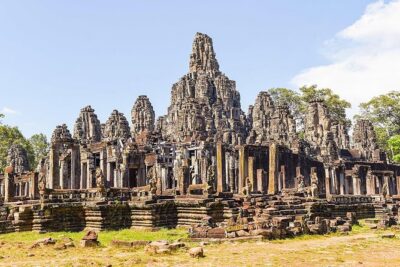
The next major part of the route takes you to the South Gate of Angkor Thom. The entrance features rows of gods and demons, along with the large stone faces that give the approach its distinctive character.
The listed stop is only two minutes, so do not read that figure as a long guided visit. It appears to be a brief photography stop or a quick look before moving onward. That can work well if your priority is collecting strong images across several sites, but it leaves little room for slow study.
At the South Gate, your best photographs may come from the repeating figures and the frontal view of the entrance. The scene has a different mood from Angkor Wat. Instead of a wide temple composition at dawn, you get a more concentrated view built around stone figures, faces, and the approach to Angkor Thom.
This is another point where a guide who understands photography can save time. With a short stop, you need to make decisions quickly. Samnang can help you identify a useful angle rather than leaving you to wander and lose the chance to take pictures before the group moves on.
Bayon Temple and its quiet stone expressions
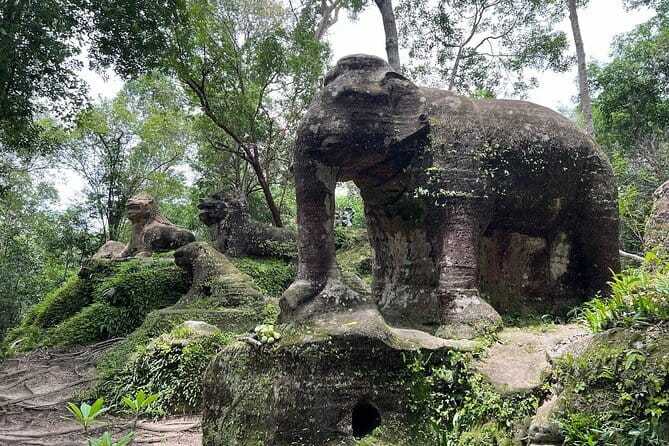
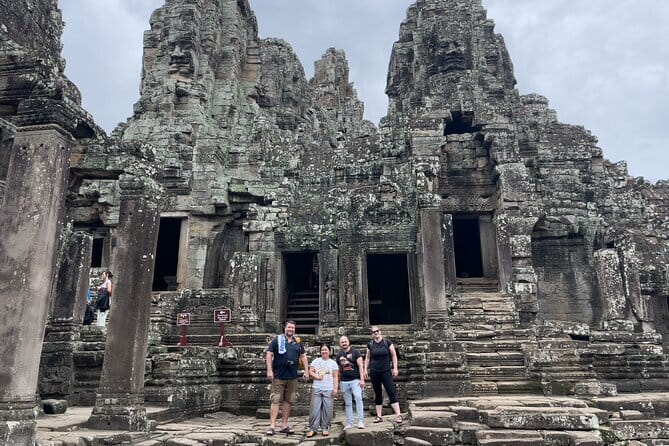
Bayon is the heart of Angkor Thom and is known for its many carved stone faces. The temple gives you a very different subject from Angkor Wat, with close views, towers, faces, and shifting relationships between light and stone.
The formal timing shown for Bayon is also only two minutes. That is unusually short for a full temple visit, so you should expect a quick stop rather than a long exploration. If you want detailed photographs of several faces and carvings, you may feel rushed.
Still, a short stop can be worthwhile when the entire day is built as a photography circuit. The focus is on finding a few good compositions at each location. Try to vary your pictures rather than taking the same face repeatedly. A straight-on portrait, a partial face behind another tower, and a wider view showing the surrounding stone can give you a more useful set of images.
The guide’s photography instruction is especially relevant at Bayon. The faces are similar enough to tempt you into taking quick snapshots, but small changes in framing can make each image feel different. A phone can handle this kind of subject well when you pay attention to the edges of the frame and avoid crowding the main feature.
Same country, a completely different kind of day:
- Angkor Wat Sunrise or Sunset Tour with Guide from Siem Reap
★ 5.0 · 12,109 reviews - Siem Reap: Angkor Wat: Small-Group Sunrise or Sunset Tour
★ 5.0 · 9,444 reviews - From Siem Reap: Kampong Phluk Floating Village Tour by Boat
★ 4.9 · 6,979 reviews - Sunset tour of Kampong Phluk stilts home village on the Tonle Sap
★ 5.0 · 4,865 reviews
Ta Prohm and the meeting of trees and stone
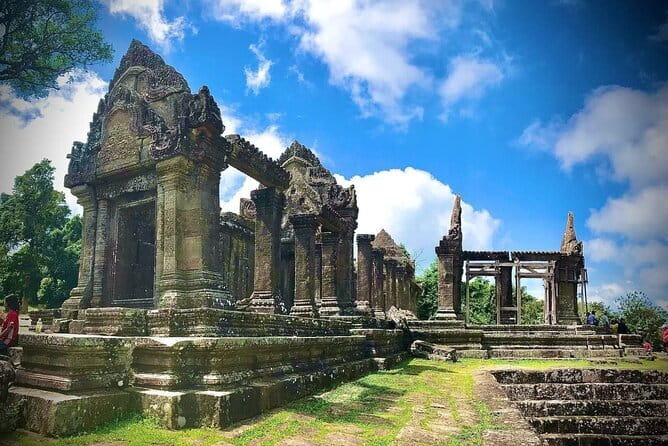
Ta Prohm supplies the day’s most atmospheric subject. Massive tree roots wind around the temple remains, creating the familiar image of nature pressing into ancient architecture.
This stop is also listed as two minutes, so plan for a concentrated photo opportunity. You will not have the same amount of time here as at Angkor Wat. The advantage is that you can arrive with a clear goal: photograph the roots, the stonework, and the way the two appear to hold one another in place.
Ta Prohm works best when you look beyond the most famous root-covered view. Try to include both the tree and the architectural detail instead of treating the roots as a separate object. The contrast is the point. Samnang’s advice can help you find a cleaner composition and avoid making every picture look like a quick record shot.
I would keep expectations realistic about the schedule. If Ta Prohm is the temple you most want to study, photograph, and explore at length, the brief listed stop may feel too short. If you want a broad introduction to several major Angkor sites in one day, it fits the tour’s purpose.
What the guide adds to your photographs
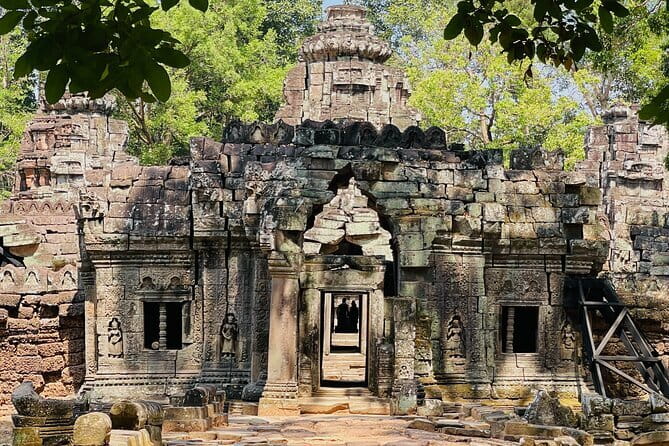
The strongest feature of this experience is the link between temple sightseeing and picture-making. Samnang is described as helping with temple history and culture while also teaching smartphone photography techniques. That combination gives you more than transport from one landmark to another.
You can expect guidance on finding good places to take pictures and on improving the way you use your phone. The advice is aimed at practical results, not just background information. That is useful in Siem Reap because the temples can overwhelm you with possible subjects. A guide can help you decide what deserves your attention.
I also like that the instruction is not limited to people with expensive equipment. The supplied details specifically point to smartphone photography, so you do not need a professional camera to benefit. If your phone is your main travel camera, this tour may help you return home with better images from the same device you already carry.
The group maximum is 15 people. That is small enough to keep the outing manageable, though it is not a private photography lesson. If several people need individual help at the same time, the amount of personal coaching may vary. You should book with the expectation of shared guidance rather than one-to-one instruction throughout the day.
What is included for $49
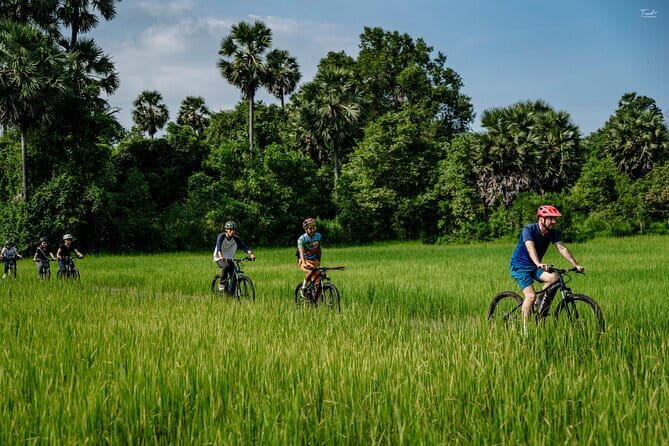
At $49, the price is reasonable if you value the transport, guide, refreshments, and photography help as one package. You are not paying only for entry to temples. You are also paying for a very early pickup, an air-conditioned vehicle, a full morning and day route, and someone who can connect cultural background with practical photo advice.
The included air-conditioned vehicle is important in a full-day visit. Moving between temple areas in a cooled vehicle gives you a break from the heat and from carrying your equipment continuously. Bottled water and cold towels are small additions, but they matter after an early start and several hours outdoors.
Breakfast is provided as a breakfast box with brewed coffee. That is convenient after sunrise, when you may be ready for food but do not want to interrupt the route to arrange it yourself. The information also lists meals as not included, so do not assume the breakfast box covers lunch or any other meal.
Cameras and equipment are not provided. Bring the phone, camera, batteries, memory cards, and any other gear you want to use. Tips and items not specifically mentioned are also extra.
The admission details are marked as included at Angkor Wat sunrise, the South Gate of Angkor Thom, Bayon, and Ta Prohm, while the second Angkor Wat segment is marked as free. Because the descriptions use different admission labels, I would ask for clarification before paying if temple-pass costs are a major part of your budget.
Who will enjoy this temple photography tour
I would choose this experience if you want to see several major Angkor sites and return with more thoughtful photographs than simple snapshots. It suits phone photographers especially well, since the guidance includes smartphone techniques and finding good picture locations.
It also fits you if you prefer a planned route. The air-conditioned vehicle, included refreshments, pickup, and sequence of stops remove much of the day’s transport work. You can concentrate on the temples and your pictures.
You may want another option if you dislike very early mornings, need a leisurely pace, or want long uninterrupted time at Ta Prohm and Bayon. The short listed stops at the South Gate, Bayon, and Ta Prohm suggest a brisk schedule, with Angkor Wat receiving the most attention.
The group limit of 15 keeps the tour from becoming a very large outing, but it does not guarantee a private guide. The experience is best for people comfortable sharing the day and taking guidance within a small group.
Practical details before you decide
Pickup is offered, and the stated start time is 1:00 am. Confirmation is received at booking. Most people can participate, according to the supplied information, but you should still think honestly about the early start and the length of the day.
Free cancellation applies when you cancel at least 24 hours before the local start time. Cancellations made less than 24 hours before the start, along with late changes, are not refunded or accepted under the stated terms.
Bring your own camera or smartphone, since equipment is not included. I would also make sure your phone is charged before pickup, because the best photography advice is not much use if your device runs out of power before the final temple.
Should you book it?
Book this tour if your priority is better temple photography with practical smartphone help, especially at Angkor Wat sunrise. The $49 fee offers solid value through transport, refreshments, an English-speaking photographer guide, and a route covering four major Angkor locations.
Skip it if you want a slow, private study of every temple or if a 1:00 am start sounds unreasonable. The short Bayon and Ta Prohm stops point to a fast-moving day. For an energetic photographer who wants a broad Angkor introduction and useful help from Samnang, this is a focused and affordable choice.
FAQ
Where does the tour take place?
The tour takes place in Siem Reap, Cambodia, and visits Angkor Wat, the South Gate of Angkor Thom, Bayon Temple, and Ta Prohm Temple.
What time does the tour start?
The stated start time is 1:00 am. The sunrise visit at Angkor Wat is scheduled from 4:30 am to 7:00 am.
How long does the experience last?
The full tour lasts approximately seven to eight hours.
Is pickup offered?
Yes, pickup is offered.
Who leads the photography instruction?
The experience includes an English-speaking photographer guide. The guide named in the supplied details is Samnang.
Can I use a smartphone for the photography lesson?
Yes. The guide provides smartphone photography techniques and helps you find good places for photographs.
Is transportation included?
Yes. An air-conditioned vehicle is included.
Is breakfast included?
Yes. A breakfast box with brewed coffee is included. Other meals are not included.
Are cameras and photography equipment provided?
No. Cameras and equipment are not included, so you need to bring your own.
What is the cancellation policy?
You can cancel for a full refund up to 24 hours before the experience start time. Cancellations or changes made less than 24 hours before the start are not accepted for a refund.
Just added around Siem Reap
- Ultimate Sunrise to Angkor Wat, Angkor Thom and Bayon Temple★ 5.0 · 3 reviews
- Twilight Tastes of Siem Reap Include Dinner★ 5.0 · 13 reviews
- Trekking Tour at Phnom Kulen National Park from Siem Reap★ 5.0 · 3 reviews
- Full-Day Private Tour of Angkor Wat with Pick Up★ 5.0 · 12 reviews
- Private Day Trip to Angkor Temples with Expert Guide★ 5.0 · 4 reviews
- Waterfall & River of 1000 Siva Linga- Kulen Mountain Private Tour★ 5.0 · 3 reviews
- Professional Photo Shoot in Angkor Archaeological Park, Siem Reap★ 5.0 · 42 reviews
- Siem Reap City Tour with War Museum and Killing Field★ 5.0 · 27 reviews
Full-Day, compared.


Full-Day Angkor Wat Sunrise Private Tour with Guide from Siem Reap
Read our review →
Angkor Wat Sunrise and Full-Day Sightseeing Tour
Read our review →
Full Day Angkor Wat Temple Experience with Sunset
Read our review →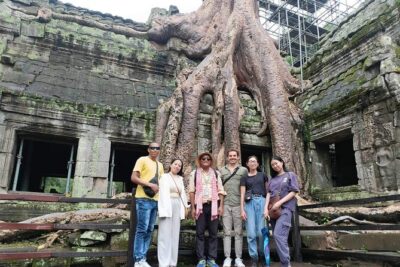
Angkor Wat full Day ‘Small Group with sunset & Tour Guide
Read our review →
Full-Day Banteay Srei & 4 Temples – Grand Tours Join-in Tour
Read our review →