
Reviewed · CAMBODIA INTERCITY TRANSFERS
Cambodia Highlight 6 Days Tour from Siem Reap to Phnom Penh
Angkor Wat at sunrise is only the opening act here. Over six days, you move from Siem Reap’s ancient temples to Phnom Penh’s royal buildings, markets, and sobering Khmer Rouge memorials. A private guide and driver handle the roads, tickets, and timing, which lets you cover far more than you could comfortably arrange alone.
I like the mix of famous monuments and quieter stops such as Ta Nei, Ta Som, and the old Kampong Kdei Bridge. I also like the practical touches: five breakfasts, bottled water, fresh tissues, and included entry fees. The main drawback is the pace. Day 2 is a long temple day beginning at 4:30 AM, and Day 5 packs much of Phnom Penh into one demanding schedule.
Key points to know before booking
- The tour covers two very different Cambodias: Angkor’s imperial temples and Phnom Penh’s modern capital and Khmer Rouge memorials.
- Day 2 begins at 4:30 AM: You see sunrise at Angkor Wat, then continue through Angkor Thom and Ta Prohm.
- The private format gives you room to ask questions: Guides such as Mr. Leap and Mr. Sara have been praised for clear English, cultural insight, humor, and thoughtful service.
- The temple program goes beyond Angkor Wat: Banteay Srei, Preah Khan, Neak Pean, Ta Som, and East Mebon add variety.
- Hotel quality depends on the option you select: Choices range from listed 3-star hotels to 4-star and 5-star properties.
- The price is strongest for convenience: At $759.05 per person, accommodation, transport, guide services, breakfasts, and admission fees are bundled together.
From Siem Reap Airport to your first Cambodian evening
Your guide and driver meet you at Siem Reap Angkor International Airport and take you into Siem Reap for hotel check-in. The transfer is listed at about two hours, including time for an introduction to the city and local daily life.
That welcome matters. Siem Reap is more than a base for Angkor Wat, and a local guide can help you understand the city before the temple schedule begins. You should use this first meeting to confirm the next morning’s pickup time, since the sunrise departure is extremely early.
Hotel options are listed by category:
- Royal Crown Hotel & Spa, listed as a 3-star option
- Regency Angkor Hotel, listed as a 4-star option
- Angkor Paradise Hotel, listed as a 5-star option
The exact property depends on the package you choose and availability. The accommodation description uses both 4-star and 5-star wording, while the hotel choices also include a 3-star option, so check the selected category carefully before paying.
More Cambodia Intercity Transfers in Siem Reap
- Siem Reap to Phnom Penh by Private Car or Minivan
★ 5.0 · 189 reviews - Taxi Siem Reap to Phnom Penh-English Speaking Driver
★ 5.0 · 62 reviews - Private Taxi Siem Reap to Phnom Penh, Reliable Driver, Transfer
★ 5.0 · 45 reviews
The 4:30 AM start at Angkor Wat
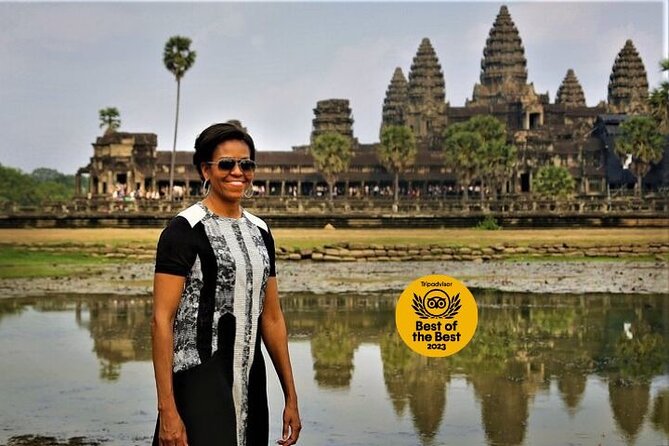
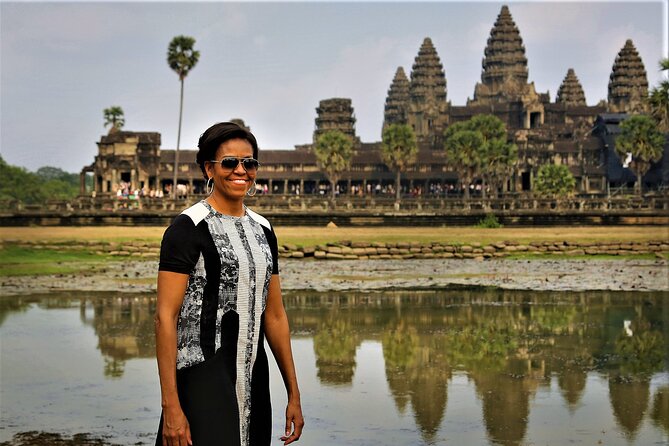
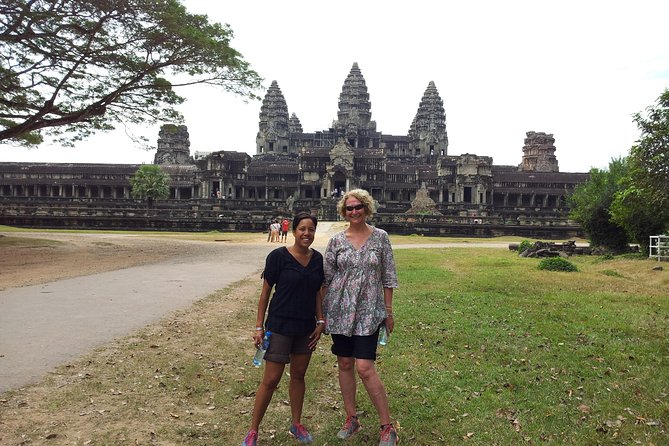
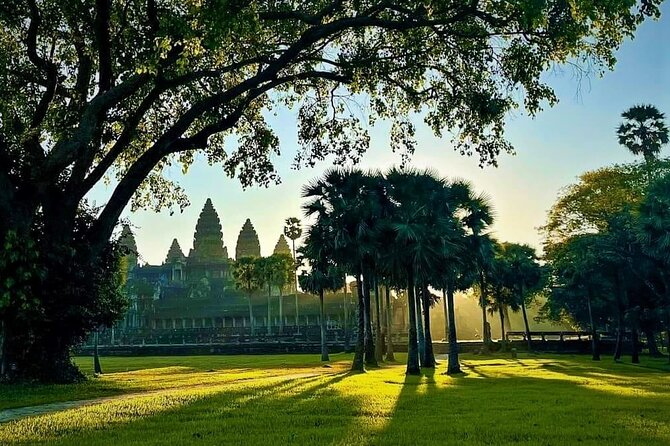
Day 2 begins before dawn. You leave at 4:30 AM for Angkor Wat, hoping to see the temple towers silhouetted against the morning sky. The sunrise visit is listed at three hours, including time to continue exploring the temple complex after first light.
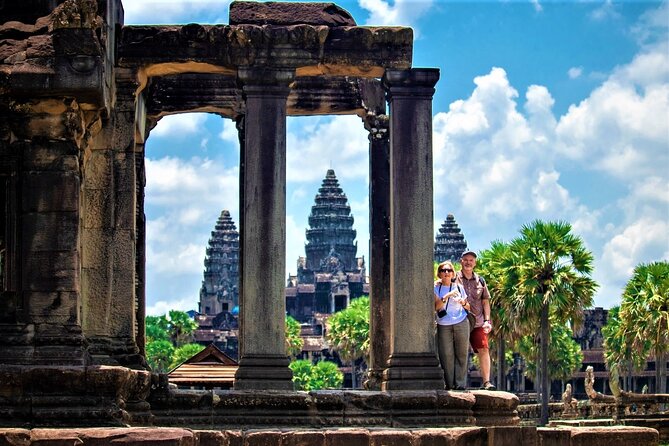
This is the tour’s signature moment, but it is not a gentle start. You will need to accept an early wake-up, a busy viewing area, and a full day on your feet. The benefit is clear: you see Angkor Wat in changing light, then have a guide beside you to explain the carvings, layout, and purpose of the temple.
After returning to the hotel for breakfast, the route continues through Angkor Thom. At the South Gate, restored stone figures and the famous head-lined bridge introduce the former royal city. The stop takes about 35 minutes and works well as a visual preface to the larger complex beyond.
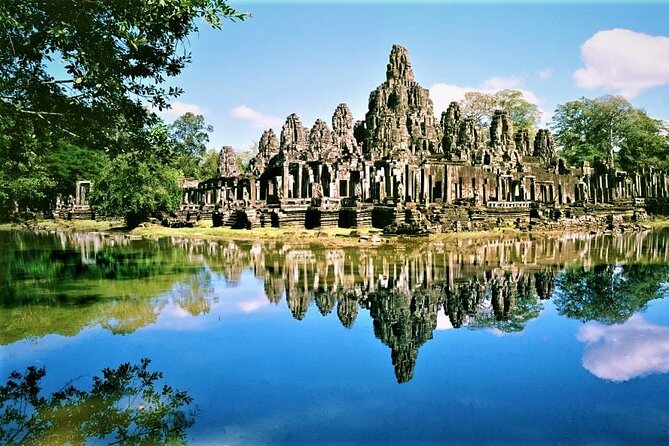
Bayon follows, with about an hour to examine its towers and immense carved faces. Unlike Angkor Wat, Bayon can feel less immediately orderly. Its towers and corridors reward an explanation, especially when your guide connects the temple to the royal city around it.
You then spend about an hour in Angkor Thom itself. This was the capital of the Khmer Empire, and the scale of its walls, gates, and ceremonial spaces helps you grasp how large the royal center once was. I would not rush this part, even though the itinerary is already full.
Baphuon, Phimeanakas, and the royal terraces
Baphuon takes about 55 minutes. Its sandstone base and unusual five-level form give it a different profile from the better-known temples. Some visitors may find the repeated architecture tiring by this point, but the guide can help you spot changes in design rather than treating each site as another pile of stones.
Phimeanakas, near the center of the old Royal Palace area, receives about 30 minutes. It is less visually overwhelming than Angkor Wat or Bayon, yet its location makes it important. You are looking at part of the former royal compound, not an isolated shrine.
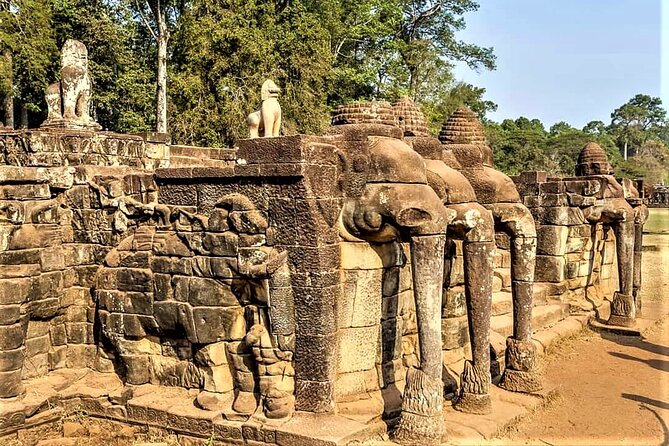
The Terrace of the Elephants and Terrace of the Leper King add another side of Angkor: public ceremony and carved decoration. Allow about 45 minutes for the first and 30 minutes for the second. The terraces are not enclosed temple visits, so they provide a change of rhythm, with long carved walls and open views through the complex.
Ta Nei is one of the day’s best choices for people who want something quieter. It sits in the jungle and is not a major tourist stop. The visit lasts about 45 minutes, though the route can be harder to find. Its rougher, less polished feel contrasts nicely with the grand monuments earlier in the day.
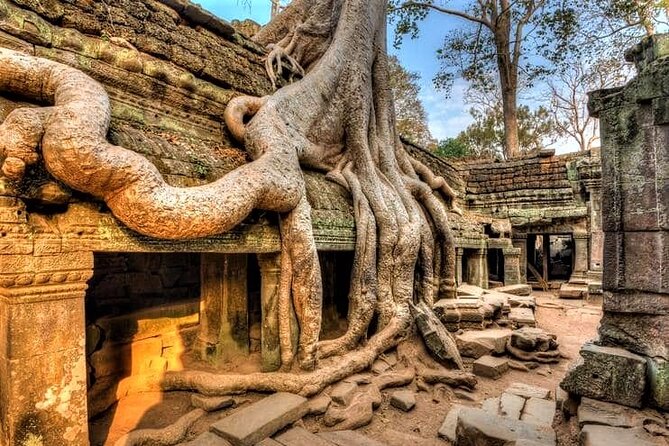
Ta Prohm closes the temple program with 90 minutes. Trees and stone share the scene here, and the temple has been left largely untouched apart from clearing paths and adding structural support. It is one of the most atmospheric stops, but it can also be tiring after such a long day.
Banteay Srei and the Grand Circuit on Day 3
Day 3 begins with Banteay Samre, a restored complex that takes about an hour. Its reconstruction used anastomosis, a method of putting original stones back into their likely positions. The site may appeal to you if you prefer a more complete structure, though the listed notes also point to a lack of maintenance in recent years.
Banteay Srei is another one-hour stop and one of the tour’s most rewarding temple visits. Its detailed carvings and smaller scale make it feel different from Angkor’s huge state temples. The journey away from the central complex also gives the day a change of pace.
Preah Khan takes about an hour. Built in the late 12th century under Jayavarman VII, it was dedicated to his father. Corridors, courtyards, and partially restored sections make this a good place to ask your guide how religious buildings also served royal and civic purposes.
Neak Pean follows for about 45 minutes. The temple sits within a large square man-made pond, once part of a carefully designed water setting. The approach and water features are as important as the central structure, so allow time to notice the layout rather than walking straight to the shrine.
Ta Som is a small, quiet temple with about 45 minutes allotted. It has not been restored, giving you a rougher view of the site. Tree growth around the entrance towers adds character, though conditions can change as conservation work and maintenance continue.
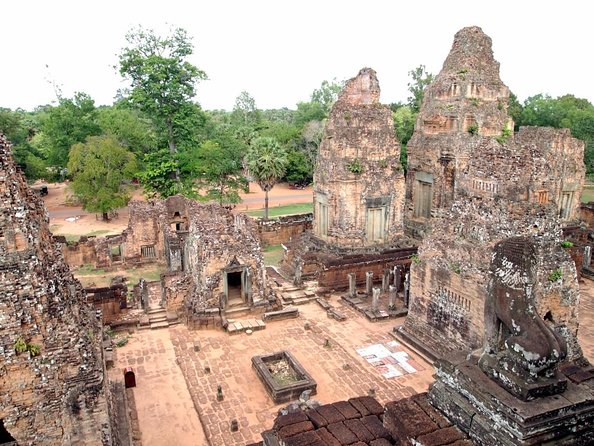
Pre Rup takes about 40 minutes and offers a bold, balanced example of temple design. East Mebon, with an hour, completes the day. It once sat on an artificial island in the East Baray reservoir, which is now dry. These two stops are useful for comparing early Angkor architecture with the later temples you saw on Day 2.
Same country, a completely different kind of day:
- Angkor Wat Sunrise or Sunset Tour with Guide from Siem Reap
★ 5.0 · 12,109 reviews - Siem Reap: Angkor Wat: Small-Group Sunrise or Sunset Tour
★ 5.0 · 9,444 reviews - From Siem Reap: Kampong Phluk Floating Village Tour by Boat
★ 4.9 · 6,979 reviews - Sunset tour of Kampong Phluk stilts home village on the Tonle Sap
★ 5.0 · 4,865 reviews
Day 4 leaves the temples behind
The fourth day shifts from major monuments to road travel and local sights. Spean Praptos, also called Kampong Kdei Bridge or Dragon Bridge, is an old laterite bridge in Siem Reap Province. The stop lasts about 30 minutes and gives you a chance to see Khmer engineering outside the temple zone.
The Stone Statue Shop Road takes about an hour. You will see workshops and shops producing stone statues, including large pieces intended for Buddhist temples. This is a commercial stop, so keep your expectations clear. It may interest you if you want to see craft production, but it is not the same as visiting a historic monument.
At Skun Spider Sanctuary, you spend about 45 minutes at one of Cambodia’s unusual markets. The town is known for fried spiders, an experience that will not suit everyone. You do not need to treat it as a dare. It is best approached as a short look at a distinctive local food tradition, with the option to observe rather than eat.
That night, your Phnom Penh hotel options include King Grand Boutique Hotel as a listed 3-star choice, Sun & Moon Urban Hotel as a 4-star choice, and Sun & Moon Riverside as a 5-star choice. The schedule does not provide a precise travel duration from Siem Reap to Phnom Penh, so expect Day 4 to include a substantial transfer as well as its sightseeing stops.
Royal Phnom Penh before its darker history
Day 5 is packed. You begin with time in Phnom Penh, a capital at the meeting point of the Mekong and Tonlé Sap rivers. The city section is listed at about 80 minutes, enough to get your bearings around the riverfront, parks, restaurants, and colonial-era parts of town.
The Royal Palace receives 90 minutes. Construction began in 1886 after King Norodom moved the royal capital to Phnom Penh. The complex remains one of the city’s major landmarks, and its formal grounds offer a calmer start before the day turns to more difficult subjects.
Next door, the Silver Pagoda takes about an hour. Its garden and interior provide a quieter visit beside the palace. Wat Phnom follows for 45 minutes. Built on the city’s only hill, the pagoda is tied to the local founding legend involving four Buddha statues found by a woman named Penh.
The Independence Monument and Wat Ounalom are shorter stops, each about 45 minutes. The monument recalls independence from France in 1953 and was built in 1958. Wat Ounalom, one of Phnom Penh’s five original monasteries, gives you another link to the city’s religious life and riverfront setting.
Tuol Sleng and Choeung Ek require time and care
The afternoon turns to Cambodia’s Khmer Rouge period. Tuol Sleng Genocide Museum occupies a former secondary school used as Security Prison 21. The visit lasts about 90 minutes, and you should expect difficult material. This is not a quick photo stop. Give yourself time to listen, read, and process what you see.
Choeung Ek Genocidal Center is about 17 kilometers south of Phnom Penh and receives roughly 85 minutes. The former orchard and mass grave site is one of the best-known memorial locations connected with the killings between 1975 and 1979.
Putting these two sites on the same day is historically coherent, but emotionally heavy. I appreciate that the schedule gives both places substantial time. Still, you may want a quiet evening afterward rather than more organized sightseeing.
Markets, monuments, and the final city stops
Central Market provides a change of mood after the memorials. The 1937 domed market has four arms filled with stalls, and the visit lasts about an hour. You might find clothing, food, souvenirs, and everyday goods, though the tour does not promise a particular shopping activity or purchase.
The Statue of King Father Norodom Sihanouk is a brief 20-minute stop. It commemorates the former king and adds a modern national symbol to a day that has already covered royal, religious, colonial, and recent Cambodian history.
The order of Day 5 may be adjusted by the guide to suit traffic and opening conditions, but the supplied schedule gives you a clear sense of the workload: ten stops, including two serious memorial sites. If you prefer slow mornings and long café breaks, this is too much. If you have only a short time in Cambodia, it is an efficient way to cover the capital’s main themes.
What the private guide adds
The guide service is one of the strongest reasons to consider this trip. English-speaking guides have included Mr. Leap and Mr. Sara, with drivers named Art, Orr, Pip, Pheap, and La mentioned in past arrangements. Names are not guaranteed, but the service style is clear: expect help with photos, frequent water, sanitary wipes, and cooling towels when available.
Mr. Leap has been noted for explaining not only temple history but also Cambodian customs and the reasons behind local practices. Mr. Sara has been praised for strong temple explanations and careful coordination with drivers. That kind of person-to-person help is valuable at Angkor, where a simple walk through stone corridors can otherwise become a blur of names and dates.
The private format also means only your group participates. You can ask for a slower look at Bayon, spend less time at a shopping stop, or tell the guide when you need a break. The itinerary is still ambitious, so do not assume private means leisurely.
Is $759.05 per person a fair price?
At $759.05 per person, this is not a shoestring Cambodia trip. The price includes accommodation in double, twin, or triple rooms, an English-speaking licensed guide, transport, temple and attraction admission fees, drinking water, fresh tissues, and five breakfasts.
That bundle has real value. Angkor admission fees add up across several days, and private transport removes the need to arrange airport transfers, temple routes, and the Siem Reap to Phnom Penh move yourself. You also avoid spending time comparing separate hotels and guides.
The price makes more sense for two or more people sharing a room and vehicle. Solo guests pay an extra 40 percent for a single room, which changes the calculation. Group discounts are offered, but the amount is not specified, so ask for the actual price before booking.
You should also compare the hotel category carefully. A 3-star option is not the same product as a 5-star option, even if the core sightseeing remains similar. The tour is best value if you want convenience, a private guide, and a fixed six-day plan rather than the lowest possible daily cost.
Who should book this six-day route?
I would choose this trip if you have six days, want both Angkor and Phnom Penh, and prefer not to organize several transfers yourself. It suits first-time visitors who want historical context and a full schedule, as well as couples or small groups that value a private vehicle.
It is also a good fit if you want more than the standard Angkor Wat circuit. Ta Nei, Banteay Srei, the old bridge at Spean Praptos, and the Skun market add variety.
I would hesitate if you dislike early mornings, long sightseeing days, emotionally difficult museums, or fixed hotel categories. The cancellation terms are also worth noting: a full refund requires cancellation at least six full days before the start time, while cancellations two to six days ahead receive 50 percent. Less than two full days receives no refund.
FAQ
Where does the tour begin?
The tour begins with pickup at Siem Reap Angkor International Airport in Siem Reap, Cambodia.
Where does the tour end?
The tour ends with a transfer from your Phnom Penh hotel to Techo International Airport on Day 6. The transfer is without a guide.
Is this a private tour?
Yes. Only your group participates in the private tour or activity.
Is an English-speaking guide included?
Yes. The package includes an English-speaking licensed tour guide.
Are entrance fees included?
Yes. Entrance fees for the sites listed in the schedule are included.
How many breakfasts are provided?
Five breakfasts are included during the six-day tour.
What hotel categories are available?
The listed choices range from 3-star to 5-star accommodation, depending on the selected option and availability.
Is there an extra charge for a single room?
Yes. A single-room stay adds 40 percent of the adult price.
Should you book it?
Book this tour if you want a well-organized first visit that combines Angkor’s major and lesser-known temples with Phnom Penh’s royal sights and genocide memorials. The private guide, included admissions, airport transfers, and five breakfasts make the $759.05 price easier to justify, especially for two people sharing a room.
Skip it if you want a slow temple holiday or plan to spend several days getting to know each city at your own pace. For most first-time visitors with limited time, though, this route gives you a clear, demanding, and meaningful introduction to Cambodia.
More 6-Day Experiences in Siem Reap
- Highlight of Angkor Temples 6 Days Cambodia Tour
★ 5.0 · 4 reviews
Just added around Siem Reap
- Ultimate Sunrise to Angkor Wat, Angkor Thom and Bayon Temple★ 5.0 · 3 reviews
- Twilight Tastes of Siem Reap Include Dinner★ 5.0 · 13 reviews
- Trekking Tour at Phnom Kulen National Park from Siem Reap★ 5.0 · 3 reviews
- Full-Day Private Tour of Angkor Wat with Pick Up★ 5.0 · 12 reviews
- Private Day Trip to Angkor Temples with Expert Guide★ 5.0 · 4 reviews
- Waterfall & River of 1000 Siva Linga- Kulen Mountain Private Tour★ 5.0 · 3 reviews
- Professional Photo Shoot in Angkor Archaeological Park, Siem Reap★ 5.0 · 42 reviews
- Unveiling 2 Days Private Angkor Wat/Beyond In Sunrise/Sunset Tour★ 5.0 · 48 reviews
Cambodia Intercity Transfers, compared.

Siem Reap to Phnom Penh by Private Car or Minivan
Read our review →
Phnom Penh to Siem Reap Private Car-English Speaking Driver
Read our review →
Private Taxi Transfer From Phnom Penh to Siem Reap with English Speaking Driver
Read our review →
Taxi Siem Reap to Phnom Penh-English Speaking Driver
Read our review →
Phnom Penh To Siem Reap Private Transfer Mini-Van-Car
Read our review →
Private Taxi Phnom Penh to Siem Reap-English Speaking Drivers
Read our review →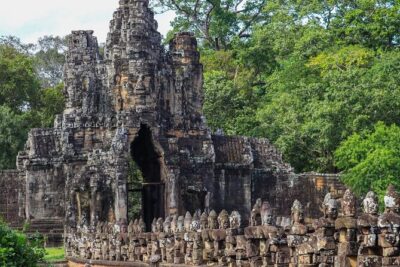
Private Taxi Siem Reap to Phnom Penh, Reliable Driver, Transfer
Read our review →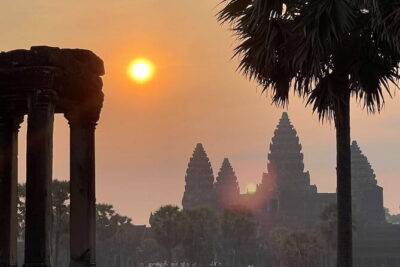
Cambodia Private Taxi – Siem Reap & Angkor Wat Temple Area Tour
Read our review →Browse the lists this tour appears in