
Reviewed · ANGKOR WAT TOURS
Private: Angkor Wat Full Day Guided Visit
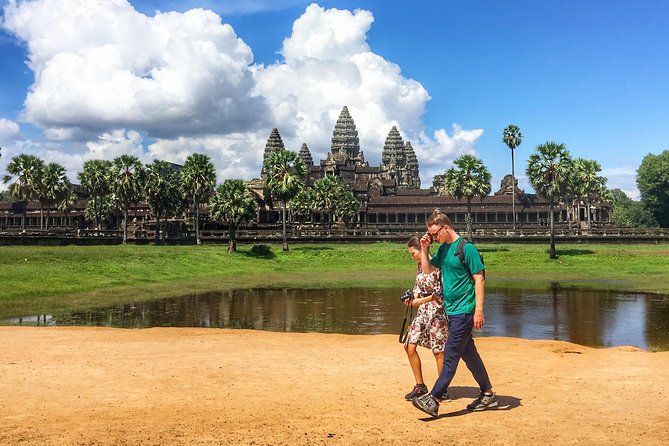
Angkor Wat is best tackled before the heat settles in, and this private day tour gets you moving at 7:30 am. You’ll see the grand temple, the stone faces of Bayon, the jungle-wrapped Ta Prohm, and the quieter Ta Nei with a guide who can explain what you are seeing instead of leaving you to guess at every carved wall.
I like the private pace and the included air-conditioned vehicle, especially when the afternoon sun starts working on the temple stones. I also like the mix of famous monuments and less-visited Ta Nei. The main catch is cost: at $113, plus the separate $37 Angkor pass, this makes the most sense for couples, families, or small groups who value personal attention.
Key points to know before booking
- A full temple day with a 7:30 am start: You have about six to eight hours for the main Angkor sights.
- A genuinely private outing: Only your group takes part, so you can ask questions, slow down, or spend less time at a stop that does not grab you.
- The essential temple set is covered: Angkor Wat, Angkor Thom, Bayon, Baphuon, Ta Prohm, and Ta Nei are all part of the day.
- Ta Nei adds a quieter contrast: This late 12th-century Buddhist temple is included as a lower-crowd stop.
- Transport and refreshments are handled: Hotel pickup and drop-off, bottled water, snacks, refreshments, fuel, and an air-conditioned vehicle are included.
- Budget for the park entrance: The one-day Angkor Archaeological Park ticket is not included and costs $37.
Why the private format works at Angkor
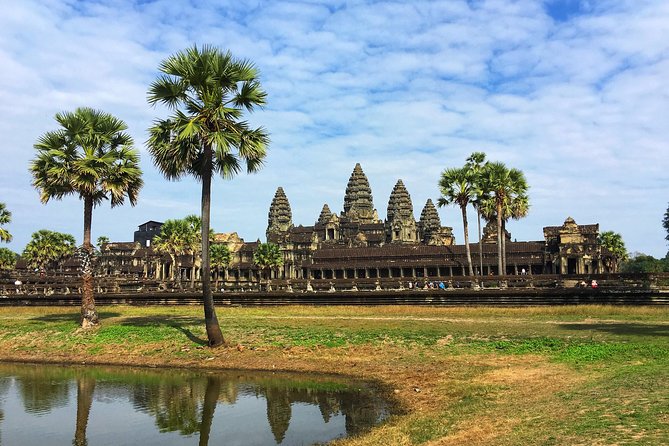
Angkor is not one temple. It is a huge archaeological area filled with major monuments, smaller shrines, long walls, galleries, towers, and forest paths. A private tour gives you a person who can turn that jumble of stone into a story about changing Khmer kings, religious ideas, and building styles.
The guide can also adjust the day to your energy. One guest described visiting only three temples after having a low-energy day, with the guide keeping the experience personal rather than forcing every listed stop. That matters here. Temple touring involves walking, steps, uneven ground, and repeated exposure to heat.
The private setup is also useful for questions. Guides named in the feedback include Sam, Tay, Tey, and Kim, along with Sam Chhoeun. Their roles appear to vary by booking, so you should not assume a particular guide unless the operator confirms one. The useful point is that the company has a group of guides familiar with the circuit, and the strongest praise centers on warm manners, clear explanations, patience, and the ability to point out good places for photographs.
More Angkor Wat Tours in Siem Reap:
- Angkor Wat Sunrise or Sunset Tour with Guide from Siem Reap
★ 5.0 · 12,109 reviews - Siem Reap: Angkor Wat: Small-Group Sunrise or Sunset Tour
★ 5.0 · 9,444 reviews - Siem Reap: Angkor Wat 2-Day Tour with Sunrise and Sunset
★ 4.9 · 4,429 reviews
Angkor Wat before the heat builds
Your first major stop is Angkor Wat, usually the temple most people picture when they think of Cambodia. You have about two hours here, enough time to appreciate the broad approach, central towers, galleries, and carved scenes without treating the visit as a quick photo stop.
The temple is famous as the world’s largest religious monument, but the scale can be hard to understand until you walk toward it. Your guide can help explain how the layout works and draw your attention to the bas-reliefs, which show stories and scenes in long carved panels. Without help, it is easy to admire the stone and miss the meaning.
Starting early is a practical choice, not just a slogan. The tour begins at 7:30 am, and the morning timing puts Angkor Wat first while you still have energy. You’ll want water, sun protection, and shoes suitable for uneven surfaces. Bottled water and refreshments are supplied, but you should still dress for a long day outdoors.
The two-hour visit is generous for a first look, though anyone who wants to inspect every gallery in detail could easily want more time. The private format gives you a chance to tell your guide if you prefer close attention to carvings, broad photography, or a faster look before moving on.
Angkor Thom, Bayon, and Baphuon in one ancient capital
The next section focuses on Angkor Thom, a vast walled capital that contains several important monuments. About two hours are allocated here, and that time is shared across a group of sites rather than spent inside one temple.
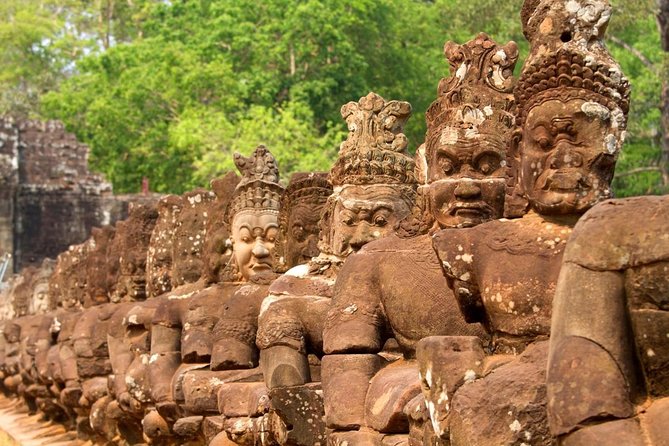
Bayon is the star. Its towers carry the famous calm stone faces that seem to watch from every direction. The effect is striking, but the temple can also feel confusing because its galleries and upper levels do not always reveal an obvious route. A guide helps you notice how the faces, reliefs, towers, and passageways fit together.
Baphuon gives you a different look. It is a large temple mountain within Angkor Thom, and it helps show how Khmer builders used height, terraces, and carefully arranged corridors to create a sacred center. The wider capital also includes Phimeanakas, the Terrace of the Elephants, the Terrace of the Leper King, Prah Palilay, and other ruins.
You should not expect a detailed stop at every structure inside Angkor Thom. The advertised visit highlights the larger cluster, with Bayon and Baphuon as the key monuments. Ask your guide how the two-hour block will be divided if one particular site matters most to you.
This part of the day is valuable because it gives Angkor context. Angkor Wat can feel like a single spectacular monument. Angkor Thom shows how temples belonged to a much larger royal city, enclosed by walls and organized around religious and civic spaces.
Ta Prohm and the power of the trees
Ta Prohm gets one hour, and that is a sensible amount for a focused visit. Its appeal comes from the meeting of architecture and forest. Strangler figs and silk-cotton trees twist among the walls, roots press over blocks, and collapsed sections make the temple feel less orderly than Angkor Wat or Bayon.
The trees are not a decorative backdrop added for visitors. They are part of what makes Ta Prohm memorable, and the unrestored character helps you picture how an ancient site can change when nature takes hold. The temple is also associated with the film Tomb Raider, which brings an extra pop-culture layer to the visit.
There is a trade-off. Ta Prohm is one of the best-known stops, so it can be harder to enjoy quietly than Ta Nei. Your guide may help you avoid the busiest flow when possible, and the private vehicle keeps you from being tied to a large group, but no guide can make a famous temple empty.
Use the hour well. Focus on the sections where roots and stone meet, listen for the story behind the temple, and leave time to look up at the trees rather than rushing from one doorway to the next. If you have a particular interest in photography, tell your guide early in the day.
A few more Siem Reap trips to weigh up
- Siem Reap: Full-Day Angkor Wat Guided Tour with Sunset
★ 4.9 · 3,803 reviews - Full-Day Angkor Wat Sunrise Private Tour with Guide from Siem Reap
★ 5.0 · 2,920 reviews - Siem Reap: Angkor Wat Sunrise and Full-Day Sightseeing Tour
★ 4.9 · 2,828 reviews - Full-Day Guided Sunset Tour of Angkor Wat
★ 5.0 · 1,507 reviews
Ta Nei, the quieter final temple
Ta Nei is a welcome change of pace. This Buddhist temple was built during the reign of Jayavarman VII in the late 12th century, and the tour allows about 30 minutes for the stop.
It is included partly because it offers a quieter setting than the headline monuments. After Angkor Wat, Angkor Thom, and Ta Prohm, a smaller temple can help you notice details that get lost at the major sites: worn carvings, broken galleries, the shape of a doorway, or the way the forest sits around old stone.
Thirty minutes is brief, so you should think of Ta Nei as a compact final visit rather than a full archaeological study. Its value is contrast. The grand temples show royal ambition and monumental scale. Ta Nei gives you a more restrained encounter and a chance to finish away from the main crowds.
This is one of the most thoughtful parts of the route. Many first-time Angkor days focus only on the famous three. Adding Ta Nei gives you a small taste of the wider park without requiring another full day.
What the guide adds to the stone
A good guide changes the shape of this experience. The company’s guides receive repeated praise for being warm, patient, punctual, and able to explain the temples in a lively way. Sam is described as combining facts with stories about Cambodian culture. Tay is praised for finding less crowded places and bringing strong enthusiasm to the sites. Kim is described as friendly and able to answer a wide range of questions.
That does not mean every guide will suit every person in the same way. Some people want long explanations about iconography and architecture. Others want the basic story, a few strong details, and help finding the best route. The private setup lets you say what you want.
The guide can also make the day easier at small moments. A guest described Mr. Kim meeting the group at the hotel with coffee and a cheerful welcome. Another account praised clear communication before the outing and a guide who could be as detailed as the group wanted. Those details suggest a service style that is attentive without needing to feel formal.
I would ask your guide to explain three things clearly: how Angkor Wat differs from the later Buddhist temples, what the faces at Bayon represent, and why Ta Prohm was left in its tree-covered state. Those questions will help you connect the stops instead of seeing them as unrelated ruins.
Lunch, transport, and the real value of $113
The $113 price covers a private tour, a licensed professional guide, hotel pickup and drop-off, fuel, transport in an air-conditioned private vehicle, bottled water, snacks, and refreshments. Lunch is served during the tour, according to the tour details.
The Angkor entrance ticket is extra. Add $37 for a single-day pass, bringing the basic combined cost to $150 before any other personal spending. That is important when you compare this with a shared group outing or a self-guided visit.
For one person, the total can feel high. For two people, the private format begins to make more sense, and for a family or small group the per-person cost may be reasonable for a full day with transport and a guide. You are paying for control over the pace and for someone to handle the route, not just for admission.
The air-conditioned vehicle matters more than it might on paper. You will move between separate temple areas, and a cool ride gives you a break between walks. Hotel pickup and drop-off also remove the need to arrange separate transport at the start and end of a long day.
Lunch is convenient, but the supplied details do not specify the restaurant, menu, or dietary arrangements. If you have allergies or special food needs, ask before booking. The same applies if you want to know exactly how lunch fits into the timing.
Who will get the most from this day
This tour suits first-time visitors who want the main Angkor sights explained in a single day. It is also a good match for families, couples, and friends who do not want to follow a large group or keep to a rigid pace.
You will get the most from it if you enjoy a guided introduction rather than a slow, independent study of one temple. The schedule covers several major sites, so the day is broad rather than intensely detailed.
It may not suit you if you want to spend half a day photographing Angkor Wat alone, or if you prefer to explore without commentary. The six to eight hour duration is also a substantial outing, and the heat, walking, and temple steps can make it tiring.
The private nature helps if your group has mixed interests. One person can ask for more history, another can pause for photos, and the whole group can decide how much time to spend at each stop. That flexibility is the strongest reason to choose this over a cheaper shared option.
Timing, tickets, and cancellation
The stated start time is 7:30 am, with the whole experience lasting about six to eight hours. Hotel pickup and drop-off are included, but you should provide accurate hotel details when booking so the collection is clear.
You receive confirmation at booking, and a mobile ticket is available. The Angkor Archaeological Park entrance pass is not part of the tour price, so plan on buying the $37 single-day ticket separately.
Most people can participate, according to the supplied information, but no detailed accessibility information is given. Ask the operator about walking distances, steps, and surfaces if those points matter to you.
Free cancellation is available up to 24 hours before the local start time for a full refund. Changes or cancellations made less than 24 hours before the start are not accepted for a refund.
Should you book this Angkor Wat tour?
Book it if you want the major temples, a quieter stop, a private vehicle, and a guide who can shape the day around your group. The strongest practical advantages are the early start, hotel transport, flexible pace, and mix of Angkor Wat, Angkor Thom, Ta Prohm, and Ta Nei.
Think twice if you are traveling alone on a tight budget, since the $113 fee does not include the $37 park pass. Also ask about lunch details and your assigned guide if those points are important.
For a first Angkor visit, I see this as a strong one-day introduction. You get the iconic monuments, a glimpse of the wider temple city, and a less crowded finish. Just treat it as a full day in the heat, not a quick sightseeing loop.
FAQ
What time does the tour start?
The stated start time is 7:30 am.
How long does the tour last?
The experience lasts approximately six to eight hours.
Is this a private tour?
Yes. Only your group participates in the activity.
Which temples are included?
The route includes Angkor Wat, Angkor Thom, Bayon, Baphuon, Ta Prohm, and Ta Nei Temple.
Is the Angkor entrance ticket included?
No. The one-day Angkor Archaeological Park pass costs $37 and must be paid separately.
Is hotel pickup and drop-off included?
Yes. Hotel pickup and drop-off are included.
Is transportation provided?
Yes. Transport is provided in a private air-conditioned vehicle.
Is lunch included?
Lunch is served during the tour. The listed inclusions also cover snacks, refreshments, and bottled water.
Can I cancel for a full refund?
Yes. You can cancel at least 24 hours before the experience start time for a full refund. Cancellations or changes made less than 24 hours before the start are not refunded.
Just added around Siem Reap
- Ultimate Sunrise to Angkor Wat, Angkor Thom and Bayon Temple★ 5.0 · 3 reviews
- Twilight Tastes of Siem Reap Include Dinner★ 5.0 · 13 reviews
- Trekking Tour at Phnom Kulen National Park from Siem Reap★ 5.0 · 3 reviews
- Full-Day Private Tour of Angkor Wat with Pick Up★ 5.0 · 12 reviews
- Private Day Trip to Angkor Temples with Expert Guide★ 5.0 · 4 reviews
- Waterfall & River of 1000 Siva Linga- Kulen Mountain Private Tour★ 5.0 · 3 reviews
- Professional Photo Shoot in Angkor Archaeological Park, Siem Reap★ 5.0 · 42 reviews
- Ultimate Siem Reap Food Tour by Tuk Tuk – 20 Tastings, 8 Stops★ 5.0 · 13 reviews
Angkor Wat Tours, compared.

Angkor Wat Sunrise or Sunset Tour with Guide from Siem Reap
Read our review →
Angkor Wat: Small-Group Sunrise or Sunset Tour
Read our review →
Angkor Wat 2-Day Tour with Sunrise and Sunset
Read our review →

Angkor Wat Sunrise tour with Small – Group and Guide tours
Read our review →
Angkor Wat Highlights and Sunrise Guided Tour from Siem Reap
Read our review →
Angkor Wat Sunset Small Group Tour with Lunch Included
Read our review →