
Reviewed · 1-DAY TOURS
One day normal Angkor tour
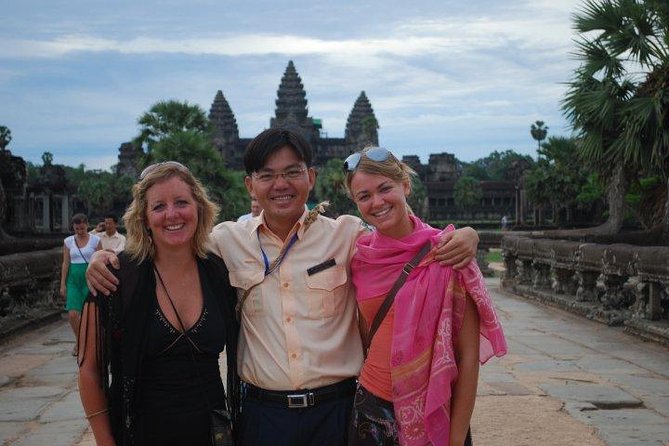
Angkor is too large and too important to treat as a quick photo stop. This eight-hour private tour gives you a clear route through the main temples, beginning at Angkor Wat before the day becomes hottest and busiest. Guide Bun Leat is frequently named in the tour’s service record, with strong praise for his history, religious context, patience, and help with photos.
I like the private air-conditioned vehicle, especially for the drives between temples and the hot middle of the day. I also like the guide-led approach: the carvings, towers, and ruined city walls make far more sense when someone explains the Hindu and Buddhist ideas behind them.
The main catch is cost. The tour is listed at $45 per person, but the one-day Angkor ticket costs another $37, and lunch is not included. You should also be ready for considerable walking, steps, heat, and a strict dress code.
Key points to know before booking
- Early Angkor Wat visit: The 7:30 AM start aims to reach the main temple while conditions are calmer and cooler.
- Private transport: Your group travels by air-conditioned car or minivan, with hotel pickup and return.
- Guide-led temple visits: Bun Leat is one of the guides associated with the experience and is praised for history, religion, restoration, and photography advice.
- Main Angkor circuit: The day includes Angkor Wat, Bayon, Angkor Thom, Ta Prohm, Baphuon, Baksei Chamkrong, Phimeanakas, the Royal Palace area, and the Royal Terraces.
- Extra cost to budget: The $45 tour price does not include the $37 one-day temple ticket or lunch.
- Flexible food needs: A vegetarian lunch option is available if you request it when booking.
Angkor Wat first, before the heat takes over
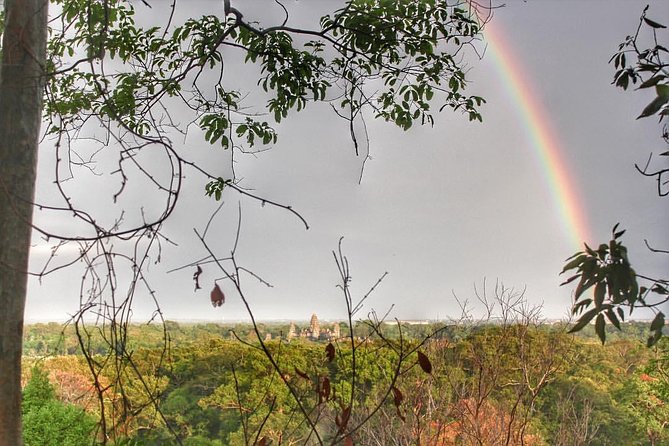
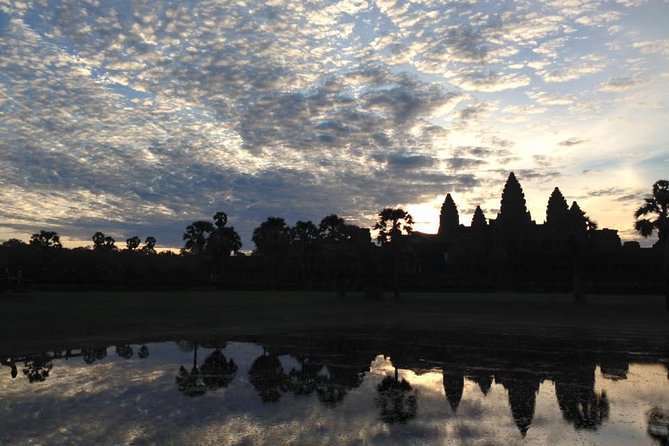
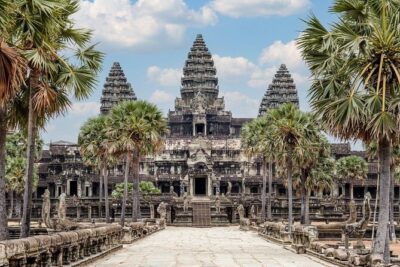
The day begins at about 7:30 AM, with transport from your hotel or the listed meeting point at Royal Angkor Resort on National Road 6. The first major stop is Angkor Wat, the temple most people picture when they think of Cambodia.
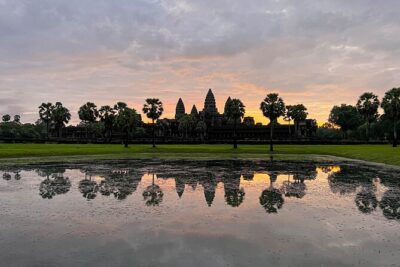
That early timing matters. Angkor Wat is vast, and its long galleries, courtyards, towers, and stone steps take time to appreciate. Starting early gives you a better chance of seeing the complex before the strongest heat of the day. The tour does not advertise a sunrise departure, so you should not book it expecting a sunrise program. It is an early morning visit, not a sunrise package.
A guide is especially useful here. Angkor Wat is not simply a single stone building. Its walls carry scenes from Hindu mythology and royal life, while its layout reflects religious ideas about the universe. Without context, you may admire the scale but miss the meaning behind the carvings and towers.
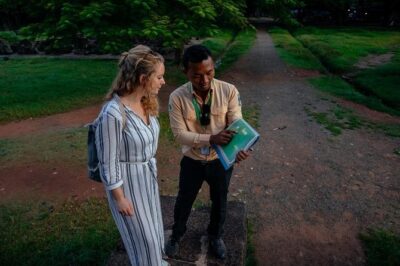
Bun Leat is named in several accounts connected with the tour. His strongest qualities are his explanations of history, Hinduism, Buddhism, temple design, and restoration. He is also noted for suggesting good camera angles and taking photos for visitors, a small service that can be valuable when you are traveling as a couple or family and want everyone in the picture.
Expect some steps and uneven ground. You will want shoes with a firm sole, water, and clothing that covers your shoulders and knees. Bottled water is supplied, but you should still dress for a long, warm day outdoors.
A few more Siem Reap trips to weigh up
- 1-Day Amazing Angkor Wat Tour with Sunset & All Interesting Major Temples
★ 5.0 · 308 reviews - Angkor Wat one Day Private Tour for All Highlight Angkor Temples
★ 5.0 · 199 reviews - 1-Day private Angkor Temple Tour from Siem Reap
★ 4.9 · 178 reviews
Baksei Chamkrong and the move toward Angkor Thom
After Angkor Wat, the route heads north to Baksei Chamkrong. This smaller pyramid temple was built in the 10th century and is dedicated to Shiva. It is a useful contrast to Angkor Wat because it offers a more compact example of the temple-mountain idea.
The tour description places its construction in 947 AD under Harshavarman I, with completion under Rajendravarman II. Your guide can help connect this structure to the larger development of Khmer temple design. Its stepped pyramid shape also makes it easy to compare with pyramid temples elsewhere, including those at Tikal in Central America.
Baksei Chamkrong is not likely to occupy as much time as Angkor Wat or Ta Prohm. That is part of its value. You get a quieter architectural stop and a chance to focus on form, elevation, and religious purpose without facing the scale of the main monuments.
The route then continues toward Angkor Thom, the ancient walled city. The change is important. You are moving from a major temple complex into the remains of a royal urban center, where roads, gates, terraces, and temples once worked together as part of a much larger capital.
Bayon’s smiling faces and Angkor Thom’s royal center
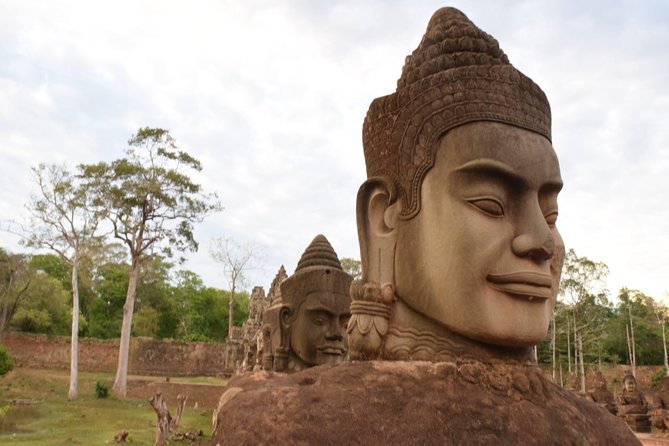
Bayon sits near the center of Angkor Thom and is famous for its towers carved with large smiling faces. The faces are the visual high point of this part of the tour, but they are only one reason to spend time here.
The temple can feel confusing at first. Towers rise at different levels, passages turn sharply, and carved galleries compete for your attention. This is where a good guide earns the fee. Bun Leat is praised for explaining the cultural and religious setting of the temples rather than simply naming each structure.
Look closely at the bas-reliefs. They show scenes of warfare, daily life, processions, and royal power. The carvings help you picture the people who used this city, not just the rulers who ordered its construction. A guide can also explain how the religious character of the site changed over time as Hindu and Buddhist traditions shaped the temples.
Nearby, the itinerary includes Baphuon, Phimeanakas, the Royal Palace area, and the Royal Terraces. These stops are less instantly recognizable than Bayon, but together they show how Angkor Thom functioned as a capital.
Baphuon is a large temple-mountain with a strong sense of height and scale. Phimeanakas is linked with the former royal center, while the Royal Terraces give you another view of the ceremonial side of Angkor Thom. The itinerary does not promise equal time at every site, so the exact pacing may depend on traffic, walking speed, heat, and your guide’s judgment.
That is one reason a private tour is useful. You are not locked into a large group’s pace. At the same time, an eight-hour schedule covering so many places can feel full. If you want long photography sessions at every temple, this route may feel rushed. If your priority is seeing the major sites in one day, the broad coverage makes sense.
Ta Prohm, where trees and stone share the frame
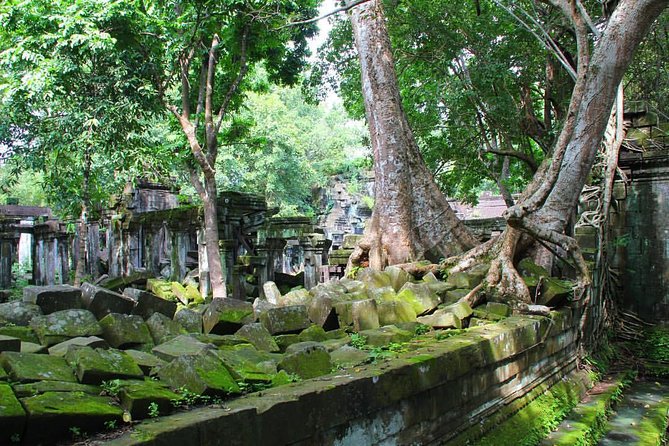
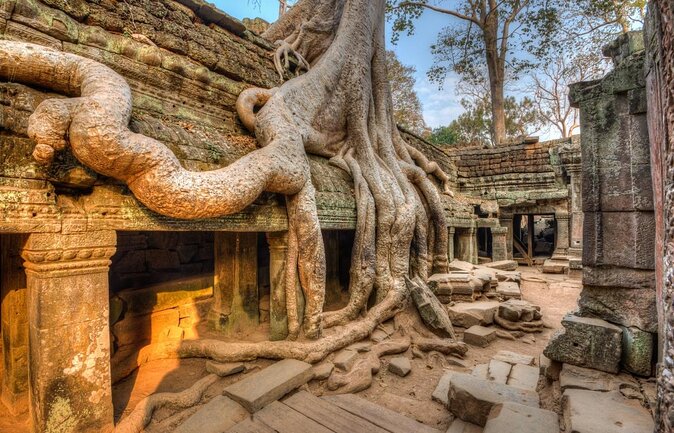
Ta Prohm is one of the most memorable stops because parts of the temple remain wrapped in the roots and branches of large trees. The effect is dramatic, but the site is more than a photogenic ruin.
The temple gives you a direct sense of age, weather, repair, and the tension between preservation and nature. Stone galleries have collapsed in places, roots cross walls, and narrow passages create a very different mood from Angkor Wat’s open courtyards.
Your guide can help separate fact from postcard image. Restoration work is a recurring theme in the guide’s commentary, and the temple offers a practical example of the challenge. Authorities must protect the structure while retaining the appearance that makes Ta Prohm so memorable.
Ta Prohm is also a place where patience helps. You may find narrow areas and busy photo spots, so allow time to look beyond the most famous tree-covered sections. The tour’s private format should make it easier to pause briefly, though the full route still has several major stops to cover.
The itinerary also includes the Royal Terraces, which add another ceremonial and architectural layer to the day. By this point, you may be feeling the heat, so the return to the air-conditioned vehicle and the supply of bottled water are more than minor comforts.
Same country, a completely different kind of day:
- Angkor Wat Sunrise or Sunset Tour with Guide from Siem Reap
★ 5.0 · 12,109 reviews - Siem Reap: Angkor Wat: Small-Group Sunrise or Sunset Tour
★ 5.0 · 9,444 reviews - From Siem Reap: Kampong Phluk Floating Village Tour by Boat
★ 4.9 · 6,979 reviews - Sunset tour of Kampong Phluk stilts home village on the Tonle Sap
★ 5.0 · 4,865 reviews
What the private car changes during an eight-hour day
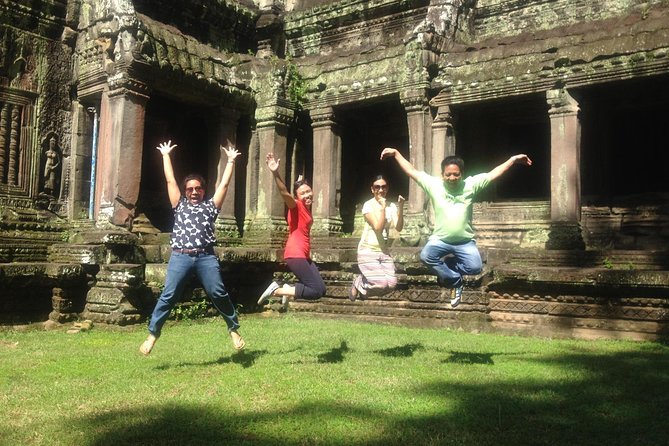
The vehicle is one of the tour’s practical strengths. Angkor’s temples are spread across a large archaeological park, and walking between all of these sites is not realistic during a one-day schedule. The air-conditioned car or minivan gives you a place to cool down between visits.
Hotel pickup and drop-off remove another minor problem. You do not need to arrange separate transport to the park or find your way back after a tiring afternoon. The listed start and end point is Royal Angkor Resort, but the experience also states that hotel pickup is provided, so confirm the exact pickup details when booking.
This is a private activity, meaning only your own group participates. That matters if you are traveling with family, need a slower walking pace, or want to ask detailed questions. It also means you should not expect the price or schedule of a large shared bus tour.
The vehicle includes bottled water and local taxes. Some service accounts also emphasize cold water, cold towels, a clean vehicle, and strong air-conditioning, but you should treat those as service details associated with particular bookings rather than a formal promise of every item. Bottled water and air-conditioned transport are clearly included.
Lunch is taken at a restaurant stop, but the meal itself is not part of the $45 price. You will need cash or another accepted payment method for food. Vegetarian food is available if requested at booking, which is useful if you have a specific diet.
The real price, and what you receive for it
At $45 per person, the tour initially looks inexpensive for a private full-day outing. The important calculation is the extra temple pass. The one-day Angkor ticket costs $37 per person, bringing the known total to $82 before lunch and any tip.
That still may be fair value if you want a private car, a guide, hotel transfers, and a carefully planned route through the major sites. Hiring transport and a guide separately can be less convenient, and the educational side of the day is a major part of what you are paying for.
The value is strongest for first-time visitors. Angkor is not difficult to admire, but it can be difficult to organize. You need to understand the temple layout, judge walking distances, manage heat, and choose which sites fit into one day. This tour handles those decisions for you.
The price is less attractive if you already know the temples well or prefer to spend a full morning at one site. You also need to compare it with the cost of a larger group tour, which may offer a lower base price but less control over timing and stops.
Tips are optional. The tour information says to tip if you like the service, so you can decide at the end based on the guide’s effort, clarity, and care.
Clothing, fitness, and the small details that matter

A strict dress code applies at places of worship and selected museums. Both men and women must cover their knees and shoulders. Shorts and sleeveless tops can result in refused entry, so do not rely on being able to wrap a scarf around yourself at the last minute.
You should have a moderate level of physical fitness. The day includes walking over uneven surfaces and visiting temples with steps. The information does not give a precise step count or accessibility plan, so anyone with mobility concerns should ask the provider before booking.
The tour operates daily from 7:00 AM to 3:00 PM according to the supplied schedule, while the stated tour itinerary begins around 7:30 AM and lasts about seven to eight hours. Confirm the exact pickup time, since hotel location and operating arrangements can affect the start.
Free cancellation is available when you cancel at least 24 hours before the experience begins. Changes or cancellations made less than 24 hours before the start are not accepted for a refund, and the cut-off follows local time.
Who should book this Angkor day tour?
I would choose this tour if you have one full day in Siem Reap and want the major temples explained rather than simply photographed. It suits couples, families, and small private groups who value a car, hotel transfers, and the chance to ask questions as they go.
It is also a good fit if you want cultural context. The strongest guide feedback centers on explanations of Hinduism, Buddhism, temple construction, restoration, and the stories connected with the carvings. That is much more useful than a guide who only points out the best camera angle.
You may want another plan if you dislike early starts, prefer a slow schedule, or want to explore every temple at length. The route is ambitious for one day. It gives you broad coverage, but you will not have unlimited time at every stop.
Should you book it?
Book this one-day Angkor tour if your goal is to see the essential temples with a private vehicle and a guide who can explain what you are looking at. The combination of Angkor Wat, Bayon, Angkor Thom, Ta Prohm, and the smaller royal sites gives you a useful first look at the park.
Before paying, budget for the separate $37 temple pass and lunch. Confirm your pickup location, request vegetarian food if needed, and pack clothing that covers your knees and shoulders. If Bun Leat is available for your date, his reported strengths in history, religion, restoration, patience, and photography would make him a particularly good match for a first visit.
FAQ
How long does the Angkor tour last?
The tour lasts approximately seven to eight hours. The stated itinerary begins around 7:30 AM.
What temples are included?
The route includes Angkor Wat, Baksei Chamkrong, Bayon, Angkor Thom, Baphuon, Phimeanakas, the Royal Palace area, Ta Prohm, and the Royal Terraces.
Is hotel pickup included?
Yes. Hotel pickup and hotel drop-off are included. The listed meeting point is Royal Angkor Resort on National Road 6 in Siem Reap.
Is the Angkor temple ticket included in the $45 price?
No. The one-day ticket costs an additional $37 per person.
Is lunch included?
No. The tour stops at a restaurant where you can purchase lunch. A vegetarian option is available if you request it when booking.
Is this a private or shared tour?
It is a private activity. Only your own group participates.
What clothing is required?
You must cover your knees and shoulders at places of worship and selected museums. Shorts and sleeveless tops are not allowed, for both men and women.
Just added around Siem Reap
- Ultimate Sunrise to Angkor Wat, Angkor Thom and Bayon Temple★ 5.0 · 3 reviews
- Twilight Tastes of Siem Reap Include Dinner★ 5.0 · 13 reviews
- Trekking Tour at Phnom Kulen National Park from Siem Reap★ 5.0 · 3 reviews
- Full-Day Private Tour of Angkor Wat with Pick Up★ 5.0 · 12 reviews
- Private Day Trip to Angkor Temples with Expert Guide★ 5.0 · 4 reviews
- Waterfall & River of 1000 Siva Linga- Kulen Mountain Private Tour★ 5.0 · 3 reviews
- Professional Photo Shoot in Angkor Archaeological Park, Siem Reap★ 5.0 · 42 reviews
- Ultimate Siem Reap Food Tour by Tuk Tuk – 20 Tastings, 8 Stops★ 5.0 · 13 reviews
1-Day Tours, compared.
1-Day Amazing Angkor Wat Tour with Sunset & All Interesting Major Temples
Read our review →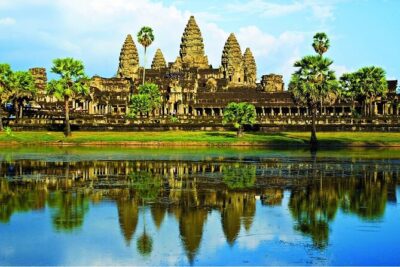
Angkor Wat one Day Private Tour for All Highlight Angkor Temples
Read our review →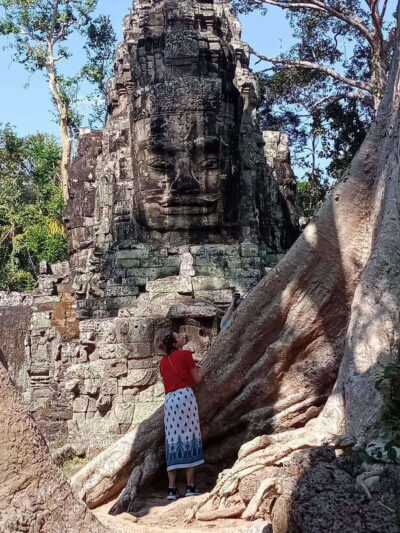
1-Day private Angkor Temple Tour from Siem Reap
Read our review →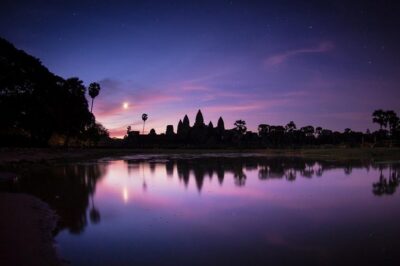
1-Day Angkor Wat Sunrise & All Interesting Temples Private Tour
Read our review →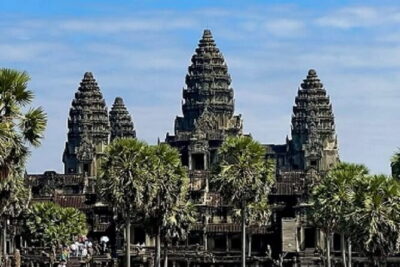
Angkor Wat Sunrise Small-Group 1-Day Tour from Siem Reap
Read our review →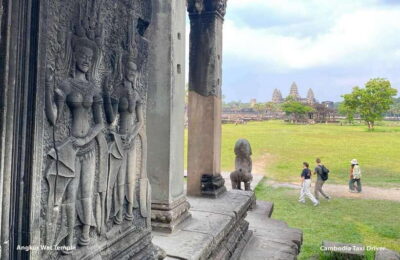
Browse the lists this tour appears in