
Reviewed · ANGKOR WAT TOURS
Angkor Wat Cycling Tour
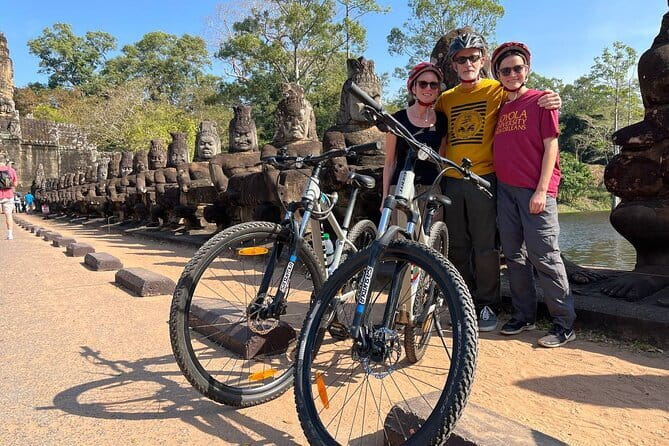
Angkor Wat feels different from a bicycle. Instead of moving from temple to temple in a car, you travel through the trees, take quieter paths, and see parts of the park that many people miss. The route includes Angkor Wat, Bayon, Ta Prohm, and Ta Nei, plus smaller ruins and rural backroads.
I especially like the private format and the chance to adjust the pace. Guide Mr K is praised for keeping riders comfortable, offering good bikes, and taking groups beyond the standard temple circuit. You should know, though, that six to eight hours of cycling in Cambodia is a long morning and afternoon, especially in heat.
Key points to know before booking
- Private ride with Mr K: Only your group takes part, allowing the pace and amount of cycling to be adjusted.
- A quieter way to see Angkor: Forest trails and backroads help you avoid spending the whole day beside tour vehicles.
- The major temples are covered: Angkor Wat, Bayon, Ta Prohm, Chau Say Tevoda, and Ta Nei are all on the route.
- Useful inclusions: Hotel pickup and drop-off, mountain bike, helmet, English-speaking guide, and cold drinking water are provided.
- The temple pass costs extra: The tour price is $45 per person, but the Angkor Temple Pass is listed separately at $37.
- Plan for a full day: Pickup is scheduled for 7:30 am, and the experience lasts about six to eight hours.
Why cycling changes your day at Angkor
Angkor is not one isolated temple. It is a large archaeological park filled with major monuments, smaller ruins, forest roads, gates, reservoirs, and traces of an old Khmer capital. A vehicle gets you between the famous sites quickly, but a bicycle lets you feel the space between them.
I like that difference. You can ride under the trees, stop near a lesser-known structure, and approach the temples without the steady rhythm of getting in and out of a van. The route also uses backroads through the Angkor area, giving you a look at rural life beyond the postcard views.
The cycling is described as leisurely, not competitive. Still, the schedule is long. The listed stops alone add up to roughly eight hours, while the advertised duration is six to eight hours, so the exact pace will depend on breaks, riding speed, and how long you spend at each temple.
This works best if you already enjoy riding a bike for several hours. It is less suitable if you want a short sightseeing outing with very little physical effort. You do not need to race, but you should be ready for a full day outdoors.
More Angkor Wat Tours in Siem Reap:
- Angkor Wat Sunrise or Sunset Tour with Guide from Siem Reap
★ 5.0 · 12,109 reviews - Siem Reap: Angkor Wat: Small-Group Sunrise or Sunset Tour
★ 5.0 · 9,444 reviews - Siem Reap: Angkor Wat 2-Day Tour with Sunrise and Sunset
★ 4.9 · 4,429 reviews
Starting at 7:30 am from your hotel
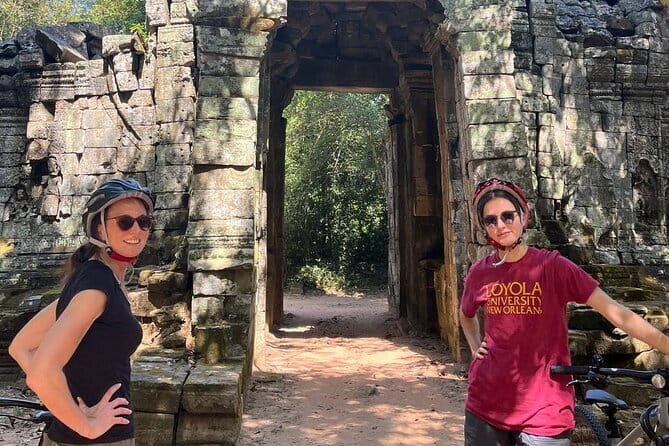
The day begins with pickup from your hotel in Siem Reap at 7:30 am. Hotel pickup and drop-off are included, which removes one practical chore from your morning. You do not need to arrange a separate tuk-tuk transfer to the meeting point.
The early start matters at Angkor. It gives you a useful head start before the day becomes hotter and helps make the cycling more pleasant. The route is private, so your guide can keep the pace comfortable for your own group instead of matching a large party.
Mr K is the guide name most closely linked with this experience. The supplied information also includes a response signed Kosorl, so the exact guide may depend on the booking. Either way, the important point is that this is a guide-led private ride, not a simple bicycle rental.
You receive a mountain bike and helmet, along with cold drinking water. Several accounts specifically praise the bike quality and the sense of safety provided by the helmets. That matters here. A bicycle is only an advantage if it is comfortable and dependable for hours on mixed routes.
Angkor Wat, the grand opening stop
The first major stop is Angkor Wat, the best-known temple in Cambodia and the largest monument in the Angkor complex. It was built between 1113 and 1150 during the reign of Suryavarman II and reaches about 65 meters at its highest point.
You are scheduled to spend about two hours here. That is enough time to see the main parts at a measured pace, though the temple is large enough that you could easily spend much longer. Cycling gets you to the monument without using your energy on the approach, leaving more strength for the galleries, towers, and courtyards.
Angkor Wat is the most famous stop, so it can also be the busiest. The bike does not make the central temple quiet, but it helps you reach it as part of a broader day rather than treating it as the only destination.
The admission ticket is not included. The listed price is $45 per person, and the Angkor Temple Pass is an additional $37 per person, making the basic combined cost $82 before any other personal spending. That total is important when comparing this tour with a vehicle-based outing.
Bayon and the gates of Angkor Thom
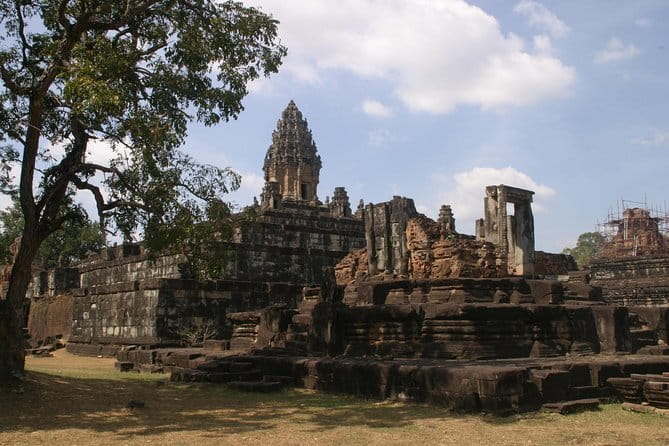
The route then continues to Bayon, a late 12th or early 13th-century Buddhist temple built during the reign of Jayavarman VII. Its towers are known for large carved faces, and the description gives the traditional count of 54 towers representing the provinces of the Khmer Empire.
Two hours are allocated for Bayon. This is generous compared with the 30-minute stop at the East Gate later in the day. I like that the schedule gives you time to look closely rather than limiting the temple to a quick photo stop.
Bayon can feel confusing at first because its towers, galleries, and faces form a dense stone maze. A guide is especially useful here. You can ask about the layout and religious changes instead of simply circling the monument and moving on.
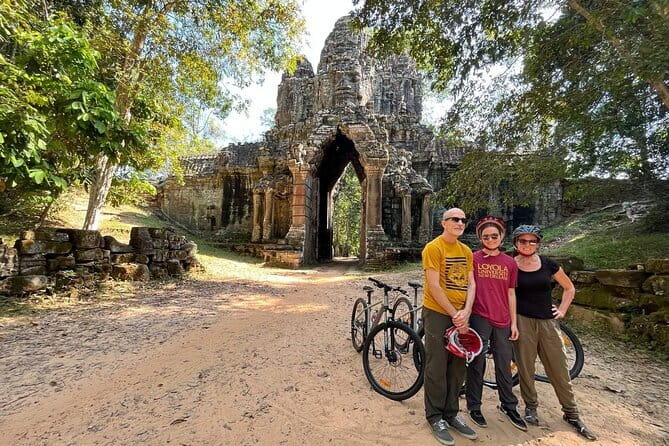
The itinerary later lists another Bayon stop, but the description is actually for Angkor Thom’s East, or Death, Gate. This is one of five gates guarding the ancient city. It was built during Jayavarman VII’s rebuilding of Angkor Thom in the late 12th century.
That 30-minute gate visit is a good example of what cycling adds. You are not only checking off the headline temples. You are also seeing the gateways and routes that explain how the ancient city was organized.
A few more Siem Reap trips to weigh up
- Siem Reap Countryside Bike Tour / E-Bike or Tuk Tuk
★ 5.0 · 935 reviews - Angkor Sunrise Bike Tour / E-Bike or Tuk Tuk
★ 5.0 · 615 reviews - Siem Reap: Bike the Angkor Temples – Full-Day 30km Tour
★ 5.0 · 463 reviews - Siem Reap: Angkor Wat Sunrise Bike Tour & Jungle Breakfast
★ 5.0 · 415 reviews
Chau Say Tevoda and the smaller temples
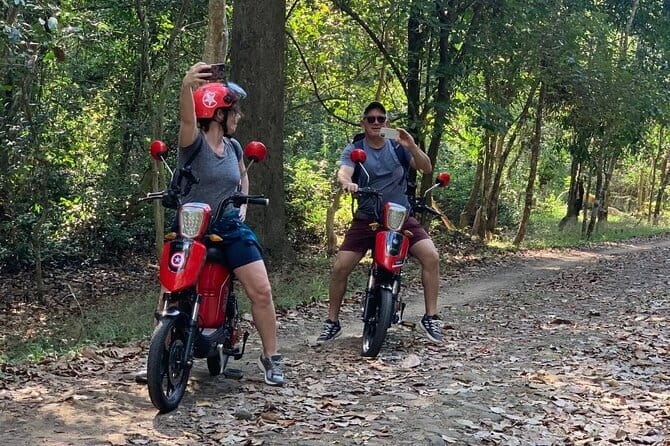
Chau Say Tevoda receives about 30 minutes. This Hindu temple lies just east of Angkor Thom, south of Thommanon across Victory Way, and dates from the middle of the 12th century, during the Angkor Wat period.
It is much smaller than Angkor Wat and Bayon. That is part of its appeal. You can take in the form of the temple without the scale of a huge complex demanding all your attention. The short stop also keeps the day moving.
The tour’s smaller sites are valuable for another reason: they break up the standard sequence of major monuments. If you have already seen Angkor Wat from a car, cycling to a quieter temple gives the day a different feel.
The route also passes through parts of the park where temples have been reclaimed by trees and where you can see rural life. The exact amount of off-road riding depends on conditions and the guide’s judgment, so do not assume every meter is a smooth paved cycleway. The experience is built around quieter tracks, forest routes, and backroads rather than a single uniform surface.
Ta Prohm and the trees around it
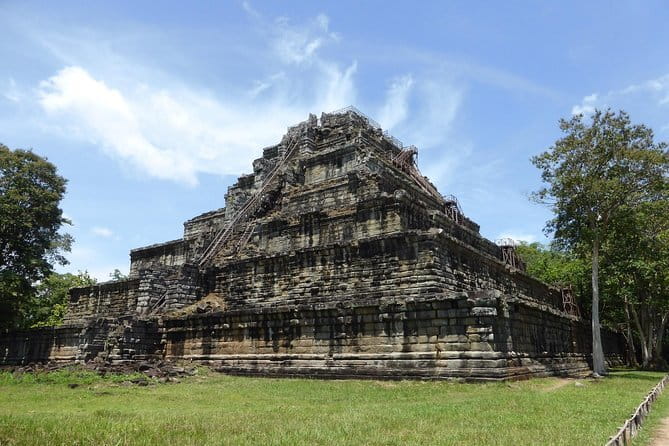
Ta Prohm is scheduled for two hours, making it one of the main stops. Jayavarman VII built it in the late 12th century and dedicated it to his mother in 1186. It began with a Buddhist purpose and was later changed to Hindu use.
Ta Prohm is famous for its trees growing around and over the stonework. The forest setting gives it a very different mood from the open scale of Angkor Wat and the crowded towers of Bayon. You will want time here, and the two-hour allocation is sensible.
This is also another busy stop. A bicycle helps you approach through the surrounding forest, but it cannot remove the crowds inside the best-known sections. Go in expecting a famous monument, not a deserted ruin.
The physical rhythm of the day works well here. After walking through a major temple, you get back on the bike and move through the trees. That change of posture can be welcome. One account specifically valued cycling as a way to stretch the legs and break up a full day of temple walking.
Ta Nei, the quietest stop on the route
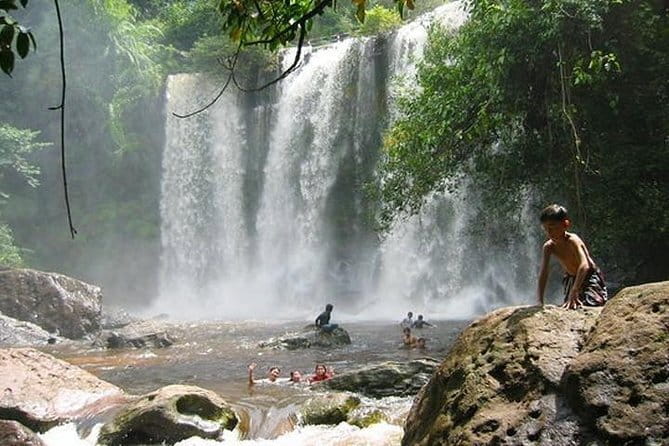
Ta Nei receives about an hour and may be the most appealing stop for anyone who wants something beyond the standard Angkor circuit. It is a late 12th-century stone temple built during Jayavarman VII’s reign and dedicated to the Buddha.
The ride to a smaller, forested temple is where this experience earns its keep. You get a closer sense of Angkor as a wide area filled with ruins, not just a chain of famous photo locations. The route through jungle and lesser-seen parts has been described as an adventure, but the tour remains presented as leisurely.
Do not expect Ta Nei to offer the scale of Angkor Wat or the carved faces of Bayon. Its value is atmosphere and setting. I would treat it as the reward for choosing a bicycle instead of a straightforward vehicle loop.
The one caution is that the less-used routes may feel more demanding than the main roads. The tour provides mountain bikes and helmets, but you should still be comfortable riding for long periods and following your guide through changing conditions.
What the $45 price really covers
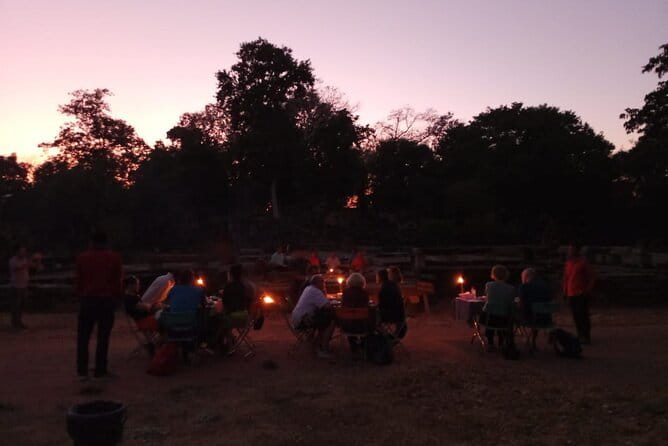
At first glance, $45 is a moderate price for a six to eight-hour private experience. The value becomes clearer once you separate what is included from what is not.
Your price covers:
- English-speaking guide
- Hotel pickup and drop-off
- Mountain bike
- Helmet
- Cold drinking water
- Private participation for your group
The Angkor Temple Pass is extra at $37 per person. That brings the known total to $82 per person. Since the pass is required separately, include it in your budget from the start rather than treating the tour price as the whole cost.
For a private group, the price can make sense if you care about the route and want personal attention. You are paying not just for transportation, but for the bikes, guide, planning, and access to a slower way of moving around the park.
A large group tour may cost less, but it will not offer the same control over pace. A private car may be easier on your legs, but it loses some of the quiet movement that makes this outing different. The best value depends on what you want the day to feel like.
Some trip accounts also refer to a private restaurant and a relaxing massage, but those extras are not listed among the formal inclusions. Do not assume they are part of the $45 price unless the operator confirms them before booking.
Who will enjoy this ride most
I would recommend this tour to confident recreational cyclists, couples, families who regularly ride, and anyone who wants to see Angkor beyond the main road. It is also a good choice if you have already visited the major temples and now want a more personal route through the park.
The private format helps families and mixed-ability groups. The guide can adjust the amount of cycling, according to the information provided about Mr K. That does not turn the trip into a no-effort outing, but it gives you more flexibility than a fixed large-group schedule.
I would be cautious if you dislike heat, struggle with several hours of riding, or want air-conditioned transport between temples. The tour is leisurely in pace, yet long in duration. You will still spend much of the day outside and on your feet at the monuments.
Most people can participate, according to the tour information, but that broad statement should not replace your own judgment. If you are unsure about the distance or route, ask the operator how much riding is planned for your date.
Practical details that affect your decision
The experience is available with mobile ticketing, and confirmation is received at booking. It is a private activity, so only your group takes part.
Free cancellation is available up to 24 hours before the start time for a full refund. Cancellations or changes made within 24 hours are not refunded or accepted, and the cut-off follows local time in Siem Reap.
You should also remember the simple basics: wear clothes suited to cycling, allow room for temple visits, and plan around a morning departure. The supplied water is useful, but the long duration makes it sensible to take the day seriously rather than treating this as a short spin.
I would confirm the meeting time, expected riding distance, and guide name before setting out. The material identifies Mr K most often, but the responses also use the name Kosorl, so it is worth checking who will lead your group.
Should you book the Angkor Wat Cycling Tour?
Book it if you want Angkor to feel like a place, not just a list of temples. The combination of major monuments, forest paths, gates, smaller ruins, and rural backroads gives you a fuller sense of the park than a quick vehicle circuit.
The strongest reasons to choose it are the private format, high-quality bikes, helmet, hotel transfers, and the chance to reach quieter sites such as Ta Nei. Mr K is repeatedly singled out for friendliness, care, timing, and the ability to adapt the ride.
Skip it if you want the easiest possible sightseeing day. The $45 price is reasonable for a private guided ride, but the additional $37 temple pass brings the known total to $82, and the six to eight-hour schedule requires stamina.
For an active visitor who wants a quieter and more flexible way to see Angkor, this is a strong choice. For everyone else, a car-based temple tour may be more comfortable.
FAQ
What time does the Angkor Wat Cycling Tour begin?
Pickup from your hotel is scheduled for 7:30 am.
How long does the cycling experience last?
The tour lasts approximately six to eight hours.
Is the Angkor Temple Pass included?
No. The Angkor Temple Pass costs an additional $37 per person.
What equipment is provided?
A mountain bike, helmet, and cold drinking water are included.
Is hotel transportation included?
Yes. Pickup and drop-off at your hotel are included.
Is this a private tour?
Yes. Only your group participates in the activity.
Just added around Siem Reap
- Ultimate Sunrise to Angkor Wat, Angkor Thom and Bayon Temple★ 5.0 · 3 reviews
- Twilight Tastes of Siem Reap Include Dinner★ 5.0 · 13 reviews
- Trekking Tour at Phnom Kulen National Park from Siem Reap★ 5.0 · 3 reviews
- Full-Day Private Tour of Angkor Wat with Pick Up★ 5.0 · 12 reviews
- Private Day Trip to Angkor Temples with Expert Guide★ 5.0 · 4 reviews
- Waterfall & River of 1000 Siva Linga- Kulen Mountain Private Tour★ 5.0 · 3 reviews
- Professional Photo Shoot in Angkor Archaeological Park, Siem Reap★ 5.0 · 42 reviews
- Ultimate Siem Reap Food Tour by Tuk Tuk – 20 Tastings, 8 Stops★ 5.0 · 13 reviews
Angkor Wat Tours, compared.

Angkor Wat Sunrise or Sunset Tour with Guide from Siem Reap
Read our review →
Angkor Wat: Small-Group Sunrise or Sunset Tour
Read our review →
Angkor Wat 2-Day Tour with Sunrise and Sunset
Read our review →

Angkor Wat Sunrise tour with Small – Group and Guide tours
Read our review →
Angkor Wat Highlights and Sunrise Guided Tour from Siem Reap
Read our review →
Angkor Wat Sunset Small Group Tour with Lunch Included
Read our review →
Full-Day Angkor Wat Sunrise Private Tour with Guide from Siem Reap
Read our review →Browse the lists this tour appears in