
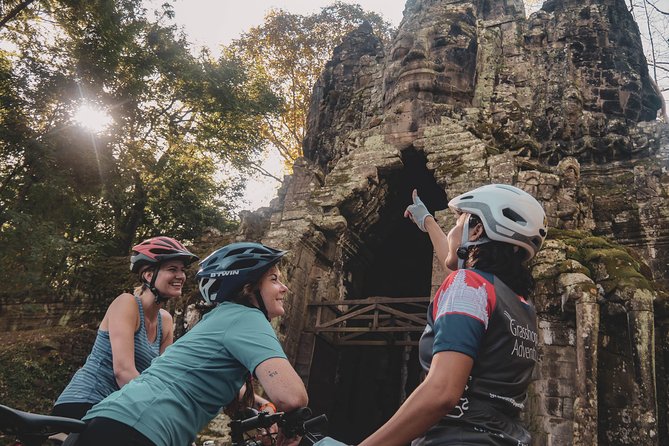
Reviewed · ANGKOR WAT TOURS
Siem Reap: Bike the Angkor Temples – Full-Day 30km Tour
Angkor is enormous, and a bicycle lets you understand its scale in a way a car cannot. This full-day ride links Angkor Wat, Bayon, and Ta Prohm with forest paths, village roads, and quiet corners of the park. You are not simply being driven from one monument to the next.
I like the small-group feel, capped at 10 people, and the careful support from the guides and assistant riders. I also like the practical touches: well-maintained mountain bikes, helmets, cold water, fruit, lunch if selected, and even a coconut drink at the finish.
The catch is the distance and heat. You will ride about 25 to 30km, sometimes over sand, bumps, and dirt trails. It is manageable for most reasonably active people, but this is not a gentle sightseeing ride with a bicycle used only for a few photographs.
Key points at a glance
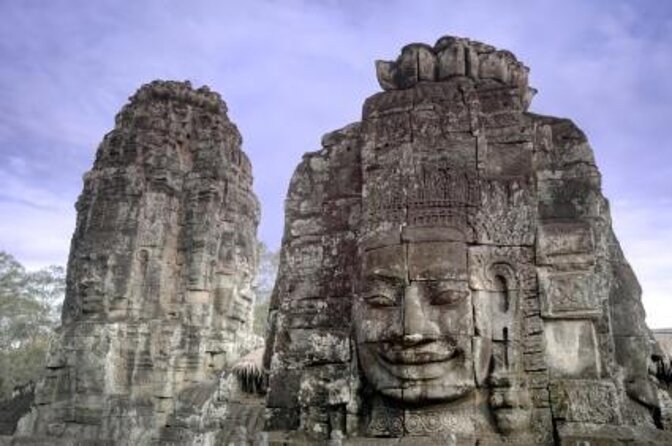
- Three major temples by bike: Visit Angkor Wat, Bayon, and Ta Prohm, with time to walk around each site.
- Back roads through rural Cambodia: Ride forest tracks, village lanes, and countryside routes that cars often bypass.
- A real full-day workout: Expect 8 hours 30 minutes and roughly 15 to 18 miles of cycling.
- Small groups with safety support: The maximum is 10 people, and guides may ride at the front and back.
- Lunch and refreshments matter: Water, fruit, snacks, and an optional Khmer lunch help you cope with the heat.
- Bring temple-appropriate clothing: Shoulders must be covered, and shorts or pants must reach at least the knee.
Why a bicycle works so well at Angkor
Angkor Archaeological Park covers a huge area, roughly half the size of New York City according to the tour description. Walking between its main sites is impossible in one day, while a vehicle can make the park feel like a series of disconnected stops.
A bicycle gives you a useful middle ground. You cover ground quickly, but you still notice the trees, old walls, local homes, small paths, and changing light between the temples. Riding through the gates of Angkor Thom is part of the experience, not just transport.
The route also gives you a look at everyday life beyond the monuments. You may pedal past village homes, farm yards, wooded tracks, and rice-growing areas. The setting changes slowly, which helps you understand that Angkor is not a single temple but a vast former city surrounded by living communities.
This is especially useful on a first visit. Your guide can explain how the temples fit together, point out carvings, and connect Cambodian history with present-day culture. Guides named in the tour feedback include Chen, Moon, Wich, Pat, Samnang Chan, Samie, Mun, Meun, Sunchen, and Sam. The exact guide depends on the date, but the strongest part of the experience is the personal explanation along the way.
More Angkor Wat Tours in Siem Reap:
- Angkor Wat Sunrise or Sunset Tour with Guide from Siem Reap
★ 5.0 · 12,109 reviews - Siem Reap: Angkor Wat: Small-Group Sunrise or Sunset Tour
★ 5.0 · 9,444 reviews - Siem Reap: Angkor Wat 2-Day Tour with Sunrise and Sunset
★ 4.9 · 4,429 reviews
Starting in Siem Reap at 7:30am
You meet at ផ្ទះគ្រូ Café, shown as 9VH7+X7G in Siem Reap, at 7:30am. You make your own way there, so hotel pickup and drop-off are not included. The tour finishes at the same meeting point.
At the bike shop, the guide gives a safety briefing and helps fit you with a mountain bike and helmet. The bikes are adjusted to your height, and the support team may include a second guide or mechanic. Several accounts describe the bikes as well maintained, with mountain-bike suspension useful on sandy or bumpy sections.
The group then rides toward the park entrance. Your guide helps you purchase the Angkor Pass there, but the pass is not included in the tour price. A one-day pass costs USD $37, so add that amount to the advertised $35 tour price when working out the real cost.
The opening ride includes public roads before the route turns toward forest and smaller tracks. The guides explain cycling pace and hand signals, an important detail because some of the early riding takes place near traffic. The aim is safe, steady progress, not racing.
Angkor Wat in the morning
Angkor Wat is the first major stop, and that is a sensible introduction to the park. Its towers, galleries, courtyards, and carved walls give you the grandest possible sense of Khmer temple building.
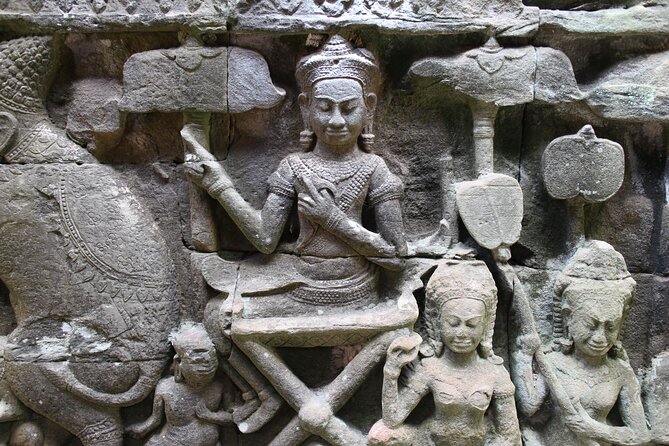
You get about an hour here, including time to leave the bike, walk through the complex, take photographs, and listen to the guide. The temple’s stone reliefs include scenes connected with the Hindu epic Ramayana, and the guide can help you notice details that are easy to miss when you explore alone.
Angkor Wat is also the busiest and most famous stop, so the hour can feel short if you want to examine every gallery. The advantage of the schedule is that you see the main monument without spending the entire day in one place.
Wear clothing that meets temple rules from the beginning. Sleeveless and see-through shirts are not allowed, and pants or shorts must reach at least the knee. A light, breathable top with covered shoulders and longer shorts or trousers will save you from scrambling to adjust your clothing at the entrance.
Bayon and the stone faces of Angkor Thom
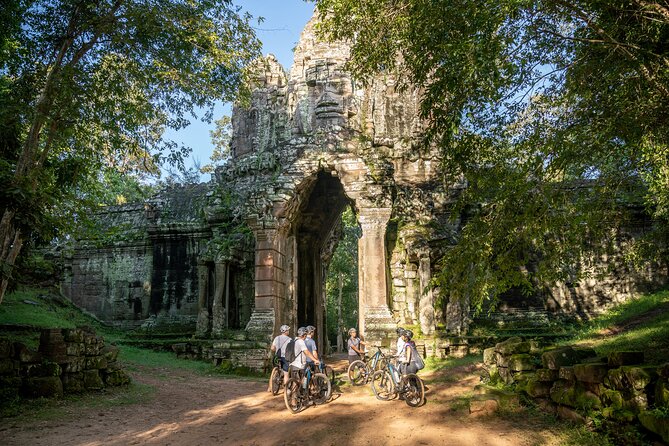
From Angkor Wat, the ride continues along the main road toward Angkor Thom. The approach is memorable: you pass large stone sculptures of divinities and demons, then cycle through the monumental gates of the ancient city.
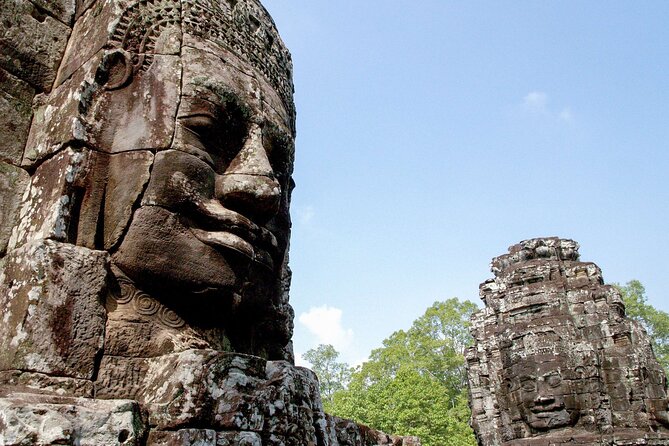
Bayon is the emotional center of this section. Its towers carry serene carved faces, often described as smiling bodhisattva faces. The towers seem to appear and disappear among the trees as you move around the temple, giving the visit a different mood from the open, formal layout of Angkor Wat.
The guide’s role is valuable here. Bayon can be confusing, with corridors and towers arranged in a dense plan. Historical explanations and stories give structure to what you are seeing instead of leaving you with a collection of impressive stone faces.
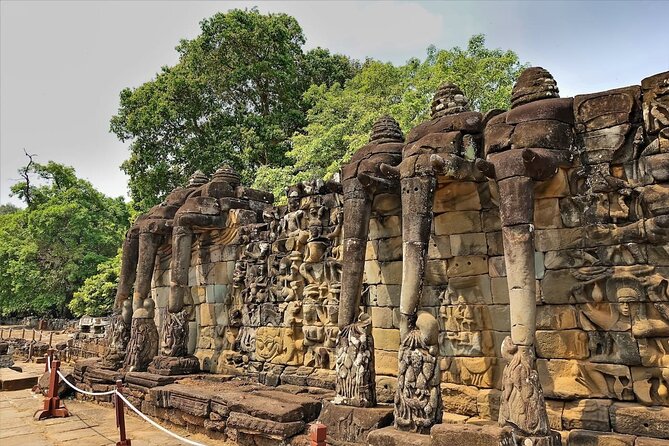
The stop also includes the Terrace of the Leper King, the Terrace of the Elephants, and the Royal Enclosure. These areas help show how Angkor Thom functioned as a royal city, not merely a group of religious buildings. You will have time to get off the bike, walk, and take photographs.
A few more Siem Reap trips to weigh up
- Siem Reap Countryside Bike Tour / E-Bike or Tuk Tuk
★ 5.0 · 935 reviews - Angkor Sunrise Bike Tour / E-Bike or Tuk Tuk
★ 5.0 · 615 reviews - Siem Reap: Angkor Wat Sunrise Bike Tour & Jungle Breakfast
★ 5.0 · 415 reviews - Siem Reap Countryside Quad Biking Tour
★ 5.0 · 322 reviews
Lunch near Srah Srang and the middle of the day
The itinerary allows about two hours around Srah Srang for lunch, snacks, and a break. If you choose the lunch option, a Khmer meal is arranged in advance. The food has been praised for generous portions, local dishes, and enough choice to suit different tastes. You should give dietary requirements when booking.
This pause is more than a pleasant extra. In Cambodia’s heat, a proper meal and time off the saddle can make the difference between enjoying the afternoon and counting the minutes until it ends. Fruit and snacks are provided, and cold bottled water is supplied during the ride.
You may also have time to purchase souvenirs along the route, although shopping is not the focus of the tour. The sensible approach is to use lunch as a real rest, drink more than you think you need, and avoid treating the second half as an afterthought.
The tour does not promise air-conditioned comfort. You eat local food during an active day, so the experience suits you best if you are happy with a simple, practical midday stop rather than a long restaurant meal.
Ta Prohm through forest tracks
The afternoon continues through wooded routes toward Ta Prohm. This is where the bicycle route earns its keep. You leave some of the more direct roads behind and ride through peaceful forest corridors and dirt tracks before reaching the temple.
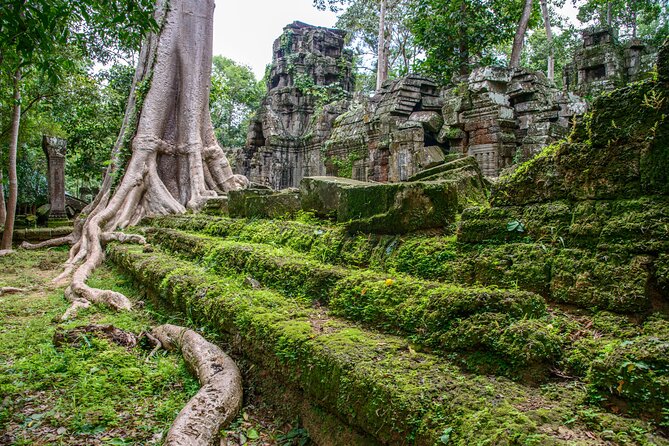
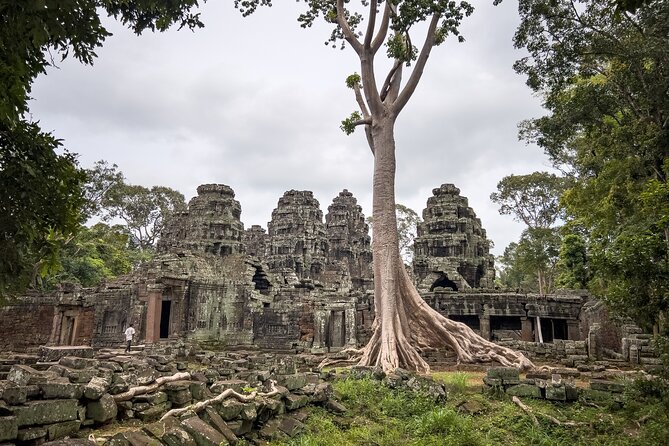
Ta Prohm is famous for its trees and roots growing over the stone ruins. Moss, shade, broken walls, and enormous root systems give the site a rougher, more atmospheric character than Angkor Wat. It is also one of the park’s most recognizable monuments, thanks to the way nature has become part of the structure.
You get about an hour to explore. The guide shares stories about the temple’s past, symbolism, and construction, while you walk through the courtyards and passages. The route can be more uneven here, so you should expect to leave the bicycle behind and take your time on foot.
Ta Prohm may be the highlight for you if you prefer texture and atmosphere over grand symmetry. If you want the clearest view of Khmer design, Angkor Wat is stronger. If you want a memorable meeting of trees and ruins, Ta Prohm is hard to beat.
The ride back through villages
After the temples, the return to Siem Reap follows small roads and village routes. This part is not filler. It gives you a glimpse of rural life and shows how quickly the setting changes once you leave the main monument circuit.
You may pass local homes, farm areas, forest, and open countryside. The road surface can vary, with some sandy or bumpy sections unsuitable for a complete beginner. One practical account noted that knees may feel tired after the rougher riding, even though the route is mostly flat.
The guides set a controlled pace and use hand signals on public roads. On some departures, one guide rides at the front and another stays behind the group. That arrangement is reassuring, especially if you are not used to cycling in Cambodia.
The tour returns to ផ្ទះគ្រូ Café in the mid to late afternoon, depending on pace and stops. Several accounts describe a cold coconut drink and, in some cases, a cold towel at the finish. You should expect to be comfortably tired rather than fresh for an evening of strenuous activity.
Fitness, heat, and the type of bike ride
The route is mostly flat, which removes the toughest obstacle. The real challenges are distance, heat, humidity, sand, and uneven trail surfaces. The ride covers approximately 15 to 18 miles, and the full program lasts about 8 hours 30 minutes.
You do not need to be a serious cyclist, but you should be comfortable riding for several hours. A family with children aged 11 and 13 completed the route, and a child seat can be requested for a child weighing up to 14kg. Still, the tour is not designed around very young children or people who rarely exercise.
A few simple preparations will help:
- Wear practical cycling clothes and sturdy shoes.
- Use sunscreen and bring a hat for walking at the temples.
- Choose longer shorts or trousers that meet the temple rules.
- Drink water regularly, not only when you feel thirsty.
- Expect dust, sand, sweat, and some bumps.
- Tell the operator about dietary needs when booking.
The heat deserves respect. A 35-degree day can make the final stretch feel long, even with regular water and a generous lunch. If you are unsure about your fitness, a private tour may give you more control over the pace, though the standard experience already aims for a relaxed rhythm.
How the $35 price works in practice
At $35 per person, this is good value for an active full-day tour, but the headline price does not cover everything. You must pay separately for the Angkor Pass, listed at $37 for one-day entry. Hotel transport is also not included.
The tour price does cover the bicycle, helmet, English-speaking guide, bottled water, fruit, and snacks. Lunch is included only if you select the lunch option. That distinction matters, so check the booking choice before you pay.
You are also paying for route planning and support. A self-guided bike rental may cost less, but it would not provide the same historical explanation, park navigation, safety guidance, or planned food and water stops. The tour also limits the group to 10 people, which is small enough for questions and basic personal attention.
For a first visit, I think the total cost is justified if you value context and want to see the countryside as well as the main monuments. If you only want a quick look at Angkor Wat and Bayon, a shorter vehicle tour may suit you better.
Small group or private booking
The shared tour has a maximum of 10 people, and the guide can usually keep the group together at a moderate pace. The small size helps at temple stops, where a very large group can make explanations hard to hear.
A private upgrade is available if you want undivided guide attention. That can be useful for families, strong and weak cyclists traveling together, or anyone with a particular interest in Cambodian history and temple architecture.
The strongest guide accounts describe lively explanations, patience, good humor, and careful attention to safety. Chen is praised for linking temple history with Cambodia’s wider story, while Moon is noted for taking care of lunch and making sure everyone was well fed. Wich, Pat, Samie, and others are also described as helpful and informative.
The guide makes a real difference because the ride is long. Good commentary breaks up the cycling, and a sensible pace keeps the day enjoyable. You can ask questions as you go rather than waiting for a formal lecture at each temple.
What this tour does better than a standard temple circuit
The obvious advantage is access to roads that cars and buses do not use. You see more of the area around Angkor, not just the monuments themselves.
The ride also gives the day a natural rhythm: cycle, explore, rest, eat, cycle again. You are active but not rushing from one photo stop to another. Riding beneath trees and through large gates makes the park feel connected.
The main tradeoff is time and effort. You will spend part of the day on the bicycle instead of inside temples. Some people find the route between stops a little long, especially in hot weather. The experience works best when you see the cycling as one of the main attractions, not as a price paid to reach Angkor Wat.
Should you book the Angkor bike tour?
Book it if you want a more active first look at Angkor, enjoy local roads, and can comfortably cycle 25 to 30km in hot conditions. It is particularly good for outdoor-minded couples, families with older children, and anyone who wants temple visits mixed with countryside scenery.
Think twice if you dislike heat, have knee problems, or want to spend every minute inside the monuments. The dirt and sandy sections are real, and the afternoon ride can be tiring.
For most reasonably fit visitors, I would choose the lunch option, arrive in practical clothing, and treat the ride as part of the cultural experience. The combination of major temples, village roads, reliable refreshments, and guides who explain both the stones and the country gives you far more than a simple bicycle rental.
FAQ
How far is the bike ride?
The ride covers approximately 15 to 18 miles, or 25 to 30km. Most of the route is flat, but some dirt trails, sandy sections, and bumpy roads can be challenging for beginning riders.
What temples are visited?
The main stops are Angkor Wat, Bayon Temple, and Ta Prohm Temple. The route also includes the Terrace of the Leper King, the Terrace of the Elephants, the Royal Enclosure, and the Srah Srang area.
Is lunch included?
Lunch is included only if you choose the with lunch option when booking. The meal is Khmer cuisine arranged in advance. Snacks, fruit, and bottled water are included.
Is the Angkor Pass included?
No. The Angkor temple complex entrance fee is separate. A single-day Angkor Pass is listed at USD $37, and the guide helps you purchase it at the park entrance.
Where does the tour start and finish?
The tour starts at ផ្ទះគ្រូ Café, 9VH7+X7G, Krong Siem Reap, at 7:30am. It ends back at the same meeting point. Hotel pickup and drop-off are not included.
What should I wear to the temples?
Sleeveless and see-through shirts are not permitted. Pants and shorts must reach at least the knee. Practical cycling clothes, proper shoes, sunscreen, and a hat are recommended for the ride and temple walks.
More Full-Day in Siem Reap
- Siem Reap: Full-Day Angkor Wat Guided Tour with Sunset
★ 4.9 · 3,803 reviews - Full-Day Angkor Wat Sunrise Private Tour with Guide from Siem Reap
★ 5.0 · 2,920 reviews - Siem Reap: Angkor Wat Sunrise and Full-Day Sightseeing Tour
★ 4.9 · 2,828 reviews - Full-Day Guided Sunset Tour of Angkor Wat
★ 5.0 · 1,507 reviews
Just added around Siem Reap
- Ultimate Sunrise to Angkor Wat, Angkor Thom and Bayon Temple★ 5.0 · 3 reviews
- Twilight Tastes of Siem Reap Include Dinner★ 5.0 · 13 reviews
- Trekking Tour at Phnom Kulen National Park from Siem Reap★ 5.0 · 3 reviews
- Full-Day Private Tour of Angkor Wat with Pick Up★ 5.0 · 12 reviews
- Private Day Trip to Angkor Temples with Expert Guide★ 5.0 · 4 reviews
- Waterfall & River of 1000 Siva Linga- Kulen Mountain Private Tour★ 5.0 · 3 reviews
- Professional Photo Shoot in Angkor Archaeological Park, Siem Reap★ 5.0 · 42 reviews
- Ultimate Siem Reap Food Tour by Tuk Tuk – 20 Tastings, 8 Stops★ 5.0 · 13 reviews
Angkor Wat Tours, compared.

Angkor Wat Sunrise or Sunset Tour with Guide from Siem Reap
Read our review →
Angkor Wat: Small-Group Sunrise or Sunset Tour
Read our review →
Angkor Wat 2-Day Tour with Sunrise and Sunset
Read our review →

Angkor Wat Sunrise tour with Small – Group and Guide tours
Read our review →
Angkor Wat Highlights and Sunrise Guided Tour from Siem Reap
Read our review →
Angkor Wat Sunset Small Group Tour with Lunch Included
Read our review →
Full-Day Angkor Wat Sunrise Private Tour with Guide from Siem Reap
Read our review →Browse the lists this tour appears in