
Reviewed · 3-DAY EXPERIENCES
Angkor Cab: Siem Reap 3 day private tour: ‘off the beaten track’
The best part of this three-day Siem Reap tour is its mix of famous temples and quieter corners. You get Angkor Wat at sunrise, but also Banteay Samre, Beng Mealea, and the old Roluos temples, with a private car, driver, and English-speaking temple guide keeping the pace under your control.
I like the small private group, which makes early starts and photo stops easier. I also like the practical comfort: bottled water is included, and one family booking used a private Lexus with the air-conditioning running before each departure. The main consideration is price. At $550 for up to three people, it is good value for a full group, but expensive for one person, especially since temple passes, meals, and some activity fees are extra.
Key points at a glance
- Five o’clock Angkor Wat start: See sunrise behind Cambodia’s most famous temple, then spend about three hours exploring the complex.
- Pink sandstone at Banteay Srei: This smaller temple is known for detailed carvings and makes a scenic first stop.
- Beng Mealea on a full-day outing: Allow about three hours at this partly ruined temple, plus roughly 90 minutes each way from Siem Reap.
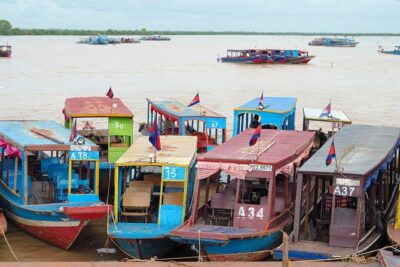
- Tonle Sap included: Spend about two hours at Southeast Asia’s largest freshwater lake, with activity fees not included.
- Early Khmer temples at Roluos: Bakong and Preah Ko offer a useful look at temple building before Angkor Wat.
- Flexible private touring: You can ask in advance for a different start time, finish point, or added destination.
A three-day plan that mixes icons and quieter temples
Siem Reap is the gateway to a huge group of temples. A first visit can easily become a blur of stone gateways, carved faces, long drives, and hot midday walks. This tour gives you a sensible spread over three days, with the biggest sights balanced by less crowded places.
The private format matters here. You are not locked into the pace of a large bus. You can ask for a slower temple visit, a shorter stop, or a different start and finish time if you arrange it ahead. The operator also says the route can be customized, though any added activities may cost more.
Transport is by private vehicle with a driver, and bottled water is included. The exact vehicle is not guaranteed in the details, but a family booking used a Lexus. You should still confirm the vehicle type if that matters to you, especially if you are traveling with three people and luggage.
The tour requires a moderate level of fitness. Expect uneven stone, outdoor heat, stairs or raised temple platforms, and plenty of walking. The early morning on Day 2 is the hardest part logistically, but it is also the day’s most memorable start.
A few more Siem Reap trips to weigh up
- From Siem Reap: Angkor Wat and Floating Village 3-Day Trip
★ 5.0 · 100 reviews - 3-Day Angkor Wat with All Interesting Major Temples, Banteay Srei & Beng Mealea
★ 5.0 · 70 reviews - 3-Day Angkor Wat & All Interesting Major Temples & Kulen Mount Waterfall
★ 5.0 · 63 reviews
Day 1: Banteay Srei and the eastern temple circuit
Banteay Srei, the small temple with fine pink carvings
The first stop is Banteay Srei, reached after about a 45-minute drive from your hotel. The route gives you a look at local activity outside the main tourist center before you arrive at the temple.
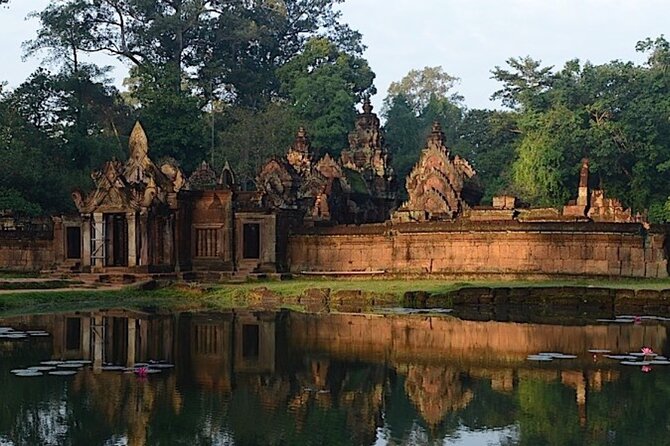
Banteay Srei dates from about the 10th century and is built from pink sandstone. Its scale is smaller than Angkor Wat, but the carving is remarkably detailed. This is the place to pay attention to lintels, pediments, door frames, and small figures rather than simply walking around a giant enclosure.
You get about an hour here. Admission is not included, so you need to budget separately for the required temple pass. A guide is especially useful at Banteay Srei because the decoration rewards close looking. Without some explanation, it can be easy to admire the patterns without understanding what you are seeing.
Banteay Samre, a quieter 12th-century stop
From Banteay Srei, the route continues to Banteay Samre. This temple was built in the 12th century and sits about 400 meters east of the East Baray, the large reservoir associated with the Angkor period.
The stop lasts about 45 minutes. That is enough for a focused visit, but not enough for a leisurely exploration of every corner. Banteay Samre is a useful contrast to the crowded headline sites because its compact layout is easier to take in.
The temple’s location also gives the day a more rural feel. You are not simply moving between the three most famous monuments. You are seeing how temple sites spread beyond the central Angkor circuit.
Same country, a completely different kind of day:
- Angkor Wat Sunrise or Sunset Tour with Guide from Siem Reap
★ 5.0 · 12,109 reviews - Siem Reap: Angkor Wat: Small-Group Sunrise or Sunset Tour
★ 5.0 · 9,444 reviews - From Siem Reap: Kampong Phluk Floating Village Tour by Boat
★ 4.9 · 6,979 reviews - Sunset tour of Kampong Phluk stilts home village on the Tonle Sap
★ 5.0 · 4,865 reviews
Lunch and Banteay Kdei
After lunch, you head to Banteay Kdei. Lunch is not included, and the supplied price guidance puts it at roughly $5 to $10 per person, depending on what you choose. You can also bring your own food.
Banteay Kdei means Citadel of Chambers. It was built in the mid-12th to early 13th century under King Jayavarman VII and is a Buddhist temple southeast of Ta Prohm. Its name gives you a clue about the experience: this is a sprawling, passage-filled place where corridors and small chambers matter as much as the main towers.
You have about an hour. The site can feel less instantly dramatic than Angkor Wat, but it is rewarding if you like atmospheric ruins and layered details. A private guide can help you understand how its plan differs from the grander temples you will see on Day 2.
Srah Srang, a short stop beside a large reservoir
Srah Srang is directly across from Banteay Kdei, making this an easy walk or short transfer. You spend about 30 minutes at the reservoir, which was built in the 10th century and modified under Jayavarman VII in the 12th century.
The tour describes it as the largest swimming pool in the world, but it is better understood as a ceremonial royal reservoir rather than a place for swimming today. This is a brief, open-air stop. It gives you a change of pace after enclosed temple corridors and offers a broad view across the water.
Do not expect a long activity here. Srah Srang works as a pause, not as a main attraction. Its value comes from its connection to the nearby temple complex and from the chance to sit with a wider view.
Tonle Sap, a two-hour look at Cambodia’s great lake
The final stop on Day 1 is Tonle Sap Lake, about two hours from the temple visits. Tonle Sap changes dramatically with the seasons. Its area is described as roughly 10,000 square kilometers during the wet season and around 3,000 square kilometers in the dry season.
That changing size is the key to understanding why the lake matters. It supports communities and shapes daily life across several Cambodian provinces. The stop gives you a break from stone monuments and places modern local life beside the ancient temples.
Some Tonle Sap activities carry additional fees, and those are not included. Ask exactly what is planned before you start the lake portion. Two hours can be a good amount of time, but the experience depends on the activity chosen and current lake conditions.
Day 2: sunrise at Angkor Wat and the main temple trio
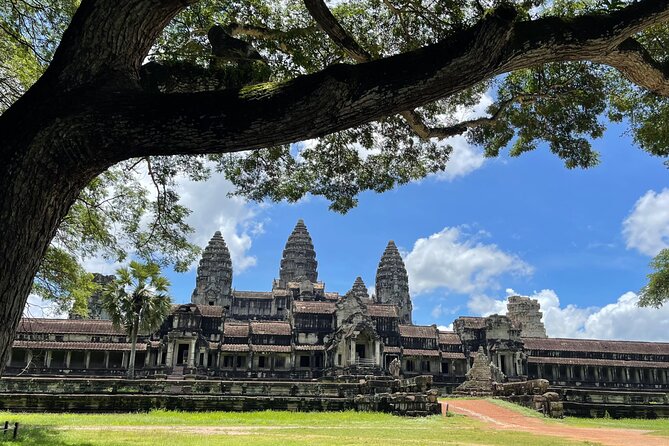
Angkor Wat at 5 a.m.
Day 2 begins around 5 a.m. from your hotel, with about 30 minutes of driving to Angkor Wat. The goal is sunrise behind the temple, one of the most popular early-morning sights in Siem Reap.
The early departure is not optional in spirit. If you want the sunrise view, you need to be ready before dawn. Bring water, wear practical shoes, and expect a wait outdoors before the light improves. Bottled water is included, which is a small but welcome detail on a long temple morning.
You have about three hours at Angkor Wat. That gives you enough time for the sunrise, the approach across the causeway, and a guided look at the temple’s galleries, towers, and carved scenes. The temple is enormous, so three hours still requires some focus. You will not see every detail.
The advantage of a private guide is that you can ask for the parts that interest you most. If you prefer architecture, religious symbolism, or the long carved bas-reliefs, say so early. If you only want sunrise photographs, three hours may feel long, but the interior is worth seeing after the crowds begin to move.
Angkor Thom and Bayon
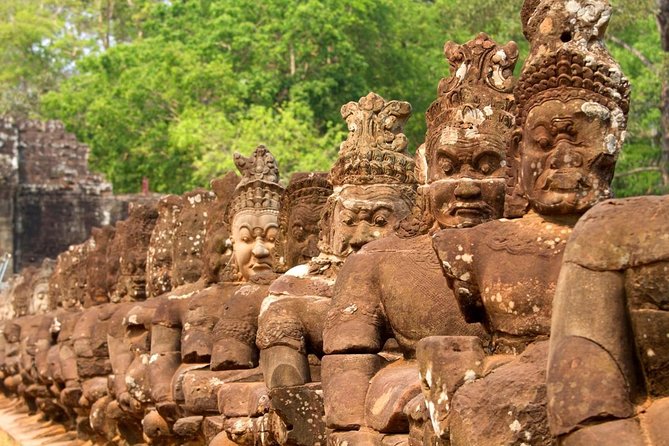
After Angkor Wat, it is about a five-minute drive to Angkor Thom, the former capital enclosed by massive walls. The route begins at the South Gate, where you can stop for photographs before continuing to the main temples.
You spend about two hours in Angkor Thom. The city is not one single temple, so this portion is about understanding a larger royal center. The South Gate gives you the dramatic entrance, while the temple area helps explain how the capital was organized around religious and political power.
The supplied schedule does not name every temple visited inside Angkor Thom, so confirm the exact route with the operator. Bayon is the usual centerpiece of this area, but you should not assume every internal stop is included without asking.
The timing is sensible. After a three-hour Angkor Wat visit, two hours provides a useful second chapter without turning the morning into an exhausting march.
Ta Prohm and the stone bridge
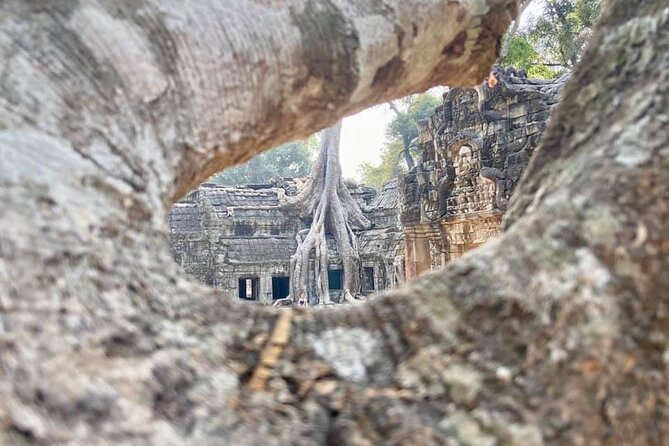
Ta Prohm follows, after about a 15-minute drive. The route includes a stop at a stone bridge with a tree growing over it, a small detail that adds variety to the transfer.
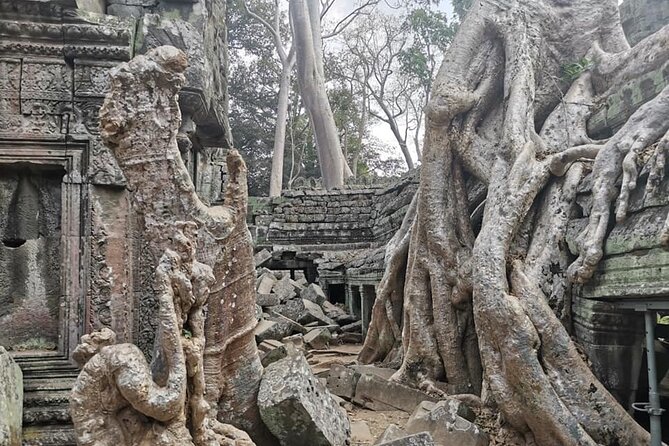
Ta Prohm is famous for trees growing across and around the temple ruins. The appeal is visual, but the site also shows how a large religious complex can look when nature and masonry share the same space. You get about an hour here.
That hour is enough for a guided walk through selected parts, though it may feel short if you want to photograph every doorway and tree. Ta Prohm is also one of the most popular temples, so the private format helps with pacing, but it cannot remove the site’s popularity.
Lunch is part of the day’s natural break, but it is not included. The tour gives no fixed restaurant or meal arrangement, so plan to pay separately or bring your own food.
Day 3: Beng Mealea and the first Khmer capital
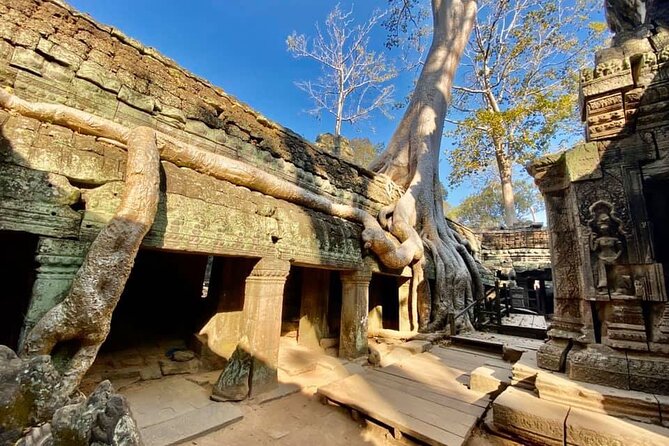
Beng Mealea, a long ride for a rougher ruin
Day 3 starts around 9 a.m. with a drive of approximately one and a half hours to Prasat Beng Mealea. The road time is significant, so you should choose this day only if you are comfortable spending a large part of the morning in the car.
The payoff is a very different temple visit. Beng Mealea is a partly ruined complex where fallen stones, damaged galleries, and overgrown sections create a rougher setting than the restored or better-organized central Angkor sites. You have about three hours here, which gives the visit room to feel unhurried.
The drive is part of the experience. You pass local activity and everyday scenes beyond Siem Reap’s main temple zone. This is one of the tour’s best choices for anyone who wants more than the standard Angkor Wat, Bayon, and Ta Prohm loop.
The drawback is clear: Beng Mealea takes time. If you dislike long road transfers or want three packed days close to town, this may not suit you. If you value a quieter, less polished ruin, the journey can be worth it.
Bakong and the Roluos group
After Beng Mealea, you head to Bakong, an ancient Khmer capital known as Hariharalaya. Bakong was built in the 9th century by King Indravarman I and is associated with Shiva.
The visit lasts about 40 minutes. Bakong is a pyramid temple, so the structure gives you a useful early example of the stepped form that developed in later Khmer architecture. It also helps place Angkor Wat in a longer timeline rather than treating it as an isolated wonder.
The short visit means you will need to keep moving. Ask the guide to explain the temple’s layout and date as you walk, since the context is one of the main reasons to include it.
Preah Ko, the Sacred Bull
The final temple is Preah Ko, meaning Sacred Bull. It was built in 879 by Indravarman I and is described as the first temple in the ancient city of Hariharalaya. It was dedicated to Shiva.
You spend about 30 minutes here. Preah Ko is not a grand finale on the scale of Angkor Wat, but it is a useful ending because it returns you to the earliest part of the architectural story covered by the tour.
Together, Bakong and Preah Ko make the final day more than a distant temple outing. They show an earlier phase of Khmer building and give you a better sense of how temple design changed over time.
What the $550 price really buys you
The $550 price covers the private group, driver, professional guide, and bottled water for up to three people. For a full group, that works out to about $183 per person for three days, before admissions and meals. For two people, the cost is $275 each, and a solo booking pays the full group rate.
That makes the tour strongest for a couple, family, or small group that wants private transport and guiding. A larger shared tour may cost less per person, but it will not offer the same control over stops and timing.
You must pay separately for the Angkor Temple Pass. Food and drinks are also excluded, with lunch estimated at about $5 to $10 per person. Other activity fees, including some parts of the Tonle Sap visit, may also be extra.
The price is fair if you value three full days of transport, a guide, a private vehicle, and a route that includes distant Beng Mealea. It is less attractive if you plan to visit only the central Angkor temples or if you are traveling alone.
Timing, comfort, and the details that matter
The tour is described as flexible, but flexibility works best when arranged before the day begins. Ask about a different start or finish time, vehicle type, the exact Angkor Thom stops, and what Tonle Sap activity is included before you pay.
The 5 a.m. start on Day 2 is the main practical challenge. You also need enough stamina for several hours on foot, uneven surfaces, and warm outdoor conditions. This is not a good match for someone seeking a mostly seated sightseeing experience.
Air-conditioning is important in Siem Reap. A family group had a private Lexus ready with the air-conditioning on and cold water, but you should treat that as an example rather than a guaranteed vehicle specification.
The provider offers free cancellation if you cancel at least 24 hours before the start time. Changes or cancellations inside that window are not accepted for a refund.
Who should book this private Siem Reap tour?
I would choose this tour if you are visiting Siem Reap for the first time and want a broad introduction without spending every day in the busiest temple zone. It suits families and small groups particularly well, since the $550 group price becomes more reasonable with three people.
It also fits photographers and temple fans who want Banteay Srei, Beng Mealea, and the early Roluos temples alongside Angkor Wat. The guide can provide useful context, while the private format gives you more say in how long you spend at each place.
I would hesitate if you have limited mobility, dislike early mornings, or want a low-cost plan. Beng Mealea adds a long drive, Tonle Sap may involve extra charges, and temple admission is not part of the quoted price.
Should you book it?
Book this tour if you want variety, private transport, and a relaxed small-group pace across three days. Its strongest feature is the route: it combines Angkor Wat and Ta Prohm with Banteay Srei, Beng Mealea, Tonle Sap, Bakong, and Preah Ko.
Before booking, confirm the temple pass cost, the exact lake activity, the vehicle type, and your preferred start times. If you are traveling with two other people and want a guide who can explain the temples without rushing you, the $550 group rate offers solid value. If you are alone or mainly want Angkor Wat, a shorter tour may make more financial sense.
FAQ
How long is the tour?
The experience lasts approximately three days, with visits scheduled across three separate days.
What time does Day 2 begin?
Day 2 begins around 5 a.m. from your hotel so you can reach Angkor Wat for sunrise.
Is transportation included?
Yes. A private driver and private tour are included. The exact vehicle type is not specified, although a Lexus was used for one small family group.
Is an English-speaking guide included?
Yes. A professional English-speaking temple guide is included.
Are meals and temple passes included?
No. Food, drinks, lunch, and the Angkor Temple Pass are not included. Lunch is estimated at about $5 to $10 per person, depending on your choice.
Can the itinerary be changed?
Yes. You can request a different destination or start and finish time in advance. Other activities may involve an additional fee.
Just added around Siem Reap
- Ultimate Sunrise to Angkor Wat, Angkor Thom and Bayon Temple★ 5.0 · 3 reviews
- Twilight Tastes of Siem Reap Include Dinner★ 5.0 · 13 reviews
- Trekking Tour at Phnom Kulen National Park from Siem Reap★ 5.0 · 3 reviews
- Full-Day Private Tour of Angkor Wat with Pick Up★ 5.0 · 12 reviews
- Private Day Trip to Angkor Temples with Expert Guide★ 5.0 · 4 reviews
- Waterfall & River of 1000 Siva Linga- Kulen Mountain Private Tour★ 5.0 · 3 reviews
- Professional Photo Shoot in Angkor Archaeological Park, Siem Reap★ 5.0 · 42 reviews
- Ultimate Siem Reap Food Tour by Tuk Tuk – 20 Tastings, 8 Stops★ 5.0 · 13 reviews
3-Day Experiences, compared.
3-Day Angkor Wat with All Interesting Major Temples, Banteay Srei & Beng Mealea
Read our review →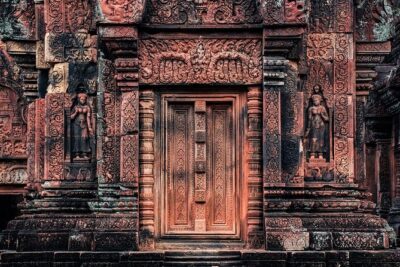
3-Day Angkor Wat & All Interesting Major Temples & Kulen Mount Waterfall
Read our review →
Best of Siem Reap 3-Day Private Tour to Angkor Wat & Tonle Sap
Read our review →
Private Siem Reap 3 Day Tour Discover All Highlight Angkor Temple
Read our review →
Private 3-Day Mekong Delta River Tour from Phnom Penh to Ho Chi Minh City
Read our review →Browse the lists this tour appears in