
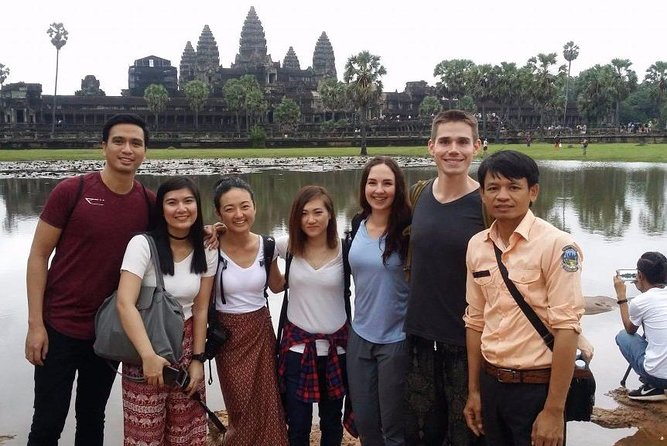
Reviewed · 3-DAY EXPERIENCES
3 Days Siem Reap Explorer – Small Group
Angkor Wat at sunrise is the headline, but this three-day plan gives you much more than one famous temple. You move from the vast stone gateways of Angkor Thom to the tree-rooted ruins of Ta Prohm, then out to Tonlé Sap Lake or an evening at Phare Circus. It is a good way to see how temples, village life, and modern Cambodian culture fit together.
I especially like the small maximum group of 15, which leaves room for questions and makes long temple walks easier to manage. I also like the practical mix of major sights and less familiar stops, including Preah Khan, Neak Pean, and Banteay Srei. The main drawback is the very early second morning and the extra $62 temple pass, which brings the real cost well above the advertised $129.
Key things to know before booking
- Sunrise begins before dawn: Hotel pickup for Angkor Wat is usually between 4:00 and 4:30 am, depending on the season.
- The group is capped at 15: That is small enough for a more personal guided visit without the price of a private tour.
- The temple pass costs extra: You pay $62 directly for the three-day pass, so budget about $191 before meals and any other personal spending.
- Tonlé Sap and Phare Circus are seasonal alternatives: From March 1 through August 31, the evening program switches to Phare Circus instead of the lake visit.
- The schedule covers several long temple days: Comfortable walking shoes, covered shoulders, and covered knees are essential.
- Hotel pickup, transport, and water are included: Meals are not, so plan to buy lunch along the way or bring suitable spending money.
Why this three-day route works
Siem Reap can tempt you into a rushed temple checklist. This tour gives the ruins enough room to make sense, then adds two different sides of Cambodia: life on Tonlé Sap Lake and the young performers of Phare Circus.
The order is sensible. Day one begins outside the main Angkor complex, giving you a change of pace before the early start at Angkor Wat. Day two focuses on the classic Angkor circuit. Day three brings quieter ruins and the highly detailed Banteay Srei.
You travel in an air-conditioned vehicle with hotel pickup and drop-off. That matters in Cambodia, where even a short road journey can feel tiring after several hours in the sun. Mineral water is included, but meals are not.
The English-speaking guide is one of the tour’s most important features. A guide such as Sok can help you read the temples as more than attractive piles of stone, explaining how royal power, Hindu worship, and Buddhism shaped the sites. The small group also means you are less likely to lose the guide’s voice in a crowd.
A few more Siem Reap trips to weigh up
- From Siem Reap: Angkor Wat and Floating Village 3-Day Trip
★ 5.0 · 100 reviews - 3-Day Angkor Wat with All Interesting Major Temples, Banteay Srei & Beng Mealea
★ 5.0 · 70 reviews - 3-Day Angkor Wat & All Interesting Major Temples & Kulen Mount Waterfall
★ 5.0 · 63 reviews
Kampong Phluk and the changing Tonlé Sap
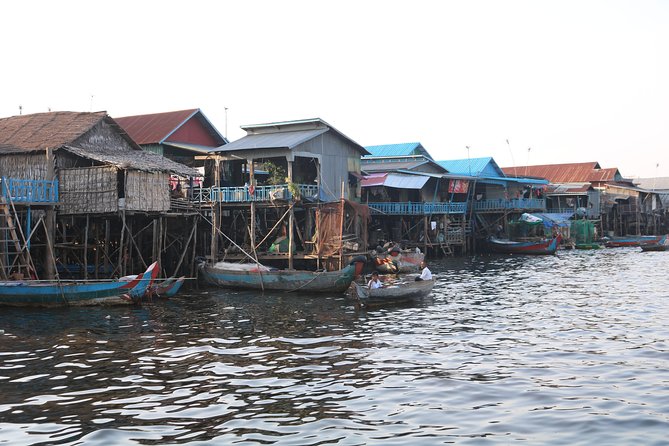
The first morning begins around 7:30 am with a drive through the countryside to Kampong Phluk, a traditional fishing village on Tonlé Sap Lake. The lake expands dramatically during the wet season, reaching about 12,000 square kilometers, and the village is built around that changing water level.
The defining sight is the traditional Khmer stilt house. Homes, boats, and daily work are all tied to the lake, so this visit gives you a look at rural life that the temple circuit cannot provide. The included boat cruise is a useful part of the price, since it takes you beyond a roadside stop and onto the water itself.
Allow about three hours here. Bring sun protection and expect the conditions to vary with the season. The experience is tied to the lake’s water level, so the appearance of the village can change during the year.
The main practical point is that Tonlé Sap is not always part of this version of the schedule. From March 1 through August 31, the program uses Phare Circus instead. If the lake is a must for you, check the operating dates before you pay.
Bakong and the early Khmer temples at Roluos
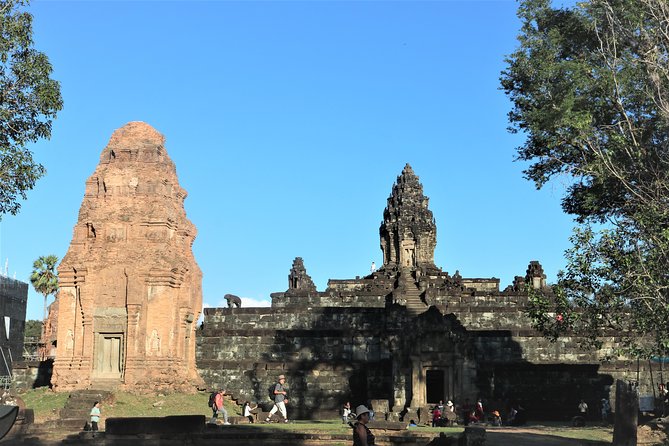
After Kampong Phluk, the tour goes to Bakong, one of the principal temples in the Roluos group. These ruins date to the ninth century, during the reign of King Indravarman I, making them much earlier than the temples most people picture when they think of Angkor.
Bakong helps you see the Khmer building tradition in an earlier form. Its temple-mountain design gives the visit a clear sense of scale, while the age of the site places the better-known Angkor temples in context.
The planned stop is about three hours, though the exact pace can depend on the group and the day’s conditions. The temple entrance is not included in the tour fee. The separate three-day pass covers the Angkor temple sites, and you should expect to pay $62 directly at the site.
I like having Bakong on day one because it keeps the first day from becoming only a lake outing. It also gives your guide a chance to explain the development of Khmer architecture before you reach Angkor Wat.
Phare Circus and Cambodia’s post-Khmer Rouge generation
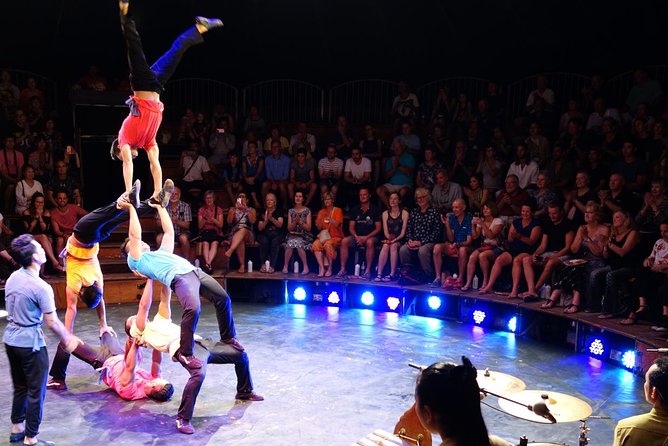
When the season calls for it, the lake visit is replaced by Phare, the Cambodian Circus. This is not a standard touring circus. It combines acrobatics, theater, music, and visual storytelling, and its background is tied to Cambodia’s recovery after the Khmer Rouge period.
The show lasts about two hours, and seat C is included. The performance gives you an evening activity with a clear Cambodian identity rather than another temple under artificial light. Its performers are connected to an arts school that helped young Cambodians build creative careers after years of cultural damage.
I would treat Phare as a real alternative, not a lesser substitute. If you have already spent time on Tonlé Sap or prefer cultural performance to a boat trip, the circus may be the more memorable choice. If you want both, this package does not promise both in the same seasonal schedule.
Same country, a completely different kind of day:
- Angkor Wat Sunrise or Sunset Tour with Guide from Siem Reap
★ 5.0 · 12,109 reviews - Siem Reap: Angkor Wat: Small-Group Sunrise or Sunset Tour
★ 5.0 · 9,444 reviews - From Siem Reap: Kampong Phluk Floating Village Tour by Boat
★ 4.9 · 6,979 reviews - Sunset tour of Kampong Phluk stilts home village on the Tonle Sap
★ 5.0 · 4,865 reviews
Angkor Wat before sunrise
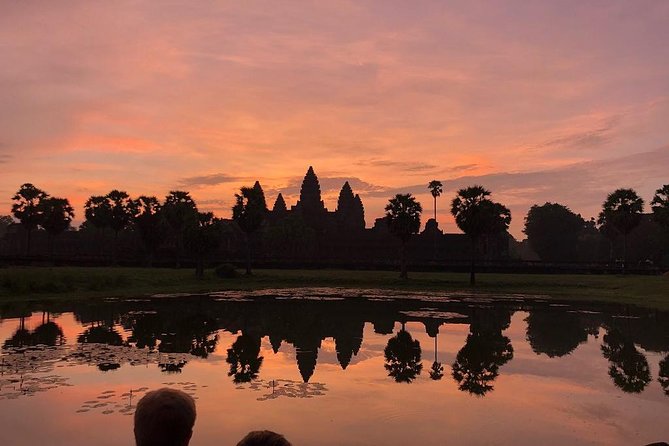
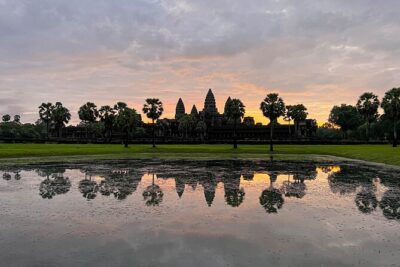
Day two begins between 4:00 and 4:30 am. That sounds harsh because it is, but sunrise is one of the few times when Angkor Wat feels quiet and unhurried. You enter from the less-used eastern side in darkness, then make your way toward the temple as the sky brightens.
This early entrance is a thoughtful detail. Instead of arriving with the main crowd at the most obvious approach, you begin on the eastern side and enter before daylight. The changing light gives the towers and galleries a different look from the midday visit.
Plan on about three hours at Angkor Wat. You will need the temple pass, which is not included in the $129 tour price. The extra $62 is payable on the day and is the single most important cost to add when comparing this tour with other options.
Wear shoes that can handle uneven stone and long walks. Shoulders and knees must be covered inside the temples, so choose light clothing that still meets the dress code. After a pre-dawn departure, breakfast and a short rest matter, but meals are your responsibility.
Angkor Wat rewards a guide who can explain what you are seeing. The site is enormous, and without help it is easy to spend the morning taking pictures without understanding the carvings, design, or religious purpose. In a group of 15 or fewer, you have a fair chance of hearing those explanations.
South Gate, Bayon, and the royal center of Angkor Thom
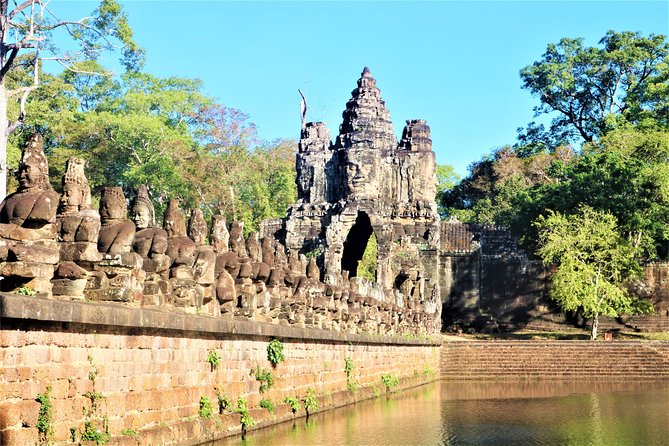
After Angkor Wat, the route continues to Angkor Thom, once the capital of the Khmer Empire. You first pass through the South Gate, a grand approach that prepares you for the scale of the walled city.
The gate is scheduled for about 30 minutes. That may sound brief, but it gives you time to take in the causeway and the monumental entrance without turning the stop into a full architectural lecture.
Inside Angkor Thom, the main stop is Bayon, planned for about 90 minutes. Bayon is known for its large carved faces, which look in different directions from the temple’s towers. Here, the stonework feels more personal than the broad symmetry of Angkor Wat.
The route also passes the Terrace of the Leper King and the Terrace of the Elephants. These are pass-by stops rather than long visits, so I would listen closely to the guide and use the time to note what you might want to revisit if you return independently.
Angkor Thom is where the small-group format has practical value. The complex is large, and it is easy for a guide to become a distant figure in a bigger crowd. A capped group should make it easier to stay together and ask about details at Bayon.
Ta Prohm and the trees that took the temple back
Ta Prohm is the temple many people recognize from the film Tomb Raider, but its appeal is not only cinematic. Tree roots push across walls and doorways, while broken galleries give the place a raw, unfinished feel.
The temple once housed 2,740 monks. Today, it looks much as it did when French explorer Henri Mouhot encountered it in the early 1850s. That contrast gives the visit its force: you can see a major religious complex being reclaimed by nature rather than restored into a polished monument.
The stop lasts about an hour. That is enough to see the key areas, though you may wish for longer if you enjoy photography or want to study the carvings. The stone can be uneven, and the day will already have been long, so good footwear is not a minor detail.
Ta Prohm is usually the emotional high point after Angkor Wat. Angkor Wat impresses with scale. Ta Prohm works through atmosphere.
Preah Khan and Neak Pean on a quieter third day

Day three starts at Preah Khan, a ruined temple complex with tree roots, crumbling stone, and long passageways. The planned visit is about an hour.
Preah Khan has the same sense of age that makes Ta Prohm appealing, but it is a different experience. The site feels more spread out, and the mixture of collapsed structures and surviving details rewards a slower walk. Your guide can help you notice the transition between open courtyards, enclosed galleries, and decorative stonework.
Next comes Neak Pean, an artificial island with a Buddhist temple on a circular island in the Jayatataka Baray. The stop is about 40 minutes.
Neak Pean is less about entering a vast temple and more about reaching a carefully designed water setting. The island arrangement gives the stop a change of rhythm after Preah Khan. It is also a useful reminder that Khmer builders worked with water as part of their religious and civic design.
The third morning is still active, but it usually feels less punishing than the pre-dawn start. You should still expect walking, steps, and sun. The tour is best for people who enjoy seeing several sites rather than settling into one temple for a full day.
Banteay Srei’s fine sandstone carving
Banteay Srei is one of the smaller temples on the route, but its carved decoration is among the most finely worked in Cambodia. The sandstone reliefs are the reason for the long trip out to this site.
The visit lasts about 90 minutes. Pay attention to the scale of the carvings and the careful detail around doorways and walls. Compared with Angkor Wat and Angkor Thom, Banteay Srei feels more intimate, and the smaller size makes its craftsmanship easier to appreciate.
This is a strong choice for day three because it gives you something different from the great temple mountains. The tour does not treat size as the only measure of importance. You see a smaller structure where detail carries the experience.
As with the other temple stops, the $62 pass is separate. Keep your clothing appropriate for temple entry, with shoulders and knees covered.
Pre Rup and the final temple view
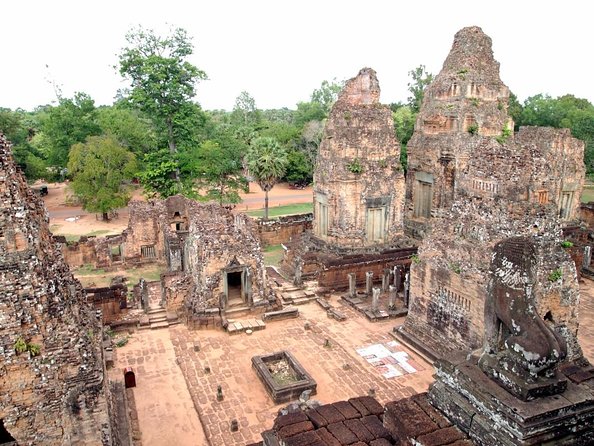
The final stop is Pre Rup, a Hindu temple built as the state temple of King Rajendravarman and dedicated in 961 or early 962. It uses brick, laterite, and sandstone in a temple-mountain design.
The planned visit is about 90 minutes. Pre Rup gives you one last chance to look at the structure from above and compare its materials with the later temples you have already seen. The brick construction adds a warmer, more textured quality than the gray stone that dominates much of Angkor.
The schedule describes this as a late afternoon stop, which makes it a natural place to finish the temple portion of the tour. Still, sunset conditions can vary, so I would not book this solely as a guaranteed sunset experience. The confirmed value is the temple itself and the chance to end with a clear view of an earlier state temple.
What the $129 price really includes
The advertised cost is $129 per person. That covers three days of sightseeing, an English-speaking licensed guide, an air-conditioned vehicle, hotel pickup and drop-off, local tax, mineral water, and either the Tonlé Sap entrance and boat cruise or Phare Circus seat C.
You must add the $62 three-day temple pass. That makes the practical base cost about $191 per person, before meals. Food is not included, so the final amount depends on what you choose during the days.
At that real price, the tour offers solid value if you want a guide and transport for a wide area. A private car could give you more control, but a maximum of 15 people keeps this from feeling like a huge coach outing. Group discounts may also be available, which is worth checking if you are booking for several people.
The best value comes from the range of experiences. You are not paying only for temple transfers. You also get the lake cruise or cultural performance, historical explanation, and a carefully arranged three-day route.
Who should book this Siem Reap experience
I would choose this tour if you have three days in Siem Reap and want the major temples explained rather than simply photographed. It suits first-time visitors, couples, families with older children, and anyone who prefers a planned route with hotel pickup.
It is also a good match if you want some variety. Tonlé Sap adds village life, while Phare adds a modern cultural evening. The tour gives you a broader view of the area than an Angkor-only package.
I would think twice if you dislike early mornings, long walks, or fixed group schedules. The Angkor Wat sunrise starts before dawn, the temple pass is extra, and meals are not arranged for you. Children younger than five are not allowed, and children who do join must be accompanied by an adult.
The free cancellation policy allows cancellation at least 24 hours before the experience start time for a full refund. Changes or cancellations inside that 24-hour window are not accepted, so keep that deadline in mind.
Should you book it?
Book this tour if you want an efficient, well-rounded introduction to Siem Reap with a small group rather than a private guide. The strongest reasons are the pre-dawn eastern entrance at Angkor Wat, the broad temple selection, and the chance to see either Tonlé Sap or Phare Circus without arranging a second booking.
Before confirming, check the season and decide which evening option matters more to you. Also add the $62 temple pass and meal costs to the headline price. If you can handle the early start and active walking days, this is a practical way to experience both the famous face of Angkor and a few of Cambodia’s less expected stories.
FAQ
How long is the tour?
The experience lasts approximately three days.
What time does the tour begin?
The listed meeting time is 8:00 am, but day one departs from the hotel at about 7:30 am and the Angkor Wat sunrise day begins between 4:00 and 4:30 am, depending on the time of year.
Is hotel pickup included?
Yes. Hotel pickup and drop-off are included.
Is the Angkor temple pass included?
No. A three-day temple pass costs $62 per person and is payable directly at the site on the day of the activity.
Are meals included?
No. Meals are not included and are available at your own choice.
Is Tonlé Sap Lake visited on every departure?
No. From March 1 through August 31, the schedule uses Phare, the Cambodian Circus, instead of Tonlé Sap Lake.
How large is the group?
The tour has a maximum of 15 travelers. A minimum of two people per booking is required.
Just added around Siem Reap
- Ultimate Sunrise to Angkor Wat, Angkor Thom and Bayon Temple★ 5.0 · 3 reviews
- Twilight Tastes of Siem Reap Include Dinner★ 5.0 · 13 reviews
- Trekking Tour at Phnom Kulen National Park from Siem Reap★ 5.0 · 3 reviews
- Full-Day Private Tour of Angkor Wat with Pick Up★ 5.0 · 12 reviews
- Private Day Trip to Angkor Temples with Expert Guide★ 5.0 · 4 reviews
- Waterfall & River of 1000 Siva Linga- Kulen Mountain Private Tour★ 5.0 · 3 reviews
- Professional Photo Shoot in Angkor Archaeological Park, Siem Reap★ 5.0 · 42 reviews
- Ultimate Siem Reap Food Tour by Tuk Tuk – 20 Tastings, 8 Stops★ 5.0 · 13 reviews
3-Day Experiences, compared.
3-Day Angkor Wat with All Interesting Major Temples, Banteay Srei & Beng Mealea
Read our review →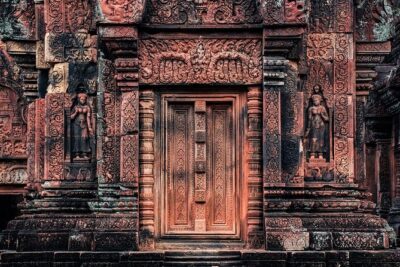
3-Day Angkor Wat & All Interesting Major Temples & Kulen Mount Waterfall
Read our review →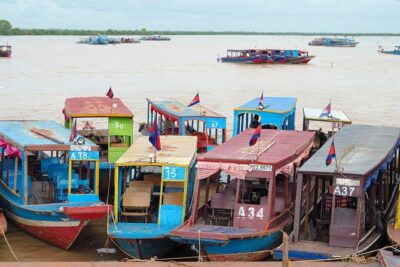
Best of Siem Reap 3-Day Private Tour to Angkor Wat & Tonle Sap
Read our review →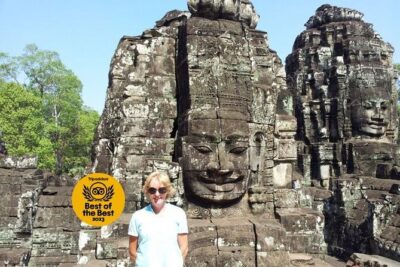
Private Siem Reap 3 Day Tour Discover All Highlight Angkor Temple
Read our review →
Private 3-Day Mekong Delta River Tour from Phnom Penh to Ho Chi Minh City
Read our review →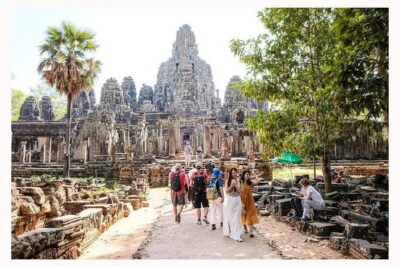
3-Day Tour(Unforgettable Angkor Temple Complex, Banteay Srei& Floating Village)
Read our review →Browse the lists this tour appears in