
Reviewed · ANGKOR WAT TOURS
3-Day Angkor Wat & All Interesting Major Temples & Kulen Mount Waterfall
The most useful feature here is the sheer range: Angkor Wat and the major temple circuit are paired with Phnom Kulen’s waterfall, remote-feeling temples, the Roluos Group, and a working Cambodian craft center. You get the famous sights, but also quieter stops such as Ta Nei and Ta Som.
I like the private car and guide, which let you slow down at temples that catch your interest. I also like the way the three days spread out the sightseeing, with cool water and wet towels helping during long, hot hours outdoors. The main drawback is cost: the $248.50 tour price excludes $62 for the Angkor temple pass, $20 for Phnom Kulen, and meals.
Key points
- A full Angkor survey: Angkor Wat, Ta Prohm, Bayon, Baphuon, Phimeanakas, and the terraces all appear on Day 1.
- A waterfall break: Phnom Kulen includes the 1,000 Lingas riverbed, a reclining Buddha, and time to swim.
- Private touring: Your group travels by air-conditioned vehicle with a driver and licensed English-speaking guide.
- Strong guide reports: Guides named Chhay, Pal Saruon, Em Somuch, Small Mony, and Chandri receive repeated praise for clear explanations and flexible pacing.
- Very early and long days: The schedule includes an 8:00 a.m. start, a possible Phnom Bakheng sunset, and a 5:00 a.m. sunrise departure.
- Extra costs matter: The listed price is not the final amount because temple, park, and meal costs are separate.
Three days that cover Angkor’s greatest hits
This is an ambitious private tour, not a light introduction. Across three days, you visit the central Angkor complex, outlying temples, Phnom Kulen National Park, the Roluos Group, Artisans Angkor, and Siem Reap’s Old Market.
I see the plan as two tours in one. The first is a temple survey, moving from the iconic Angkor Wat to the carved faces of Bayon and the tree roots of Ta Prohm. The second adds countryside and culture, taking you well beyond the main park to Kulen Mountain and the early Khmer temples near Roluos.
The private format matters. A guide can explain why a temple was built, then adjust the pace if you want more time for carvings or photographs. Several guides named in the experience, including Chhay, Pal Saruon, Em Somuch, Small Mony, and Chandri, are praised for strong explanations and flexibility. Drivers named San, Det, and Sriang are also singled out for patience and reliable service.
The schedule is full. You spend long periods on your feet, climb temple steps, and ride between sites. If you want a slow morning at one ruin, this plan may feel rushed. If you want to see a great deal in three days, it gives you a lot for the time.
More Angkor Wat Tours in Siem Reap:
- Angkor Wat Sunrise or Sunset Tour with Guide from Siem Reap
★ 5.0 · 12,109 reviews - Siem Reap: Angkor Wat: Small-Group Sunrise or Sunset Tour
★ 5.0 · 9,444 reviews - Siem Reap: Angkor Wat 2-Day Tour with Sunrise and Sunset
★ 4.9 · 4,429 reviews
Day 1: Angkor Wat, tree roots, and the royal city
Pickup begins at your hotel or guest house at 8:00 a.m. The first stop is Angkor Wat, where you spend about two and a half hours. The temple pass is bought along the way, and admission is not included in the tour price.
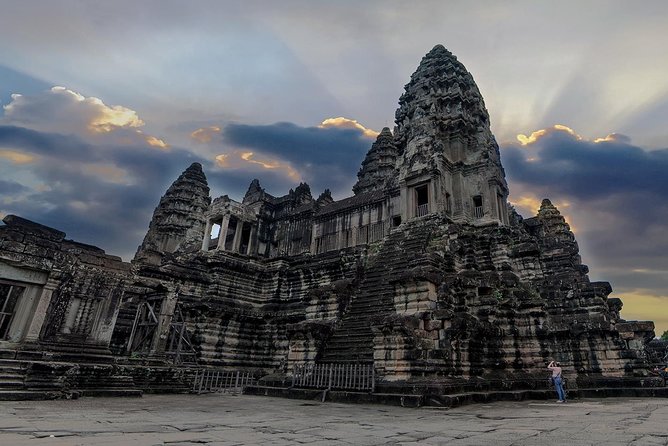
Angkor Wat deserves the opening slot. Its scale is difficult to grasp from photographs, and a guide gives the stone galleries, towers, and religious imagery a clearer purpose. Two and a half hours is enough for a broad visit, though it is not an exhaustive study of every carving and corridor.
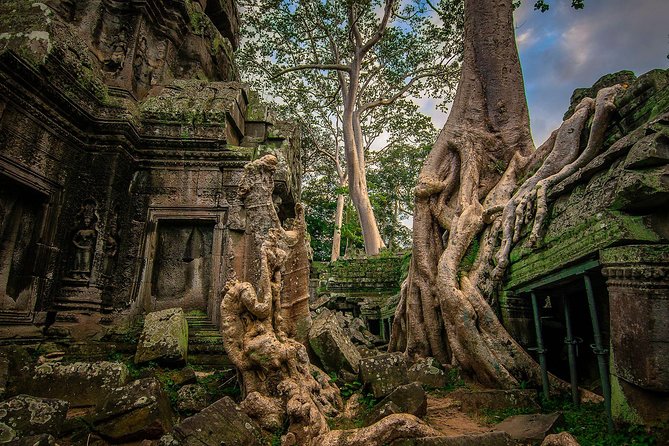
Next comes Ta Prohm, the temple associated with the film Tomb Raider. The attraction is not only the movie connection. Huge tree roots press across the masonry, creating a dramatic meeting of forest and stone. You have about two hours here, which gives your guide time to point out details beyond the best-known photo spots.
Ta Prohm can be one of the busiest stops, so the private format helps if you want to pause or move at a different pace. Still, the schedule cannot guarantee quiet conditions. The most popular temples attract crowds, especially around their signature views.
Ta Nei offers a change of mood. It is smaller, surrounded by large trees, and less restored. The 45-minute visit is short but useful because it shows a quieter side of the Angkor area. Do not expect the same polished presentation as Angkor Wat. Its appeal is the setting and the sense of a less finished ruin.
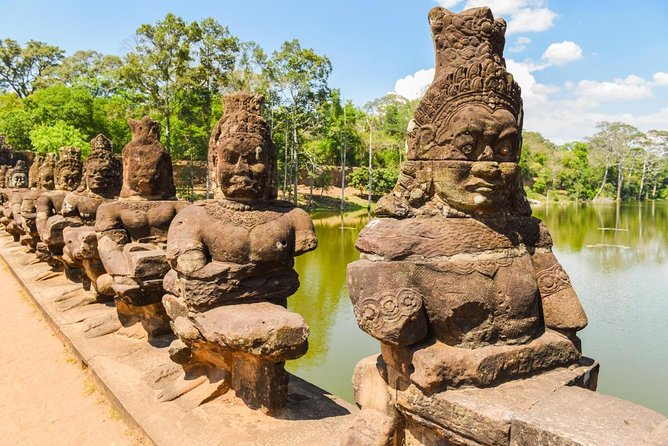
The tour then enters Angkor Thom through the Victory Gate on the eastern side. The stop lasts only about 10 minutes, so think of it as a photo and orientation stop rather than a detailed visit. From there, you continue to Bayon.
Bayon is one of the day’s essential temples. Its towers carry the famous calm faces linked with the bodhisattva Avalokitesvara. The plan allows 45 minutes, enough to walk among the towers and hear about King Jayavarman VII’s period of rule, but you may want to ask your guide to focus on the faces and reliefs if time feels tight.
Baphuon follows. This Hindu temple predates Angkor Wat and dates to the 11th century. Behind it is a reclining Buddha added much later, in the 16th century. The 30-minute stop gives you a quick look at how different religious periods left their mark on the same site.
Phimeanakas is a smaller visit, about 15 minutes. This pyramid-shaped Hindu temple once sat within the old royal area of Angkor Thom. Its importance comes from its place in the royal compound, so it works best when explained alongside the ancient Royal Enclosure Wall.
The Terraces of the Elephants and the Leper King are brief stops of about 10 minutes each. The Elephant Terrace was used by kings to view returning armies, and its carved elephants remain the main feature. The nearby Leper King Terrace has detailed reliefs and a more enclosed feel.
The day may end at Phnom Bakheng for sunset. The climb and wait can take about two hours, and access is limited because only a certain number of people are allowed at a time. This is the least predictable part of the schedule. If you dislike waiting or are already tired, the itinerary allows you to skip it.
Day 2: Phnom Kulen’s waterfall and the pink stone of Banteay Srei
Day 2 moves far beyond the central Angkor park. Phnom Kulen National Park is more than 60 kilometers from the Angkor area, and the stop takes about five hours. That travel time is important when deciding if this outing suits you.
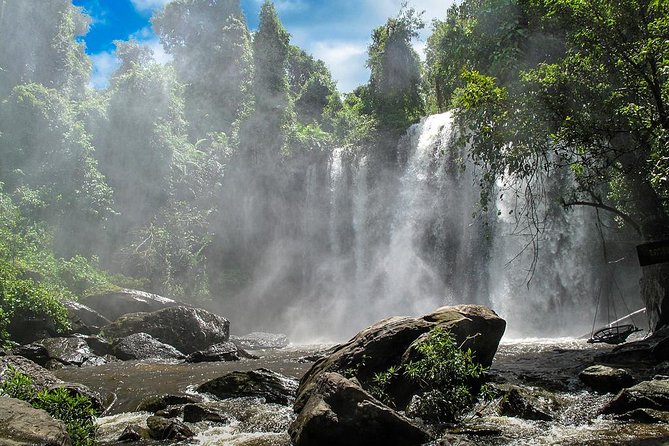
Kulen is a nature break as well as a sacred site. You see a riverbed carved with 1,000 Lingas, symbols connected with Shiva, and a rock reclining Buddha. The waterfall is the day’s biggest change of pace, with time to swim.
Bring suitable swimwear and a way to keep belongings dry, since swimming is part of the plan. The included cool water and wet towels are particularly useful on this day, but lunch is not included. Meals are listed at about $5 per person, depending on the menu.
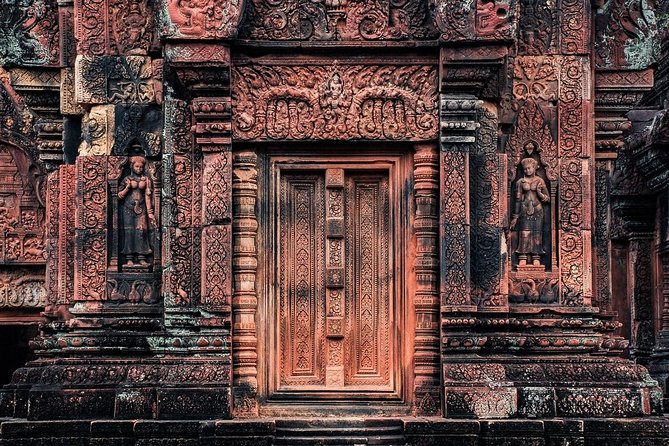
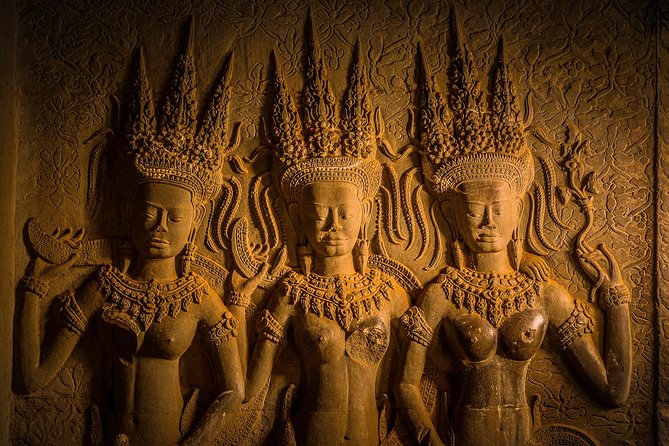
After Kulen, the route continues to Banteay Srei. This Hindu temple was built in the second half of the 10th century from pink sandstone and dedicated mainly to Shiva. It is smaller than Angkor Wat, but its fine carvings make the one-hour visit worthwhile.
Banteay Samre follows for about 45 minutes. This 12th-century Hindu temple is often compared in design with Angkor Wat. It is a good stop after Banteay Srei because you can compare a smaller, more compact temple with the grander central monuments.
The final temple is Pre Rup, a pyramid-style Hindu temple from the late 10th century. Its name is associated with turning the body, and the site is linked with Khmer funeral traditions. You have about 30 minutes here, enough to see the rising levels and talk through its religious role.
Day 2 is the tour’s most demanding driving day. The payoff is variety: water, sacred carvings, pink sandstone, and a temple setting that feels different from the central Angkor circuit. If your priority is only the main temples, Kulen may seem like a large detour. If you want Cambodia beyond the postcard view, it is one of the most useful additions.
Day 3: Sunrise, Jayavarman VII, and the Roluos temples
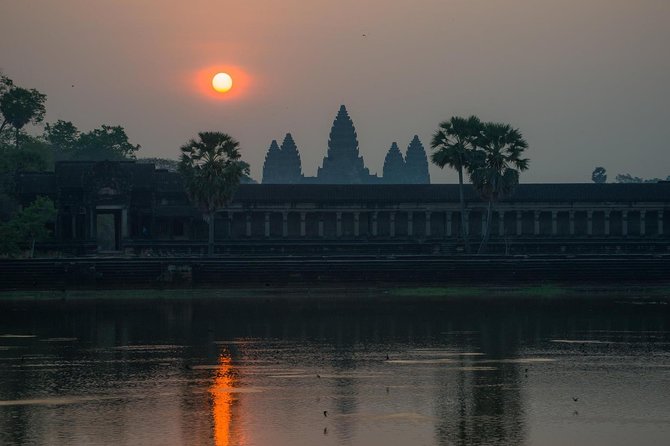
Day 3 begins at 5:00 a.m. for sunrise at Angkor Wat. The visit lasts about one hour and 45 minutes. This early start is not for everyone, but it gives you a second look at the centerpiece and a chance to see it in a different light.
The sunrise timing also means you should plan for a very early night before Day 3. The schedule says breakfast follows the sunrise visit before the guide picks you up again for the remaining temples. The exact rhythm depends on your accommodation and the day’s pacing.
Preah Khan is the first major stop after breakfast. King Jayavarman VII built this large Buddhist temple for his father. It has long corridors, courtyards, and many layers of stonework. The one-hour visit is enough for a strong overview, though this is another place where a history-minded visitor may wish for extra time.
Neak Pean is a small island temple set in the middle of the last baray, or reservoir, in the Angkor area. The 30-minute visit is less about a large monument and more about the unusual water setting and compact design.
Ta Som, another small Buddhist temple, also receives 30 minutes. It lies east of Neak Pean and offers a quieter stop in the sequence. Like Ta Prohm, it is associated with trees and stone, but it is smaller and less overwhelming.
Eastern Mebon is a three-level temple mountain crowned by five towers. Large elephant statues mark its corners, making them the detail to watch for during the one-hour visit. The stop helps you understand how Khmer builders used raised temple forms to represent sacred mountains.
The route then goes to the Roluos Group, an early cluster of temples linked with the old city of Hariharalaya. Lolei is a small Hindu temple from the 9th century, with about 15 minutes set aside.
Preah Ko was the first temple built in Hariharalaya. The half-hour stop is useful for seeing an earlier stage of Khmer temple design before the grander monuments of Angkor reached their peak.
Bakong is the largest and most important stop in the Roluos Group. It is described as the first sandstone temple mountain built by Khmer rulers. The visit lasts about 45 minutes, and lunch follows at a local restaurant along the route, at your own expense.
This part of Day 3 is valuable because it places Angkor’s famous temples in a longer timeline. You are not simply checking off ruins. You are seeing how temple design developed from the early Roluos period to the vast city of Angkor Thom.
More Phnom Kulen Tours in Siem Reap:
- Kulen Waterfall Join-in Tour (local Picnic lunch)
★ 5.0 · 2,434 reviews - Kulen Mountain: Small-Group Tour and Picnic lunch
★ 4.9 · 1,802 reviews - Siem Reap: Kulen Mountain, Beng Mealea and Tonle Sap Tour
★ 5.0 · 1,483 reviews - Phnom Kulen Waterfall & the Sacred 1000 Lingas (with Lunch)
★ 4.8 · 974 reviews
Artisans Angkor and Siem Reap’s Old Market
The last two stops are optional. Artisans Angkor is known for stone carving, wood carving, lacquering, gilding, and silk processing. It gives you a look at traditional craft skills and offers products for sale.
I would keep this stop if you want a cultural activity after several days of ruins. It is also a chance to see skilled work rather than only ancient examples. If shopping is not your interest, the itinerary allows you to skip it.
Psar Chaa, or the Old Market, is in central Siem Reap. The 30-minute visit is a short way to finish the tour near local shopping and food options. Again, you can skip it if you prefer to return to your hotel.
What the $248.50 price really covers
The listed price is $248.50 per person. It includes a private air-conditioned vehicle, a driver, a licensed English-speaking guide, parking fees, road tolls, hotel pickup and return, drinking water, and wet towels.
The important phrase is per person. The experience is private, so only your group participates, but the overall value depends on the number of people sharing the booking. A larger private group can make the transport and guide cost easier to justify. Group discounts may also be available.
You must add $62 per person for Angkor Wat and the other Angkor temples, plus $20 for Phnom Kulen. That brings the known total to $330.50 per person before meals. Lunch is not included and is estimated at about $5 per person, depending on what you order.
That is not a budget tour. The value comes from the private vehicle, three full days, long-distance transport to Kulen, and a licensed guide who can explain the religious and political background of the monuments. It is less suitable if you want a simple ride to Angkor Wat and a few nearby ruins.
Guides, timing, and practical comfort
The strongest part of this experience is the guide service. Chhay is repeatedly praised for clear temple explanations, good timing, and finding useful photo spots. Pal Saruon is described as especially strong at explaining the sites and their past. Em Somuch is noted for taking a shaded bush path, and Small Mony is praised for bringing the stories of the temples to life.
Those details tell you what to ask for. Tell the guide if you care most about architecture, religion, photographs, or royal history. The private format makes that kind of adjustment possible.
The days are physically and mentally full. Day 1 can run from morning through the Phnom Bakheng sunset wait. Day 2 includes a long trip to Kulen. Day 3 starts before dawn and continues through several temple groups. Most travelers can participate, but the plan is not designed around a relaxed pace.
Wear practical clothing suitable for temple visits and outdoor walking. Bring swimwear for the waterfall, and expect heat, steps, uneven ground, and long periods outside. The tour provides water and wet towels, but you still need to manage your own comfort.
Booking is usually made well in advance, with the experience averaging about 57 days ahead. Free cancellation is available if you cancel at least 24 hours before the local start time. Changes or cancellations inside that window are not accepted for a refund.
Should you book this three-day tour?
Book it if you want a private, history-focused Angkor program that includes far more than Angkor Wat. It suits you especially well if you want a guide at every major site, appreciate flexible pacing, and like the idea of adding a waterfall, a distant national park, early temples, crafts, and a market.
Think twice if you want plenty of free time, dislike early mornings, or prefer to explore only a few temples slowly. You also need to budget beyond the advertised price for the $82 in admission fees and for meals.
For a first visit with only three days, this is a strong all-round plan. The main temples receive proper attention, while Ta Nei, Kulen, Roluos, and Artisans Angkor keep the experience from becoming one long procession of famous ruins. The best booking request is simple: tell your assigned guide what interests you most, and agree on how much time you want at each temple before the long days begin.
FAQ
How long is the tour?
The experience lasts approximately three days.
Is hotel pickup included?
Yes. Pickup and return to your hotel or guest house are included.
Is this a private tour?
Yes. Only your group participates.
Is transportation provided?
Yes. A private air-conditioned vehicle with a driver is included.
Is an English-speaking guide included?
Yes. The tour includes a licensed English-speaking guide.
Are temple admission fees included?
No. The Angkor Wat and other temple admission cost is listed separately at $62 per person.
Is the Phnom Kulen entrance fee included?
No. The Phnom Kulen entrance fee is listed separately at $20 per person.
Are meals included?
No. Meals are not included. Lunch is estimated at about $5 per person, depending on the menu.
What time does the sunrise day begin?
The guide pickup for the Angkor Wat sunrise begins at 5:00 a.m.
Can I cancel for a full refund?
Yes, if you cancel at least 24 hours before the experience start time. Cancellations made less than 24 hours before the start time are not refunded.
More 3-Day Experiences in Siem Reap
- From Siem Reap: Angkor Wat and Floating Village 3-Day Trip
★ 5.0 · 100 reviews - 3-Day Angkor Wat with All Interesting Major Temples, Banteay Srei & Beng Mealea
★ 5.0 · 70 reviews - 3 Days Siem Reap Explorer – Small Group
★ 5.0 · 50 reviews - Best of Siem Reap 3-Day Private Tour to Angkor Wat & Tonle Sap
★ 5.0 · 47 reviews
Just added around Siem Reap
- Ultimate Sunrise to Angkor Wat, Angkor Thom and Bayon Temple★ 5.0 · 3 reviews
- Twilight Tastes of Siem Reap Include Dinner★ 5.0 · 13 reviews
- Trekking Tour at Phnom Kulen National Park from Siem Reap★ 5.0 · 3 reviews
- Full-Day Private Tour of Angkor Wat with Pick Up★ 5.0 · 12 reviews
- Private Day Trip to Angkor Temples with Expert Guide★ 5.0 · 4 reviews
- Waterfall & River of 1000 Siva Linga- Kulen Mountain Private Tour★ 5.0 · 3 reviews
- Professional Photo Shoot in Angkor Archaeological Park, Siem Reap★ 5.0 · 42 reviews
- Unveiling 2 Days Private Angkor Wat/Beyond In Sunrise/Sunset Tour★ 5.0 · 48 reviews
Angkor Wat Tours, compared.

Angkor Wat Sunrise or Sunset Tour with Guide from Siem Reap
Read our review →
Angkor Wat: Small-Group Sunrise or Sunset Tour
Read our review →
Angkor Wat 2-Day Tour with Sunrise and Sunset
Read our review →

Angkor Wat Sunrise tour with Small – Group and Guide tours
Read our review →
Angkor Wat Highlights and Sunrise Guided Tour from Siem Reap
Read our review →
Angkor Wat Sunset Small Group Tour with Lunch Included
Read our review →
Full-Day Angkor Wat Sunrise Private Tour with Guide from Siem Reap
Read our review →Browse the lists this tour appears in