
Reviewed · 1-DAY TOURS
Prasith and Reap Temples Private Day Trip from Phnom Penh
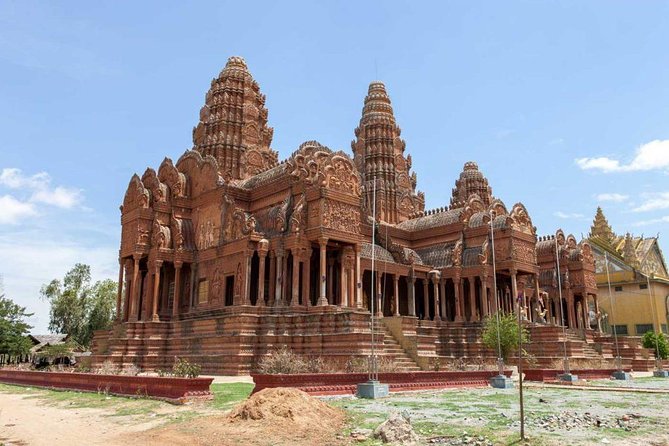
Phnom Reap is the surprise here: a modern Cambodian temple built in the style of Angkor Wat, complete with sculptures of kings and Buddha. It gives you a fresh way to think about Angkorian design without the crowds of Siem Reap. The route also reaches Phnom Prasith, an older hilltop temple with wide views and a working monastic community.
I like the private pacing, since you can spend more time at a shrine or cut a stop short without waiting for a busload of strangers. I also like the chance to see ordinary religious life at Putmondul, where monks, nuns, and local people gather for offerings and blessings. The main drawback is the long 90-minute ride each way, and the hilltop temple requires a moderate level of fitness.
Key points to know before booking
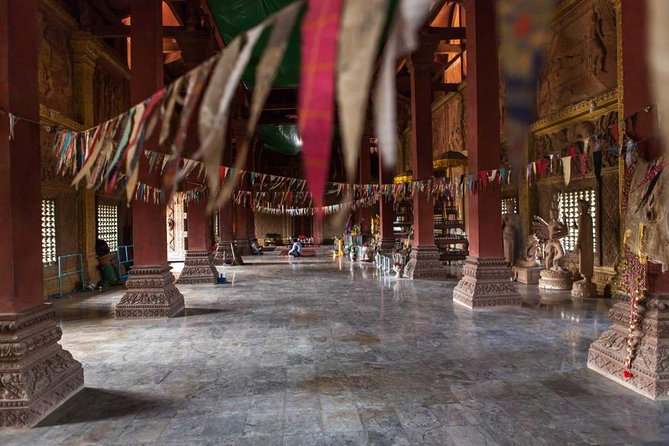
- Phnom Reap is a modern Angkor-inspired temple: Completed in 1998, it is also known as Prasat Vihear Suor and is often called the new Angkor Wat.
- Phnom Prasith gives you a quieter temple setting: The shrine sits on the eastern summit of twin hills and looks across the surrounding countryside.
- Putmondul adds real religious life: You may see monks, nuns, and local people making offerings or asking for blessings.
- You choose your private transport: The 90-minute trip from Phnom Penh can be made by tuk tuk or car.
- Lunch and refreshments are included: Expect bottled water, coffee or tea, a morning snack, and lunch at a traditional Khmer restaurant.
- Guides make a major difference: Li has been praised for a relaxed approach, while Seung and another guide have been noted for strong English and thoughtful explanations.
Why this Phnom Penh temple trip is worth your day
Phnom Penh is often treated as a stop before the temples of Siem Reap. That is a mistake. The city sits within a wider Cambodian setting where Buddhist practice, royal history, rural life, and temple architecture meet. This day trip gives you a look beyond the capital’s streets without asking you to commit to a second full temple circuit in Siem Reap.
The appeal is not a single world-famous ruin. Instead, the route builds a picture from several different places. You see an old hilltop temple, a Buddhist center still used for worship, and a modern structure that borrows from the design of Angkor Wat. I find that mix more useful than a string of similar ruins because each stop answers a different question: How did ancient Khmer builders use height? How does Buddhism function today? And how does Cambodia use its past in modern religious architecture?
The experience lasts about eight hours, including transport. Since it is a private activity, only your group takes part. That matters on a route with varied stops, especially if you want time for photographs, questions, or quiet observation.
A few more Phnom Penh trips to weigh up
- Visit 11 Places in One Day including S21 & Killing Field
★ 5.0 · 361 reviews - From Phnom Penh: Angkor Wat, Bayon, and Ta Prohm Day Trip
★ 4.9 · 104 reviews - A day Trip Sightseeing Phnom Penh – Siem Reap – Private English Speaking Driver
★ 5.0 · 67 reviews
The 90-minute ride from Phnom Penh
Pickup begins at your hotel, and you choose between a tuk tuk and a car. The choice shapes the day. A car gives you more protection from heat and road dust, while the tuk tuk makes the journey feel more connected to the towns, markets, and countryside along the way.
The trip to Phnom Prasith takes about 90 minutes. That is not a minor transfer, so you should treat the road time as part of the experience rather than a quick hop between sights. You will see Cambodia changing as the city gives way to more open rural views. A local snack is provided for morning tea, which breaks up the ride and adds a small taste of daily Cambodian food.
One guide, Li, has been praised for offering useful information without pressing too hard. That is a good quality on a long drive. You get room to look out the window, while still having someone available to explain the places and customs ahead.
The tuk tuk can be especially appealing if you enjoy the feel of the road. A market ride was singled out as one of the best parts of the day, which makes sense: local streets often reveal more about a place than a polished attraction does. Still, a tuk tuk is an open vehicle, and the ride may feel hot or dusty. If comfort matters most, select the car.
Phnom Prasith and its hilltop monastery
Phnom Prasith sits high on the eastern summit of twin hills. Reaching the temple takes some physical effort, so the moderate fitness requirement should be taken seriously. This is not presented as a flat, step-free sightseeing stop. Wear sensible shoes and be ready for uphill movement.
The reward is the view. From the summit, you look over the countryside rather than a dense city center. The broad setting helps you understand why hills have long mattered in Khmer sacred architecture. Height can make a temple feel closer to the heavens, while also giving it a strong visual presence over the surrounding area.
The temple itself is an older structure, but Phnom Prasith is not an abandoned shell. A community of monks lives and works here, and you may see them carrying out ordinary daily tasks. That living element changes the mood. You are not simply inspecting old stones. You are entering a functioning religious site, so quiet behavior and respectful clothing are important.
I would give this stop time for both the view and the people who use the temple. It is tempting to rush to the shrine, take a photograph, and head back down. The better approach is to pause and notice the contrast between the ancient setting and the present-day monastic community.
The hill is also where the day’s physical demand is most obvious. If someone in your group has trouble with hills or stairs, the private format lets you discuss the pace with the guide. The tour data does not promise special accessibility arrangements, so you should ask before booking if mobility is a concern.
Khmer lunch beneath the trees
After Phnom Prasith, you return to the base of the hill for lunch at a traditional Khmer restaurant. The setting is described as shady, with views toward the rural surroundings. This is a welcome change from eating quickly beside a major attraction.
Lunch is included, along with bottled water and coffee or tea. The exact menu is not specified, so you should not book this expecting a particular dish. What you can count on is a proper midday meal built into the schedule, which keeps the day simple and avoids the need to search for food between temple visits.
I like the location because it keeps the meal tied to the route. You are not being sent back into Phnom Penh for a generic restaurant stop. Instead, you get a pause in a quieter setting, with the countryside still in view.
The meal also gives you time to ask the guide about what you have seen. Guides on this route have been praised for strong English and for explaining Cambodian history through personal experience. One guide was described as warm and thoughtful, with a deep grasp of the country’s past. That kind of conversation can make the stops feel connected rather than separate.
Same country, a completely different kind of day:
- The Killing Field and Toul Sleng Genocide Museum (S21) Tour
★ 5.0 · 1,977 reviews - Phnom Penh: Sunset Cruise with Unlimited Beers & BBQ Buffet
★ 4.5 · 727 reviews - Aroma Therapy Massage, Relaxation therapeutic aromatherapy oil massages.
★ 5.0 · 645 reviews - Killing field and Toul Sleng genocide museum Tour
★ 5.0 · 610 reviews
Putmondul and Buddhist practice today
The next stop is Putmondul, described as a Buddhist center. Here, the focus shifts away from temple architecture and toward religious practice. You may see monks and nuns, along with local people bringing offerings and seeking good luck or a blessing.
This is one of the most valuable parts of the day for anyone who wants more than ruins. Cambodia’s temples are not only monuments. They are places where people pray, give offerings, meet religious figures, and mark important moments in life. Putmondul gives you a chance to see that activity in a setting that is less tied to international sightseeing.
The center includes a large reclining Buddha and paintings showing the history of Buddhism. The paintings give you something concrete to look at, while the active ceremonies provide the human setting. You may find that the religious side of the visit feels more immediate here than at an empty archaeological site.
A practical point: donations are not included. The tour specifically lists donations as an extra cost, so bring some Cambodian currency if you wish to contribute. You should never feel pressured to give, but a small offering can be appropriate when you take part in a religious setting. Ask your guide what is suitable before handing money to anyone.
You may also see a monk blessing local people. Keep your camera use discreet and follow the guide’s lead. The point is to observe respectfully, not to turn a private religious moment into a staged photo.
Phnom Reap, Cambodia’s modern answer to Angkor Wat
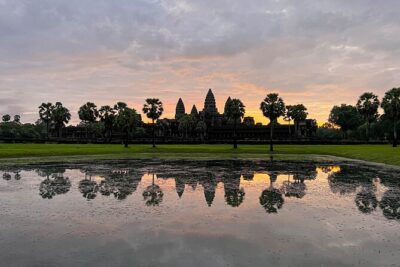
Phnom Reap is also known as Prasat Vihear Suor. Construction finished in 1998, and the temple is based on the architectural style of Angkor Wat. That makes it very different from Phnom Prasith. Here, you are not looking at a medieval ruin. You are seeing a modern Cambodian building that deliberately reaches back to the country’s most famous architectural tradition.
The nickname new Angkor Wat explains the basic idea, but it should not set an unfair expectation. Phnom Reap is not a replacement for Angkor Wat, and it does not have the same age or scale. Its value lies in what it shows about modern Cambodian identity and devotion. The builders used familiar Khmer forms to create a place for current religious life.
Inside and around the temple, you will see sculptures of ancient kings and Buddha. These images link royal Cambodian history with Buddhist belief. Your guide can help explain how those themes work together, since the visual program may be easier to appreciate with context.
I like this stop because it challenges the idea that only old buildings matter. A recent temple can still reveal how a culture chooses to remember its past. For a first-time visitor, Phnom Reap also provides a useful comparison point. After seeing it, the ancient Angkorian style becomes easier to recognize as a living design language rather than a museum subject.
Local people travel here to seek blessings from monks and hope for good fortune. That continuing use gives the temple a sense of purpose. You are likely to see religious activity rather than only sightseeing, so modest clothing and polite conduct are called for.
A private guide changes the pace
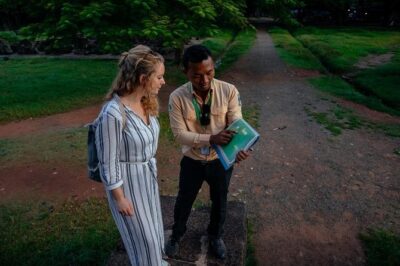
The private setup is one of the clearest advantages of this trip. You do not wait for other groups, and the schedule can move at the speed of your own party. If the views at Phnom Prasith hold your attention, you have more freedom to pause. If a member of your group needs a break, you are not holding up a coach full of people.
The guide is also important because the route does not explain itself as clearly as a famous Angkor temple. Phnom Reap’s modern construction, Putmondul’s religious customs, and Phnom Prasith’s monastic setting all benefit from explanation.
The guiding record attached to this experience includes Li and Seung by name. Li has been described as relaxed and informative without pushing too much commentary. Seung has been praised for arriving on time, speaking excellent English, and explaining the sites clearly. Another guide was noted for warm storytelling and personal accounts of Cambodian history.
Those details matter because guide quality can make or break a day outside the standard sightseeing circuit. The exact guide assigned to you may differ, but you can reasonably expect the guide to be central to the experience. When booking, it is worth treating the guide as part of the value, not just a driver who happens to know the road.
What the $117.44 price includes
At $117.44 per person, this is not the cheapest way to leave Phnom Penh. The price needs to be judged against what is bundled into the day: hotel pickup, private transport, a driver, a private guide, a morning snack, lunch, bottled water, and coffee or tea.
For a solo visitor, the cost may feel high because private transport and guiding are being paid for by one person. For two or more people, the value improves, particularly if group discounts apply to your booking. You also avoid the hassle of arranging a vehicle, finding the temples, and working out how to combine three separate religious sites in one day.
The private format is most useful for couples, families, and small groups with similar interests. Families should note that the child rate applies only when sharing with one or more paying adults, and children must be accompanied by an adult.
Admission fees are not listed in the supplied details, so check the final booking information for any entrance costs. Donations are definitely separate. That is normal at working religious sites, but it is better to know before you set out.
Who should book this day trip
I would recommend this route to you if you have already seen Phnom Penh’s main city sights and want a quieter day outside town. It also suits anyone who wants to combine architecture with present-day Buddhist life instead of visiting only ruins.
The tour works well for:
- Couples or families who want a private schedule
- Visitors interested in Cambodian religion and local customs
- People who enjoy rural road travel and market scenes
- Anyone curious about modern Khmer architecture
- Small groups that can share the cost of private transport
I would think twice if your only goal is to see ancient Angkor ruins. Phnom Reap is modern, and Putmondul is primarily a religious center. If you have limited time in Cambodia and must choose one temple experience, the major sites around Siem Reap may be a stronger fit for ancient architecture.
The 90-minute ride each way is another consideration. Eight hours is a full day, and the road takes a sizeable portion of it. The reward is a calmer route with fewer crowds, not a packed list of grand monuments.
You can cancel for a full refund if you do so at least 24 hours before the local start time. Changes or cancellations inside that period are not accepted for a refund.
Should you book the Prasith and Reap temples trip?
Book it if you want to see how Cambodian faith works today, not just how Khmer kings built centuries ago. Phnom Prasith offers height, monks, and countryside views. Putmondul shows active Buddhist practice. Phnom Reap gives you a modern interpretation of the Angkor style. Together, they make a thoughtful day beyond Phnom Penh.
Skip it if you want a short outing, a flat route, or only ancient ruins. For everyone else, the private transport, included meal, flexible pace, and strong guide potential make the $117.44 price reasonable, especially when shared with companions.
FAQ
How long does the private temple trip last?
The experience lasts approximately eight hours.
Is hotel pickup included?
Yes. Hotel pickup in Phnom Penh is included.
Can I choose between a tuk tuk and a car?
Yes. The tour includes private transport of your choice, with a driver.
Is lunch included?
Yes. Lunch at a traditional Khmer restaurant is included, along with bottled water and coffee or tea. A local snack is also provided for morning tea.
Is this a private group experience?
Yes. Only your group participates in the activity, and the guide can keep the day moving at your pace.
Are donations included in the price?
No. Donations are not included.
Just added around Phnom Penh
- The killing field and Toul Sleng Genocide museum (S21) Tour★ 4.5 · 19 reviews
- Watch Khmer Kickboxing with Free Beers by Ringside Seats★ 5.0 · 11 reviews
- Udong Old Capital Tour★ 4.5 · 3 reviews
- Watch Live Khmer Traditional boxing in Phnom Penh★ 5.0 · 46 reviews
- Udong Historical Site Tour★ 5.0 · 8 reviews
- Warm Stone Massage★ 5.0 · 23 reviews
- Private Taxi Between Phnom Penh – Siem Reap Stop Sightseeing★ 5.0 · 23 reviews
- Killing Fields & Toul Sleng Genocide Museum Tickets With Tuk Tuk★ 5.0 · 6 reviews
1-Day Tours, compared.
1-Day Amazing Angkor Wat Tour with Sunset & All Interesting Major Temples
Read our review →
Angkor Wat one Day Private Tour for All Highlight Angkor Temples
Read our review →
1-Day private Angkor Temple Tour from Siem Reap
Read our review →
1-Day Angkor Wat Sunrise & All Interesting Temples Private Tour
Read our review →
Angkor Wat Sunrise Small-Group 1-Day Tour from Siem Reap
Read our review →
Browse the lists this tour appears in