
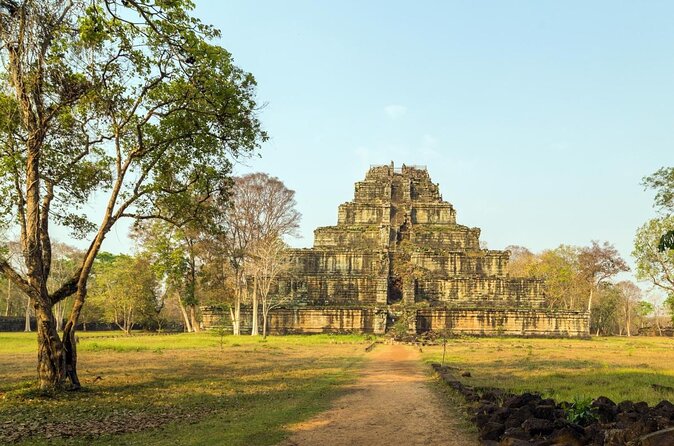
Reviewed · ANGKOR WAT TOURS
3-Day Tour of Siem Reap, Angkor Temples & Phnom Kulen Waterfall
Angkor Wat is only the beginning here. Over three days, you see the famous temples, lesser-visited ruins, a sacred waterfall, and the floating communities of Tonle Sap. The private format lets guide Hok adjust his explanations and care to your group, rather than putting you into a fixed coach tour.
I like the range of the route, especially the contrast between carefully carved temples and the rough jungle ruins of Beng Mealea. I also like that you get both sunset and sunrise at Angkor Wat, plus air-conditioned transport, lunches, drinks, cool water, and towels. The main drawback is the pace: a 4:30 a.m. start and long temple days will test your legs, and admission tickets are not included in the $250 price.
Key points to know before booking
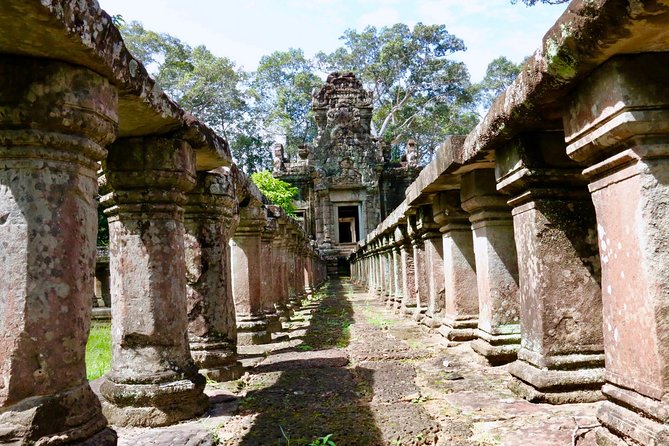
- Hok is the central part of the experience: He explains religion, royal power, and Khmer culture in a lively, story-based way.
- The three days cover far more than Angkor Wat: You visit Angkor Thom, Ta Prohm, Banteay Srei, Preah Khan, Phnom Kulen, Beng Mealea, and Tonle Sap.
- The schedule begins early: Day two starts with hotel pickup at 4:30 a.m. for Angkor Wat sunrise.
- Temple passes cost extra: Angkor admission, Phnom Kulen admission, and accommodation are not part of the tour price.
- You travel privately: Only your own group participates, with hotel pickup and an air-conditioned vehicle.
- The route mixes culture and scenery: Temples, forest, villages, waterfalls, a sacred river, and a lake community all fit into one trip.
Three days that put Angkor in context
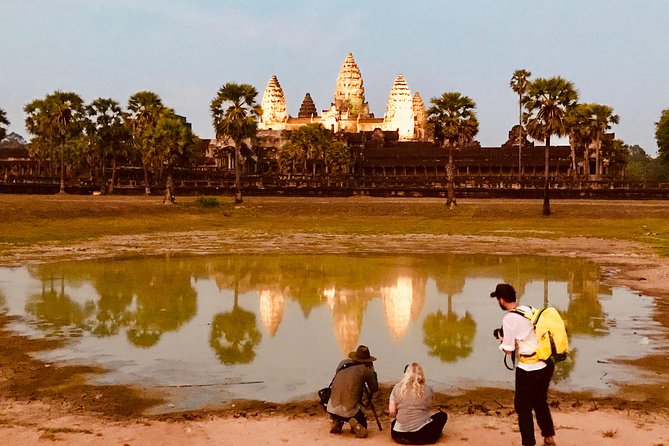
A quick Angkor Wat visit can leave you with grand photographs but little sense of how the ancient city worked. This tour gives you three days to connect the temples with Khmer kingship, Hindu and Buddhist beliefs, village life, forests, and the modern communities around Siem Reap.
You travel in a private group with an English-speaking guide and an air-conditioned vehicle. That matters in Cambodia, where the heat can make a long temple day tiring. Cool water and towels are supplied, and two lunches are included, though you should confirm the exact meal arrangements before departure.
The $250 price is per person, and accommodation is left out. That keeps the plan flexible if you already have a hotel in Siem Reap, but you need to budget separately for lodging and all entrance tickets. For a private three-day experience with transport, guiding, meals, and a wide route, the price can be useful value for couples, families, or small groups. It is less attractive if you only want a short Angkor visit or prefer arranging each day yourself.
More Angkor Wat Tours in Siem Reap:
- Angkor Wat Sunrise or Sunset Tour with Guide from Siem Reap
★ 5.0 · 12,109 reviews - Siem Reap: Angkor Wat: Small-Group Sunrise or Sunset Tour
★ 5.0 · 9,444 reviews - Siem Reap: Angkor Wat 2-Day Tour with Sunrise and Sunset
★ 4.9 · 4,429 reviews
Day one: Angkor Wat and the great city of Angkor Thom
The first pickup is scheduled for 8:00 a.m. That is a sensible start after arriving in Siem Reap, and it gives you time to explore without the immediate shock of a pre-dawn alarm.
Angkor Wat receives about two hours. This is the essential introduction to the site, with time to see its monumental towers, galleries, courtyards, and carved scenes. The temple was built as a Hindu monument dedicated to Vishnu and later became an important Buddhist site. A private guide can help you read the carvings and layout instead of treating the visit as a simple walk around a large ruin.
The route also includes local villages and forest near Angkor Wat. This helps place the temple in its setting, although the schedule gives no exact timing for the village stop. Ask Hok how much time will be spent there if local life matters as much to you as the monuments.
Next comes Angkor Thom, the fortified royal city. You have about 30 minutes here, followed by a longer stop at Bayon. Angkor Thom was the capital under the Khmer Empire, and its scale helps you understand that Angkor was not one isolated temple. It was a major urban and ceremonial center.
Bayon deserves its full hour. Its famous stone faces look calm, watchful, and slightly mysterious, while the lower galleries show scenes from Khmer life and military campaigns. This is one of the places where a guide’s storytelling makes a real difference. Hok is praised for explaining sites with humor and clear stories, while still taking the religious and historical meaning seriously.
Baphuon follows for roughly 45 minutes. This tall Hindu monument was dedicated to Shiva and designed as a symbolic mountain. The climb and uneven stone surfaces can make the stop more tiring than the short time suggests, so comfortable shoes are useful.
The Terrace of the Elephants gets about 30 minutes. It was connected with royal ceremonies and public appearances, and its carved elephants provide one of the clearest visual links between Angkor’s architecture and royal power. This is a shorter stop, but it helps explain how the royal city was used.
Ta Prohm, Pre Rup, and sunset at Phnom Bakheng
Ta Prohm is scheduled for an hour. This is the temple most associated with jungle imagery and the film Tomb Raider, but its appeal is not only cinematic. Trees grow through walls and over galleries, giving you a sharp sense of how difficult it must have been to preserve these sites.
The popularity of Ta Prohm brings a practical concern: the atmospheric corners can be crowded. A private guide cannot control the number of people at the temple, but Hok can help you understand what you are seeing and may adjust the order of your walk when possible.
Pre Rup offers a change of mood. Its warm brick towers and pyramid form make it a strong example of earlier Khmer temple design. It was built in the 10th century as a state temple dedicated to Shiva. The visit is listed at about 30 minutes, enough for a look but not a slow study of every detail.
The day ends at Phnom Bakheng, with about an hour scheduled for sunset. This hilltop temple is one of the best-known sunset locations in the Angkor area, so expect it to be a popular stop. The schedule may also feel compressed after a full day of walking. If sunset photography is your top priority, ask Hok about the timing and current access arrangements before setting out.
Day two starts at 4:30 a.m. for Angkor Wat sunrise
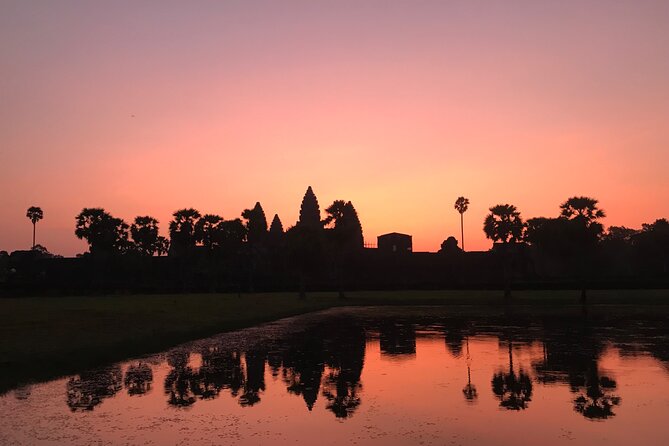
Day two begins very early. Hotel pickup is scheduled for 4:30 a.m., allowing you to reach Angkor Wat for sunrise. This is the tour’s most demanding start, but it gives you a chance to see the temple in a cooler, softer light before the day becomes hot.
Sunrise is planned for about 90 minutes. The exact view depends on weather and where you are able to stand, so you should treat it as a chance rather than a guarantee of a perfect reflection or colorful sky. Afterward, the day continues through a long series of temples, so bring water, wear practical footwear, and pace yourself.
Banteay Srei is roughly 37 kilometers north of Angkor Wat and receives an hour. Its pink sandstone carvings are remarkably fine, with small figures and detailed decorative work that reward close attention. The temple is often called the Lady Temple, and its smaller scale makes it feel very different from Angkor Wat or Bayon.
The drive to Banteay Srei also takes you farther from the central temple cluster. That adds travel time, but it is worthwhile if you want to see a more delicate style of Khmer carving. The ticket is not included, so remember that this temple is covered by the Angkor admission arrangements rather than being free.
More Phnom Kulen Tours in Siem Reap:
- Kulen Waterfall Join-in Tour (local Picnic lunch)
★ 5.0 · 2,434 reviews - Kulen Mountain: Small-Group Tour and Picnic lunch
★ 4.9 · 1,802 reviews - Siem Reap: Kulen Mountain, Beng Mealea and Tonle Sap Tour
★ 5.0 · 1,483 reviews - Phnom Kulen Waterfall & the Sacred 1000 Lingas (with Lunch)
★ 4.8 · 974 reviews
Preah Khan to Banteay Samre: a full second temple circuit
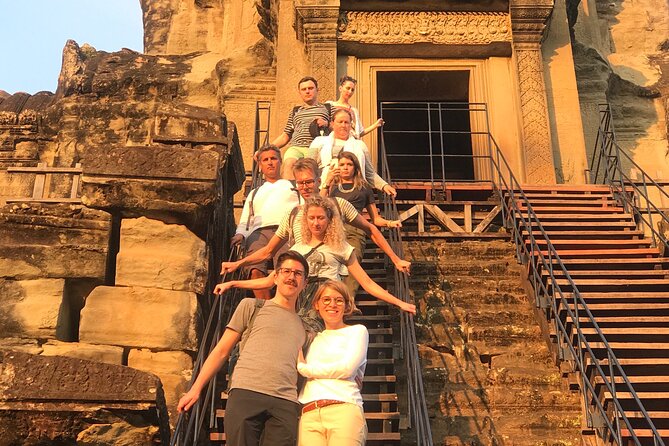
Preah Khan is given an hour and is one of the day’s more substantial stops. It is a large Buddhist complex built under Jayavarman VII and dedicated to his father. Its corridors, courtyards, carvings, and partially restored sections reward a slower walk.
Ta Som follows for about 30 minutes. This smaller temple has a peaceful feel and is known for a tree growing around one of its doorways. The stop is brief, so listen to Hok’s explanation before wandering too far from the main route.
Neak Pean takes another 30 minutes. The temple sits on an island in a water setting and was connected with ideas of healing. The approach across the water gives the stop a different character from the enclosed galleries and towers elsewhere in Angkor, though the experience depends on water levels and site conditions.
Banteay Samre is the final temple of day two, with about 30 minutes scheduled. Its stonework is well preserved, and its design reflects the same broad Khmer tradition seen at larger sites, but on a more manageable scale. By this point, you may be ready for a shorter stop rather than another enormous complex.
This second day is ambitious. It combines sunrise, a longer drive to Banteay Srei, and several more temples. That makes it excellent for someone who wants broad coverage, but not ideal for someone who prefers long pauses, sketching, photography, or quiet time at each monument.
Day three: Phnom Kulen Waterfall and sacred sites
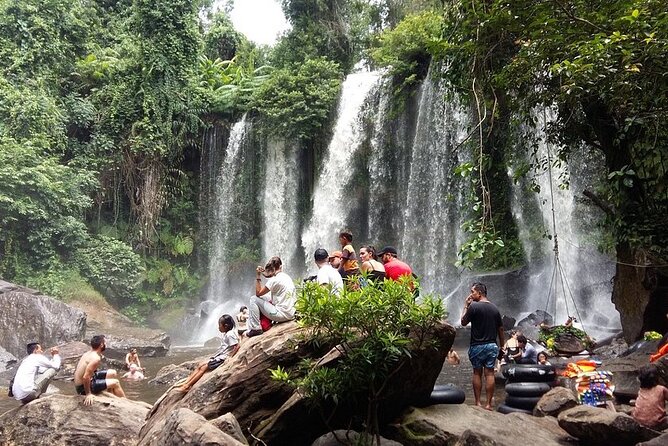
The third day moves beyond the main Angkor complex. Phnom Kulen National Park is scheduled for about two hours, with the waterfall, reclining Buddha, a sacred river marked with thousands of lingas, Srash Damrei, and Bat Cave included in the planned area.
Phnom Kulen is important in Cambodian religious tradition, not simply a place for a swim. The combination of water, sculpture, forest, and sacred sites adds cultural depth to the temple program. You get a look at how natural places can carry religious meaning, rather than seeing Cambodia only through stone buildings.
The tour description does not specify how long you spend at the waterfall itself or whether swimming is part of the plan. Ask before booking if the waterfall is your main reason for choosing this day. The Phnom Kulen ticket is extra, and the park adds another admission cost to your budget.
Beng Mealea brings the wildest ruins
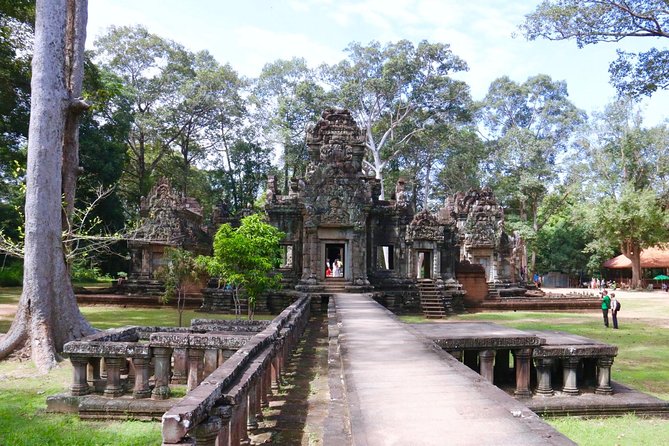
After Phnom Kulen, the route continues to Prasat Beng Mealea, about 66 kilometers northeast of Siem Reap. The temple receives roughly an hour.
Beng Mealea is the most rough-edged ruin on the itinerary. Collapsed galleries, scattered blocks, and vegetation give it a less ordered feel than the central Angkor temples. If you like seeing monuments with fewer polished viewpoints and more visible decay, this may be one of your favorite stops.
The tradeoff is the distance. You spend more time in the vehicle to reach Beng Mealea, and one hour may not feel long enough for every corner. Still, the drive is what makes the day different. You leave the familiar Angkor circuit and see a more remote temple setting.
Tonle Sap closes the trip with present-day Cambodia
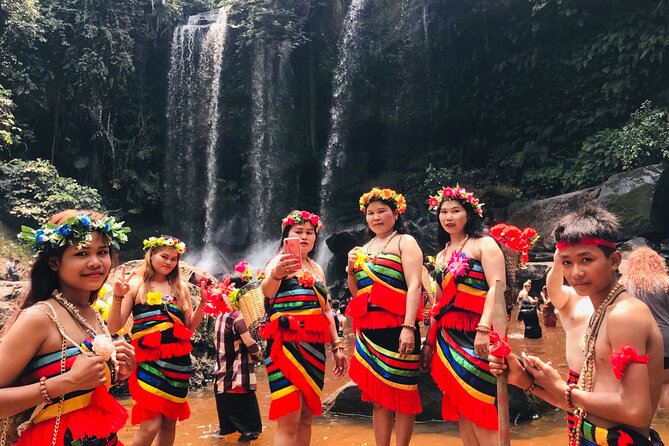
The final stop is Tonle Sap Lake, the largest freshwater lake in Southeast Asia. The visit is scheduled for about one hour and focuses on the lake and its floating village communities.
This is a useful ending because it shifts attention from ancient kings to people living around one of Cambodia’s major waterways. Water levels change through the year, so the appearance of the villages and the boat ride setting can vary. The supplied information does not specify the exact village, boat arrangements, or whether a boat fee is included, so ask for those details before you go.
Tonle Sap can also feel very different from the temples. If you want a strictly archaeological tour, this stop may seem less essential. If you want to understand more of Cambodia beyond Angkor, it gives the three days a broader shape.
What Hok adds to the experience
The strongest feature of this tour is the private guide. Hok is described as friendly, humorous, attentive, and serious when explaining the sites. That combination matters in Angkor, where a guide can either turn a wall of carvings into a story or leave you staring at stones without a clear idea of their purpose.
Hok also helps with the practical side of a packed route. Past tour arrangements have included adapting plans to the group’s preferred number of days, organizing transport, and paying attention to comfort and safety. You should still tell him early if you need slower walking, extra photo time, or fewer stops.
The private format means only your group participates. It does not promise total flexibility, since the three days have a set structure, but it gives you a better chance to ask questions and request sensible adjustments than a large group excursion.
Price, tickets, and the real cost
At $250 per person, the tour includes an air-conditioned vehicle, an English-speaking guide, cool water, towels, two lunches, and drinks. Hotel pickup is offered, and group discounts may be available.
The important extra costs are Angkor temple admission, Phnom Kulen National Park admission, and hotel accommodation. The activity uses a mobile ticket, and booking confirmation is received at the time of booking. Since the ticket prices are not provided here, calculate them separately rather than assuming the $250 covers the full trip.
I see the price as strongest for a small private group that wants a guide for the full three days. Solo visitors or two people may find it more expensive than a shared tour, while families and larger groups may benefit more from the private setup and any group discount.
You can cancel for a full refund if you do so at least three full days before the local start time. Changes or cancellations inside that period are not accepted for a refund.
Who should book this three-day route
I would choose this tour if you want a structured introduction to Siem Reap and prefer having one guide explain the temples in context. It suits first-time visitors, families, couples, and small groups that want Angkor plus Phnom Kulen, Beng Mealea, and Tonle Sap.
You should be comfortable with early mornings, heat, uneven temple paths, long sightseeing days, and several hours of driving outside Siem Reap. The itinerary is not designed for a slow holiday. It is designed to cover a lot.
If you have only one day, choose a shorter Angkor plan. If you have four or more days in Siem Reap, this three-day tour could form the main structure of your visit, with a free day left for rest or independent exploring.
Should you book it?
Book this tour if you want breadth, private transport, and a guide who makes history personal. The range is excellent: sunrise and sunset, the major Angkor monuments, smaller temples, a sacred mountain, a remote ruin, and Tonle Sap.
Think twice if you dislike early starts or want entrance fees and accommodation bundled into one price. For an active visitor who wants Cambodia explained clearly and efficiently, this is a strong three-day plan. Just budget for the tickets, protect your energy on day two, and tell Hok what matters most to you before the first pickup.
FAQ
How long is the tour?
The tour lasts approximately three days.
Is hotel pickup included?
Yes. Pickup is offered from your hotel, with the first scheduled pickup at 8:00 a.m. on day one and a 4:30 a.m. pickup on day two.
Is this a private tour?
Yes. Only your own group participates in the activity.
Is accommodation included?
No. You choose and pay for your own hotel accommodation.
Are Angkor Temple tickets included?
No. Admission to the Angkor temples is not included in the tour price.
Is the Phnom Kulen ticket included?
No. The Phnom Kulen National Park ticket is an additional cost.
What meals are included?
Two lunches and drinks are included.
What transport is provided?
Transport is provided in an air-conditioned vehicle.
Is a guide included?
Yes. An English-speaking private guide is included. The guide named in the tour information is Hok.
Can I cancel for a full refund?
Yes, if you cancel at least three full days before the experience start time, based on local time. Cancellations or changes made less than three full days before the start are not refunded.
More 3-Day Experiences in Siem Reap
- From Siem Reap: Angkor Wat and Floating Village 3-Day Trip
★ 5.0 · 100 reviews - 3-Day Angkor Wat with All Interesting Major Temples, Banteay Srei & Beng Mealea
★ 5.0 · 70 reviews - 3-Day Angkor Wat & All Interesting Major Temples & Kulen Mount Waterfall
★ 5.0 · 63 reviews - 3 Days Siem Reap Explorer – Small Group
★ 5.0 · 50 reviews
Just added around Siem Reap
- Ultimate Sunrise to Angkor Wat, Angkor Thom and Bayon Temple★ 5.0 · 3 reviews
- Twilight Tastes of Siem Reap Include Dinner★ 5.0 · 13 reviews
- Trekking Tour at Phnom Kulen National Park from Siem Reap★ 5.0 · 3 reviews
- Full-Day Private Tour of Angkor Wat with Pick Up★ 5.0 · 12 reviews
- Private Day Trip to Angkor Temples with Expert Guide★ 5.0 · 4 reviews
- Waterfall & River of 1000 Siva Linga- Kulen Mountain Private Tour★ 5.0 · 3 reviews
- Professional Photo Shoot in Angkor Archaeological Park, Siem Reap★ 5.0 · 42 reviews
- Ultimate Siem Reap Food Tour by Tuk Tuk – 20 Tastings, 8 Stops★ 5.0 · 13 reviews
Angkor Wat Tours, compared.

Angkor Wat Sunrise or Sunset Tour with Guide from Siem Reap
Read our review →
Angkor Wat: Small-Group Sunrise or Sunset Tour
Read our review →
Angkor Wat 2-Day Tour with Sunrise and Sunset
Read our review →

Angkor Wat Sunrise tour with Small – Group and Guide tours
Read our review →
Angkor Wat Highlights and Sunrise Guided Tour from Siem Reap
Read our review →
Angkor Wat Sunset Small Group Tour with Lunch Included
Read our review →
Full-Day Angkor Wat Sunrise Private Tour with Guide from Siem Reap
Read our review →Browse the lists this tour appears in